Software testing has evolved, but the way many teams manage it hasn’t. As applications grow more complex and release cycles accelerate, QA workflows often become fragmented – split across different tools, teams, and processes.
The result isn’t just inefficiency. It’s a lack of visibility. Teams struggle to answer a simple question: what has actually been tested, and what does it mean for release readiness? Without a unified view, testing becomes reactive, repetitive, and harder to scale.
1. What Unified Test Automation Management Actually Means
1.1 The Problem with Fragmented Test Automation
Testing fragmentation rarely happens overnight. It emerges gradually as teams adopt different tools and approaches to support their specific workflows.
In web application testing, where validating complete user flows is critical, this fragmentation becomes especially problematic. Different tools handle test case design, execution, and automation results, but they don’t necessarily communicate with each other in a meaningful way. As a result, teams lack a shared, unified view of what has been tested, what passed, and where risks remain.
The impact goes beyond duplicated effort. Communication breaks down when insights are scattered across systems. Test results become harder to interpret because they live in different formats and contexts. Most importantly, quality risks increase – not because teams don’t test enough, but because connecting the full testing picture requires manually stitching together information from multiple sources.
1.2 Defining Unified Test Automation Management
Unified test automation management consolidates various testing processes and tools into a single cohesive framework. This approach creates a connected testing ecosystem where different types of tests within web application testing workflows, and other testing types work together seamlessly rather than in isolation.
The concept centers on breaking down barriers between testing layers and teams. Instead of separate tools requiring different skills and producing incompatible outputs, unified management provides common standards, shared resources, and integrated workflows. Teams validate complete user scenarios across web-based user flows and related automation layers through coordinated testing that reveals issues standard fragmented approaches miss.
This integration encompasses shared repositories for test assets, standardized frameworks that work across projects, consolidated reporting that provides clear visibility, and governance models that enable collaboration without sacrificing team autonomy.

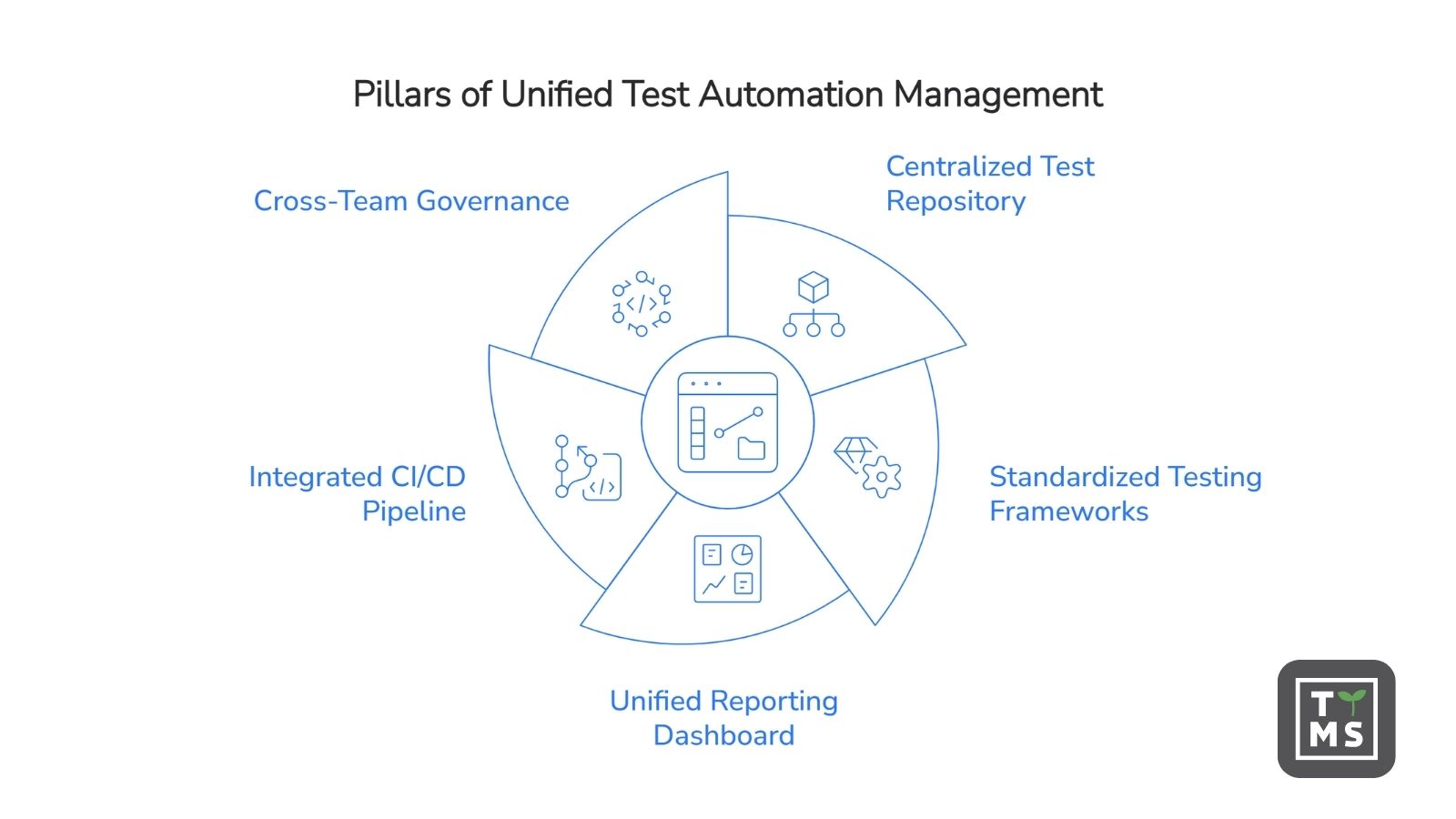
2. Core Pillars of Unified Test Automation Management
2.1 Centralized Test Repository and Asset Management
A centralized test repository serves as the foundation for unified test automation by providing a single place where teams manage test cases, execution results, and reporting data. Instead of scattering information across multiple tools, teams work within one structured environment that reflects the full testing lifecycle – from test design to execution and outcomes. This reduces fragmentation and makes it easier to understand what has been tested, what passed, and where gaps may remain.
Effective asset management focuses on organization and discoverability. Tagging, categorization, and clear structuring allow teams to quickly find relevant test cases and reuse them across projects and releases. Rather than recreating similar scenarios, testers can build on existing work, improving consistency and reducing duplication. Over time, this transforms the repository into an active QA resource that supports collaboration, visibility, and scalable testing workflows.
2.2 Standardized Testing Frameworks Across Teams
Standardization doesn’t mean forcing every team to use identical tools. Rather, it establishes common patterns, interfaces, and practices that allow different testing approaches to work together coherently. A standardized framework might support multiple implementation options while ensuring all produce compatible outputs and follow consistent conventions.
These frameworks address common testing needs through reusable components. Many modern AI-powered QA platforms already support these standardized approaches and are featured in our list of the best AI tools for testers. Authentication, data setup, environment configuration, and similar requirements get handled through shared modules rather than reimplemented by each team. This reduces redundant work while ensuring consistency in how basic tasks execute.
2.3 Unified Reporting and Analytics Dashboard
Separate reporting systems create information silos that obscure overall quality status. Unified dashboards aggregate results from all testing activities into coherent views that stakeholders can actually interpret. Rather than reviewing multiple reports to understand coverage, teams see consolidated metrics that reveal true testing effectiveness.
Analytics capabilities transform raw test results into actionable insights. Pattern recognition identifies flaky tests that undermine confidence. Trend analysis reveals whether coverage improves or degrades over time. Coverage maps show which user journeys lack adequate validation. These analytics help teams focus improvement efforts where they’ll have the greatest impact.
2.4 Integrated CI/CD Pipeline Workflows
Unified test automation management integrates with CI/CD pipelines to ensure that testing becomes a natural part of the software delivery process. As code moves through development stages, tests can be executed automatically, while results are captured and made visible within the test management platform. This integration helps teams stay aligned with release progress and ensures that quality validation happens continuously, not as a separate, delayed phase. Many organizations also extend these capabilities through process automation solutions that eliminate manual handoffs and streamline workflows across development, QA, and operations teams.
Rather than relying on complex orchestration logic, modern platforms focus on execution visibility and control. Teams can track test progress in real time, review results in a unified view, and quickly identify issues as they arise. Features such as clear execution tracking, conflict prevention during test runs, and the ability to restore or revisit test runs help maintain consistency and confidence in testing outcomes. Combined with AI-assisted workflows, this approach enables faster feedback and a more streamlined connection between development and QA activities.
2.5 Cross-Team Governance and Collaboration Models
Governance models for unified testing balance standardization with team autonomy. Central governing bodies establish overarching standards and coordinate shared resources while individual teams retain flexibility in how they implement testing for their specific contexts. This balance prevents both chaos from complete decentralization and rigidity from excessive control.
Effective governance includes clear ownership and accountability structures. Organizations that want to scale quality across teams often complement unified testing initiatives with broader quality management solutions that support governance, compliance, and continuous improvement. Someone owns the unified testing infrastructure and ensures it meets team needs. Teams own their specific test suites but follow agreed standards. Quality metrics have clear owners who track progress and drive improvements.
3. AI as a Unifying Layer in Test Automation
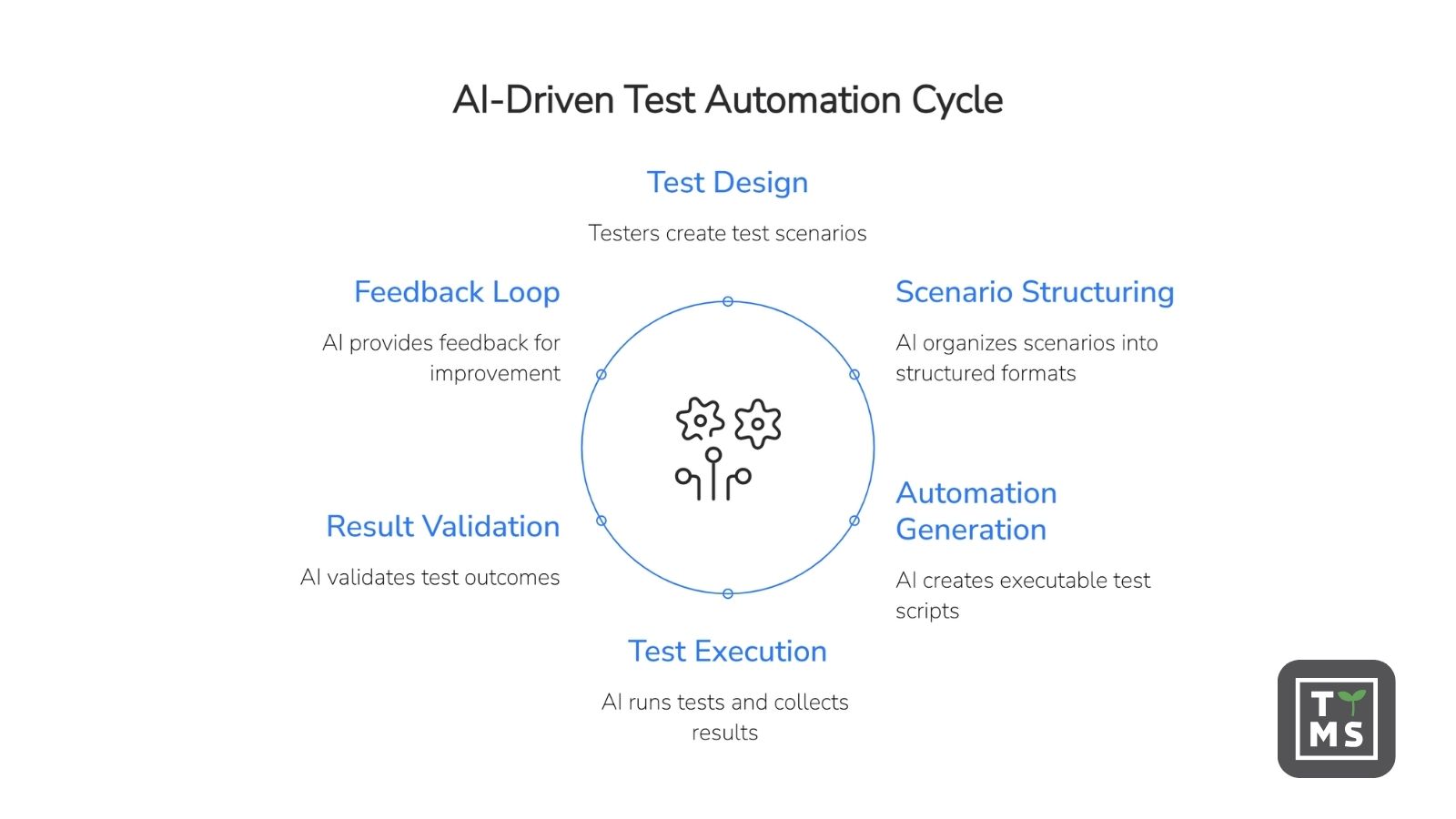
Traditional approaches to test automation often create a divide between manual QA and automation engineering. Testers design scenarios and validate functionality, while automation engineers are responsible for translating those scenarios into executable test scripts. This separation introduces delays, communication gaps, and duplicated effort – especially when requirements change frequently.
For example, Qatana addresses this challenge by positioning AI as a unifying layer across the entire QA workflow. Instead of treating test creation and automation as separate activities, AI connects them directly. It enables the same test case to evolve from a ticket into a structured scenario and further into executable automation, without requiring handoffs between different roles. This approach reduces friction and ensures consistency between what is tested manually and what is automated.
At the execution level, AI acts as an active component of the testing process rather than just a helper tool. Many of the best AI automation testing tools now support end-to-end QA workflows, helping organizations reduce manual effort and improve testing visibility. It supports generating automation scripts, validating test logic, and refining outcomes based on execution. This effectively creates an additional execution layer within the QA process – one that handles repetitive and technical tasks, while testers focus on reviewing and approving results. This aligns with the broader trend of using AI to automate repetitive business activities and improve team productivity.
By embedding AI across both test design and execution, Qatana eliminates the traditional silos between manual testing and automation. QA teams operate within a single, unified environment where testing workflows are continuous rather than segmented. The result is faster feedback, reduced manual overhead, and a more scalable approach to maintaining quality as applications grow.
4. Best Practices for Unified Test Automation Management
4.1 Establish Clear Automation Standards and Guidelines
Standards prevent the chaos that emerges when every team makes independent decisions about testing approaches. Effective standards cover test design patterns, coding conventions, documentation requirements, and quality criteria. They provide enough specificity to ensure consistency while allowing flexibility for legitimate variations.
Documentation makes standards accessible and useful. Style guides, template repositories, and reference implementations help teams understand not just what standards require but how to apply them practically. Automated checks catch common violations during code review while peer review processes verify adherence to more nuanced guidelines.
4.2 Maintain a Single Source of Truth for Test Data
Test data management often becomes a bottleneck and source of errors in automation efforts. Creating a single authoritative source for test data eliminates inconsistencies that cause tests to produce different results in different contexts. Centralized management also simplifies updates when application data requirements change.
Effective test data strategies balance realism with privacy and security. Production-like data helps tests catch real-world issues, but sensitive information requires masking or synthesis. Data generation tools can create realistic test data that meets requirements without exposing actual customer information.
4.3 Leverage Test Reusability Across Projects and Teams
Reusability multiplies testing investment value by letting multiple teams benefit from shared work. Modular test design facilitates reuse by creating self-contained components that address specific testing needs. These modules combine to form complete tests without tight coupling that limits their application.
Component libraries provide curated collections of reusable test elements. Authentication modules, data validation utilities, common workflows, and similar frequently needed capabilities become shared resources. Discovery mechanisms help teams find existing components before creating new ones through searchable repositories with clear documentation and usage examples.
4.4 Enable Real-Time Visibility into Testing Activities
Visibility transforms testing from a black box into a transparent process that stakeholders can monitor and understand. Real-time dashboards show current testing status, highlighting what’s running, what’s completed, and what’s waiting. This transparency helps identify bottlenecks, resource constraints, and other issues affecting testing throughput. Achieving this level of visibility often requires scalable cloud infrastructure, which is why many enterprises build their testing ecosystems on platforms such as Microsoft Azure
4.5 Institute Regular Test Suite Hygiene and Maintenance
Test suites degrade over time without active maintenance. Obsolete tests waste execution resources. Flaky tests undermine confidence in results. Redundant tests duplicate effort without adding value. Regular hygiene practices prevent these issues from accumulating and degrading testing effectiveness.
Scheduled reviews identify tests that no longer serve their purpose. Flaky test detection algorithms highlight problematic tests that fail intermittently. Teams investigate root causes, fix unstable tests, or remove them if they can’t be reliably stabilized. Refactoring efforts keep test code maintainable as frameworks evolve and better patterns emerge.
5. How Qatana Supports Unified Test Automation
At TTMS, we built Qatana as a test management platform created by testers, for testers – designed to solve the real challenges we’ve experienced ourselves: fragmented workflows, disconnected tools, and too much manual effort in QA.
Instead of forcing teams to stitch together multiple systems, we bring everything into one unified environment where testing becomes clear, connected, and scalable.
Here’s how we enable unified test automation in practice:
- Single platform for manual and automated testing – Manage test cases, execution, and automation results in one place – without switching between tools or losing visibility
- AI-driven test and automation generation – Turn tickets into structured test cases and evolve them into automation (e.g., Playwright) within the same workflow, reducing manual effort and bridging the gap between QA and automation engineers
- Full execution visibility and control – Track test runs in real time, prevent execution conflicts, and restore runs when needed – giving your team confidence in every release
- Clear reporting for teams and stakeholders – Generate complete, stakeholder-ready reports in one click and always maintain an up-to-date view of quality status
- Flexible integrations with your existing ecosystem – Connect Qatana with Jira, your preferred LLM, and CI/CD workflows – without forcing rigid processes or tool changes
- Fast onboarding and quick time to value – Import existing test cases, onboard teams easily, and go live in days thanks to intuitive UI, built-in tutorials, and simple deployment
By combining these elements, Qatana creates a unified testing environment where AI actively supports both test creation and execution, eliminating silos and reducing the effort required to maintain high-quality software at scale.
Ready to See Qatana in Action?
If you’re looking to move away from fragmented testing and build a truly unified QA workflow, we’d be happy to show you how Qatana works in practice.
Contact us to schedule a demo or request a tailored pricing proposal for your team.