Enterprise content teams are under pressure to create, adapt, approve, and deliver more content across more digital touchpoints. Traditional CMS workflows can still support structured publishing, but they often struggle with the speed, coordination, and governance demands of modern content operations.
This is where the idea of an agentic CMS enters the conversation. In the AEM ecosystem, it points to a shift toward AI-assisted content workflows, where agents can help teams discover, optimize, adapt, and orchestrate content more efficiently while keeping human oversight in place.
1. What Is an Agentic CMS, and Why It Matters Now
An agentic CMS is best understood as a content management concept rather than a fixed product category. It describes a CMS environment where AI agents help teams complete content-related tasks such as discovery, optimization, adaptation, tagging, workflow support, and delivery preparation. In the AEM ecosystem, this idea is most closely connected to Agents in AEM, which Adobe describes as capabilities that can automate tasks, streamline workflows, and help orchestrate changes in AEM as a Cloud Service and Edge Delivery Services.
The key shift is not that humans disappear from the process. Instead, agentic workflows are designed to reduce repetitive manual work while keeping people in control of strategy, creative judgment, governance, and final approval. This makes the concept especially relevant for enterprise content teams that need to manage more digital content without weakening brand, compliance, or workflow standards.
1.1 The Evolution: From Headless CMS to Agent-Assisted Content Workflows
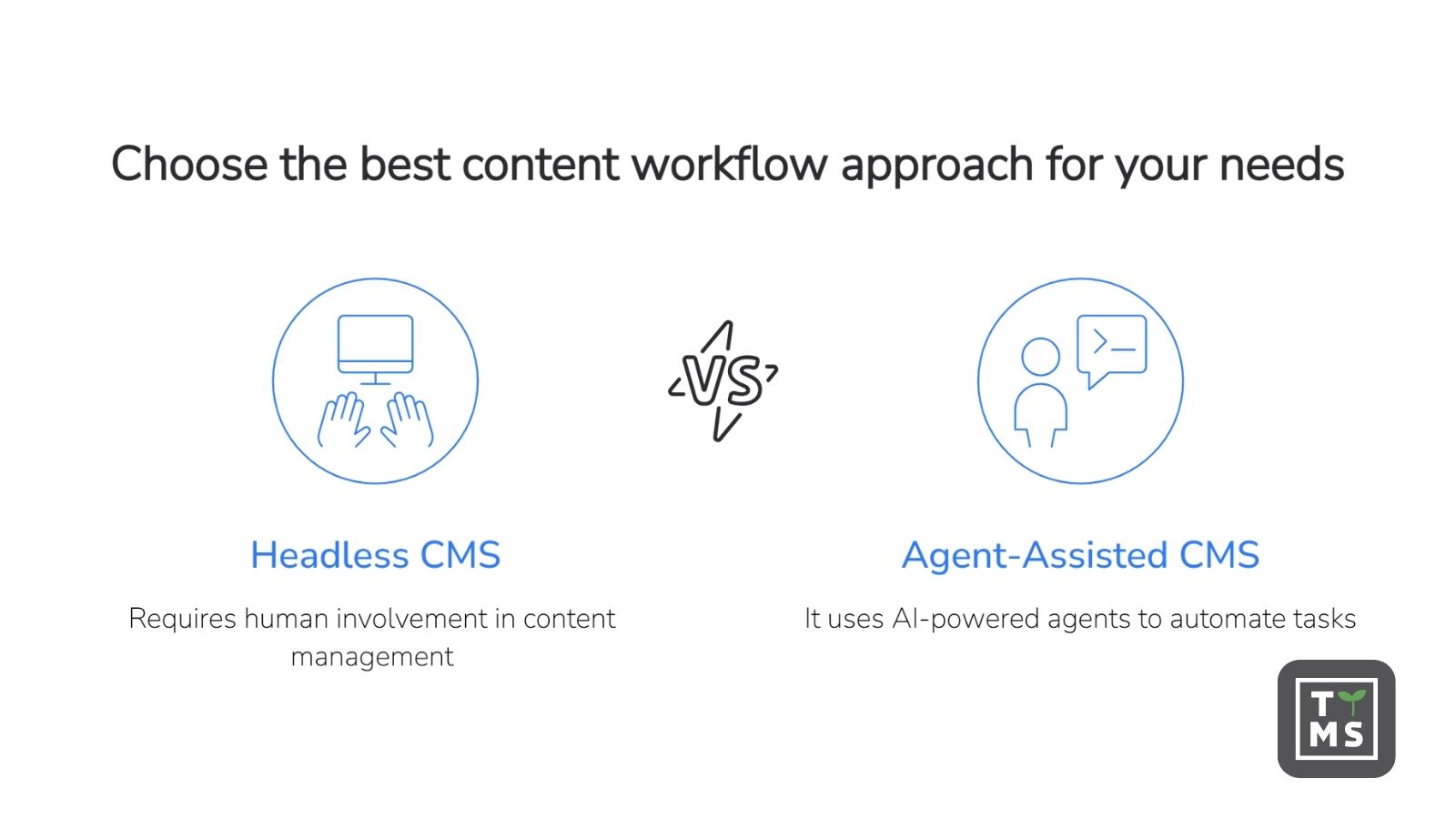
Headless CMS platforms helped separate content structure from presentation, making it easier to reuse content across websites, applications, and other digital experiences. However, headless architecture still relies on people to decide what content to create, how to adapt it, when to publish it, and how to coordinate work across teams.
Agent-assisted content workflows build on that foundation. Instead of only storing and delivering structured content, AI agents can help with tasks such as finding relevant assets, preparing channel-ready content variations, supporting content updates, and assisting with workflow execution. Structured content, metadata, permissions, and governance rules remain essential because they provide the framework within which agents can operate safely and usefully.
1.2 Integrated Agent Workflows vs. Isolated AI Features
There is an important difference between isolated AI features and integrated agent workflows. A standalone writing assistant or translation tool can help with a single task, but it may not understand the broader content model, workflow, permissions, brand rules, or delivery context.
2. The Risks of Fragmented AI Tools in Content Operations
Adding a standalone AI writing assistant, translation plugin, or LLM wrapper to an existing CMS can help with individual tasks, but it does not automatically create an agentic content workflow. The challenge appears when each tool works in isolation, with separate permissions, context, prompts, review processes, and monitoring.
In that setup, teams may still need to manually move content between systems, check whether generated outputs follow brand rules, and make sure the right people review the right materials before publication. Instead of reducing operational complexity, disconnected AI tools can add another layer of coordination for content, marketing, legal, and technical teams.
2.1 Security and Governance Risks of Fragmented AI Tools
When AI tools operate without a shared governance framework, organizations can lose visibility into how content is generated, adapted, reviewed, and approved. This can make it harder to maintain consistent permissions, content standards, audit trails, and human review across the content supply chain.
This is why governance matters in agentic content operations: AI-assisted work needs shared permissions, review steps, content standards, and auditability across the content supply chain.
2.2 The Integration Trap: Why Disconnected Agents Break Workflows
Disconnected agents can create workflow friction when they do not share the same content context. For example, a writing assistant may generate copy, a localization tool may adapt it, and an approval workflow may review it, but if these systems do not exchange context, people still need to coordinate the handoffs manually.
3. How Agents in AEM Support the Content Supply Chain
AI agents can support content operations by helping teams reduce repetitive manual work across discovery, optimization, adaptation, and workflow execution. In the AEM ecosystem, this direction is reflected in Agents in AEM, which Adobe describes as capabilities designed to automate tasks, streamline workflows, and help orchestrate changes in AEM as a Cloud Service and Edge Delivery Services.
The value is not full autonomy. The value is better coordination between people, content, assets, workflows, and delivery systems. Agents can help with specific tasks, while humans remain responsible for strategy, creative judgment, governance, and final approval.
3.1 Supporting the Content Supply Chain with Agent-Assisted Workflows
An agentic content supply chain is not only about generating text. It is about using AI agents to support different stages of content operations, such as finding relevant assets, refining content, creating channel-ready variations, preparing assets for specific digital channels, and helping teams execute repeatable workflow steps.
In AEM, the Content Advisor Agent is especially relevant here. Adobe describes it as helping users discover, refine, and adapt assets through natural language instructions. It can support discovery across Assets, Content Fragments, and Adaptive Forms, and it can help prepare channel-ready variations by generating renditions, adjusting visual properties, changing backgrounds, or preparing assets for specific digital channels.
3.2 Content Adaptation and Channel-Ready Variations
Instead of describing agentic CMS as fully automated personalization, it is safer to think about content adaptation. AI agents can help teams prepare content or assets for different channels, formats, and use cases, especially when the content foundation is already structured, governed, and supported by clear metadata.
This is where agentic workflows can reduce repetitive content work without removing human control. Teams can use AI-assisted capabilities to accelerate preparation and adaptation, while reviewers still validate quality, brand alignment, and business context before content is published or activated.
3.3 Human-in-the-Loop Workflows and Oversight
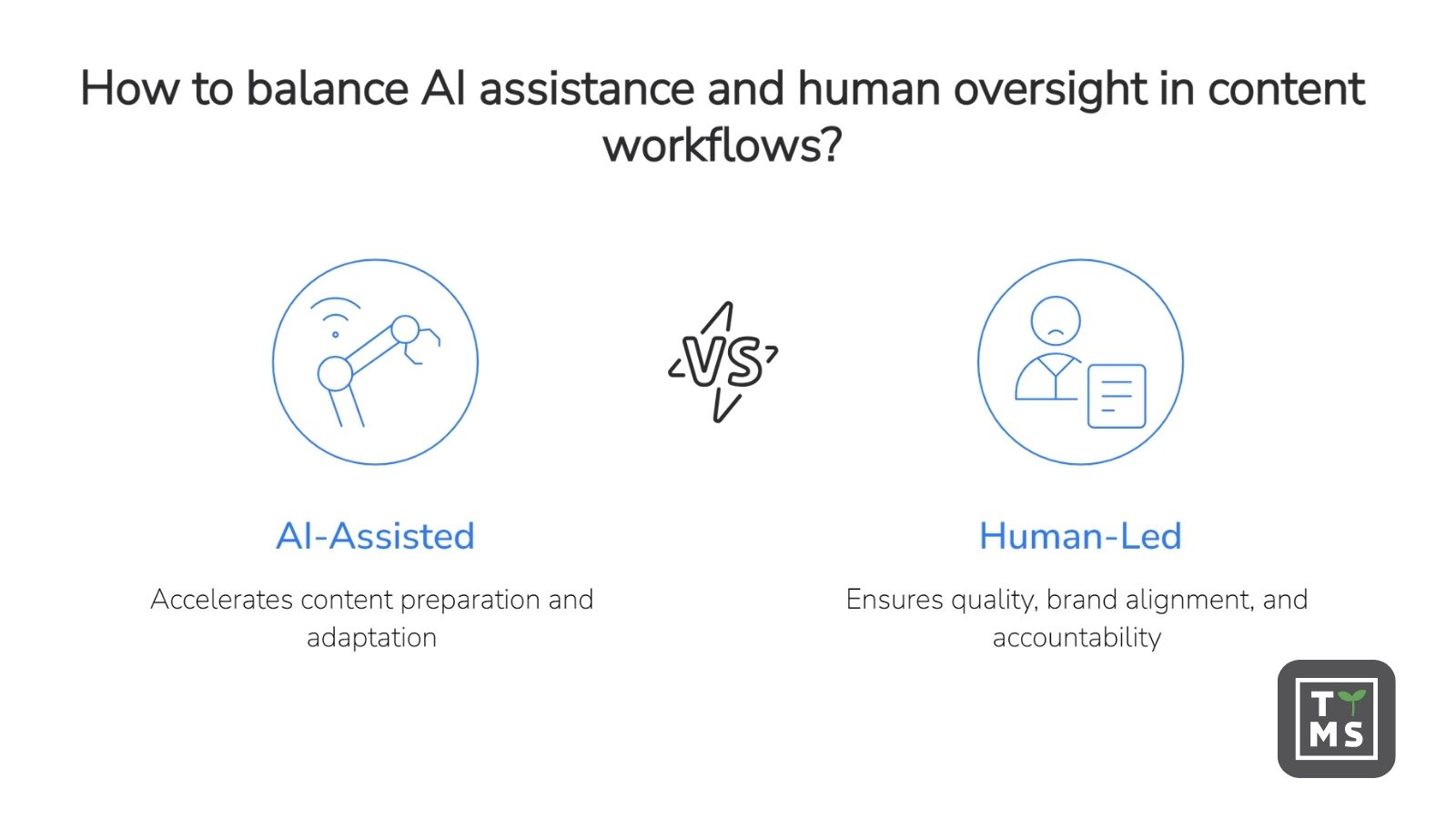
Agent-assisted workflows still need human oversight. Adobe’s agentic content supply chain framing emphasizes human-led, agent-accelerated systems, where agents support execution but people remain responsible for review, approvals, and governance.
In practice, this means AI agents can help with repetitive drafting, formatting, asset preparation, or routing tasks, while designated reviewers confirm whether the output is accurate, on brand, and ready for use. This balance helps teams reduce manual coordination while keeping decision-making and accountability clear.
4. Key Capabilities Behind Agentic CMS Workflows in AEM
Evaluating agentic CMS concepts requires looking beyond isolated AI features. The most important question is how well AI agents can work with content, assets, governance rules, permissions, and delivery workflows inside the broader content platform.
4.1 AI-Assisted Content Creation and Adaptation
Agentic CMS workflows should support more than one-off text generation. They should help users discover, refine, and adapt content or assets for specific needs while keeping people responsible for quality, context, and final decisions.
4.2 Governance, Guardrails, and Human Review
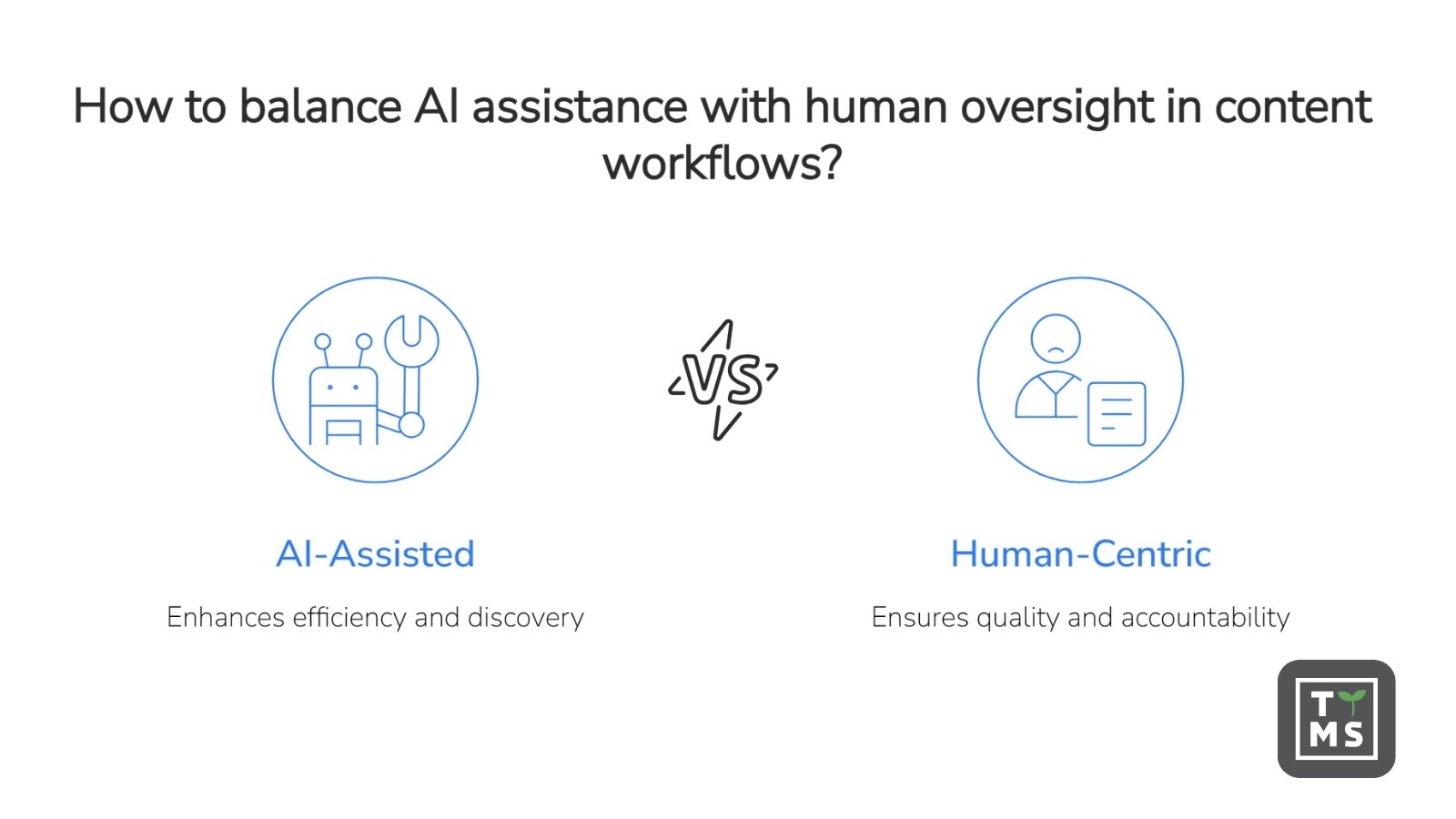
Agentic workflows need clear governance. AI agents should operate within defined permissions, metadata standards, brand guidelines, and review processes. This helps teams keep AI-assisted content work connected to the same governance model used for human-created content.
Strong guardrails can support consistency in tone, visual identity, asset usage, and workflow routing, but they should not remove human accountability. In enterprise environments, reviewers still need to validate accuracy, brand fit, legal context, and publishing readiness before content is activated.
4.3 Connected Architecture and Fast Delivery
Agentic CMS workflows work best when agents can operate within a connected content environment instead of sitting beside the CMS as isolated tools. This means they should be able to work with structured content, digital assets, workflows, permissions, and delivery systems in a coordinated way.
In AEM, this direction is reflected in Agents in AEM, AEM as a Cloud Service, and Edge Delivery Services. Together, these capabilities support a model where agents can assist with content operations while the platform continues to provide the structure, governance, and delivery foundation enterprise teams need.
5. How Adobe Experience Manager Supports Agentic Content Workflows
In the Adobe ecosystem, Agentic CMS is best understood through the capabilities Adobe is building into AEM, including Agents in AEM, AEM as a Cloud Service, Edge Delivery Services, and AI-assisted workflows for content discovery, optimization, modernization, and delivery.
5.1 Agents in AEM and AI-Assisted Content Operations
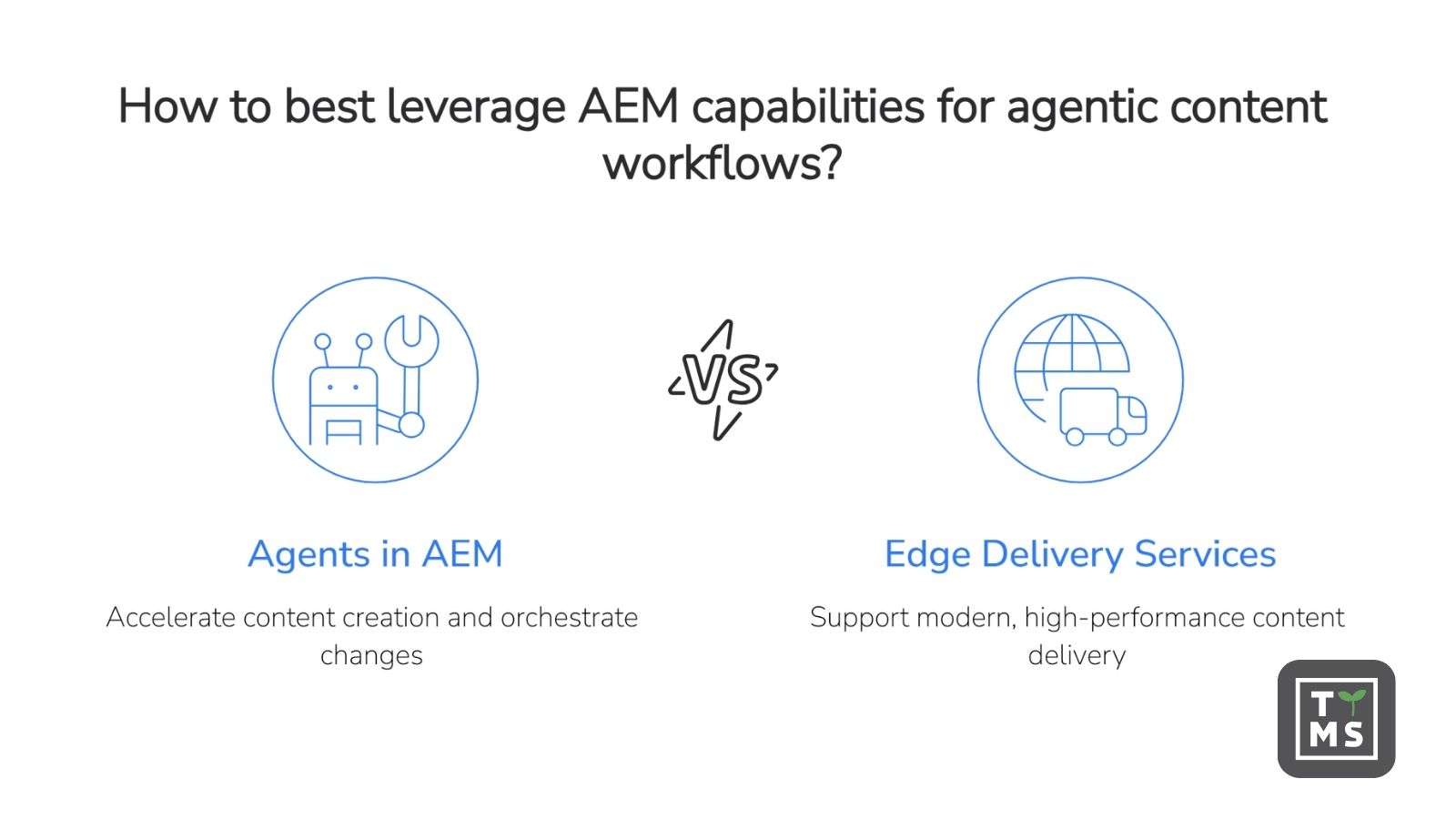
The most relevant AEM capabilities for agentic content workflows are Agents in AEM. Adobe describes these agents as capabilities available in AEM as a Cloud Service and Edge Delivery Services that can accelerate content creation and help orchestrate changes.
Alongside the Content Advisor Agent discussed earlier, Adobe also describes the Brand Experience Agent, which includes specialized agents for modernization, production, and development tasks. Together, these capabilities point toward agent-assisted content operations where AI supports execution while people guide strategy, quality, and approval.
5.2 Edge Delivery Services and Faster Content Delivery
Edge Delivery Services play a delivery role in the broader AEM environment where agentic workflows are becoming available. They support modern, high-performance content delivery patterns, while workflow orchestration depends on the specific agents, governance model, content structure, and review processes used in AEM.
6. How TTMS Can Help You Move Toward Agentic CMS Workflows
Moving toward agentic CMS workflows does not have to mean replacing your current content setup all at once. In the AEM ecosystem, a safer approach is to start with clear, well-governed use cases where AI agents can support repetitive content tasks while people remain responsible for strategy, quality, and approval.
This is where we can help. We support organizations in assessing where Agents in AEM, AEM as a Cloud Service, Edge Delivery Services, structured content, metadata, and governance can work together to improve content operations. Adobe describes Agents in AEM as capabilities that can automate tasks, streamline workflows, and help orchestrate changes in AEM environments.
If your team is exploring Agentic CMS in the context of AEM, we can help you define the right starting point, prepare the governance model, and build a practical roadmap for human-led, agent-assisted content workflows. Contact us now.
7. Frequently Asked Questions About Agentic CMS
What’s the difference between an agentic CMS and a traditional headless CMS?
A headless CMS separates content from presentation, while an agentic CMS concept adds AI agents that can support content tasks such as discovery, optimization, adaptation, and workflow execution. In the AEM ecosystem, this idea is reflected in Agents in AEM, which Adobe describes as capabilities that help automate tasks and streamline workflows in AEM as a Cloud Service and Edge Delivery Services.
Is agentic CMS the same as agentic AI?
No. Agentic AI is a broader concept referring to AI agents that can help plan and execute tasks. Agentic CMS applies that idea specifically to content operations, where agents support content workflows, assets, governance, and delivery processes.
How does an agentic CMS improve content governance?
Agentic CMS workflows can support governance by keeping AI-assisted tasks connected to permissions, metadata, review steps, and approval processes. Adobe’s agentic content supply chain framing emphasizes human-led, agent-accelerated workflows, so people remain responsible for oversight and final decisions.
Can smaller organizations benefit from agentic CMS, or is it only for large enterprises?
Yes, but the value depends on content complexity, governance needs, and workflow maturity. Smaller teams can start with focused use cases, such as asset discovery, content updates, or channel-ready variations, before expanding agent-assisted workflows more broadly.
How does AEM support agentic content workflows?
AEM supports this direction through Agents in AEM, AEM as a Cloud Service, Edge Delivery Services, and AI-assisted workflows for content discovery, optimization, modernization, and delivery. Adobe describes agents such as the Content Advisor Agent and Brand Experience Agent as capabilities that help users discover, refine, adapt, and update content while keeping human oversight in place.