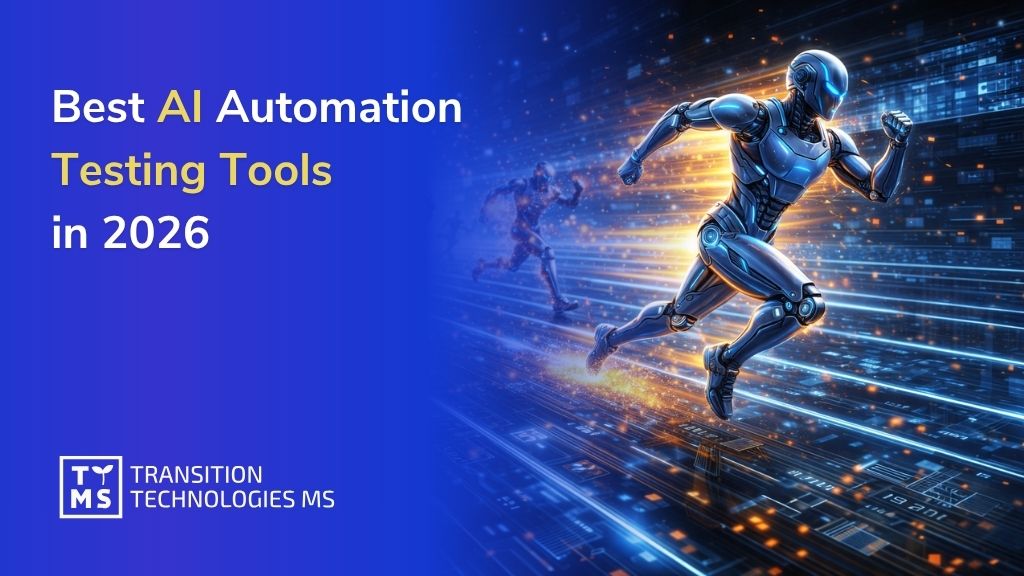
Artificial intelligence is revolutionizing software testing in 2026. QA teams are now leveraging AI to accelerate test creation, improve accuracy, and reduce the drudgery of maintenance. Imagine releasing software with confidence, knowing an AI co-pilot has already caught critical bugs and optimized your test coverage. From intelligent test management systems that write test cases for you, to smart automation platforms that self-heal tests, AI-powered tools are rapidly becoming essential for any business that demands quality at speed.
Below we rank and describe ten of the best AI-based software testing tools used globally in 2026. These cutting-edge solutions—ranging from AI-driven test management tools to autonomous test automation platforms—help organizations deliver reliable software faster. Let’s explore how each tool can make testing smarter and more efficient.
1. TTMS QATANA – AI-Powered Test Management Tool
TTMS QATANA is an AI-driven software test management system built by testers for testers. This platform streamlines the entire test lifecycle by using AI to assist in test case creation, planning, and maintenance. For example, QATANA can draft test cases and select regression suites automatically from requirements or release notes, cutting down test design time (TTMS reports up to a 30% reduction in QA effort with its AI features). It provides full visibility into both manual and automated tests in one unified hub, bridging the gap between traditional and automated QA workflows. Key features like intelligent test case generation, real-time dashboards, and seamless integrations (with tools like Jira and Playwright) make it a comprehensive software testing solution for enterprises. QATANA also offers secure on-premise deployment options and audit-ready logs, so organizations in regulated industries can maintain compliance while accelerating their testing cycles.
| Product Name | TTMS QATANA |
|---|---|
| Pricing | Enterprise licensing (contact TTMS for pricing) |
| Key Features | AI-assisted test case generation; Full test lifecycle management; Hybrid manual & automated workflows; Real-time reporting dashboards; On-premise deployment option |
| Primary Testing Use Case(s) | Test management and planning for manual and automated testing in large organizations |
| Headquarters Location | Warsaw, Poland |
| Website | TTMS QATANA product page |
2. Applitools – Visual AI Testing Platform
Applitools is a leading AI-powered visual testing tool renowned for its sophisticated computer vision algorithms. It uses Visual AI to automatically detect UI anomalies and regressions across different browsers, devices, and screen variations. Applitools’ core engine (called Eyes) mimics human vision, spotting pixel-level differences and visual bugs that traditional scripts often miss—drastically reducing false negatives and manual checks. QA teams integrate Applitools into their existing test frameworks (Selenium, Cypress, etc.), allowing them to add visual validation steps easily. By offloading visual regression testing to AI, businesses ensure a consistent user interface and UX without slowing down release cycles.
| Product Name | Applitools Eyes |
|---|---|
| Pricing | Subscription (free trial & free plan available; enterprise plans for high volume) |
| Key Features | Visual UI comparison with AI; Cross-browser and cross-device testing; Automated screenshot analysis; Seamless integration with test frameworks |
| Primary Testing Use Case(s) | Visual regression testing and UI/UX validation across web and mobile applications |
| Headquarters Location | California, USA |
| Website | applitools.com |
3. Mabl – Intelligent Test Automation for CI/CD
Mabl is an AI-driven test automation solution designed for Agile and DevOps teams. This cloud-based platform offers a low-code interface for creating functional tests, coupled with machine learning to automatically maintain and improve those tests over time. Mabl’s intelligent auto-healing capability means tests adapt to minor UI changes, significantly reducing flaky tests and maintenance efforts. It also provides features like visual anomaly detection and performance insights, alerting testers to issues like layout changes or slow page loads. Integrated directly into CI/CD pipelines, Mabl enables continuous testing by running smart, reliable test suites on every deployment—helping businesses catch issues early and deliver quality software faster.
| Product Name | Mabl |
|---|---|
| Pricing | Tiered subscription plans (free trial available) |
| Key Features | Low-code test creation; Auto-healing test scripts; Anomaly detection (performance & visual); Native CI/CD integration |
| Primary Testing Use Case(s) | Regression and continuous testing for web applications in Agile/DevOps workflows |
| Headquarters Location | Boston, Massachusetts, USA |
| Website | mabl.com |
4. Katalon Studio – All-in-One Platform with AI
Katalon Studio is a popular all-in-one test automation platform that has incorporated AI to boost testing efficiency. It supports web, mobile, API, and desktop testing in a unified environment, offering both codeless test creation (via record-and-playback or keyword-driven approach) and script extensions for advanced users. Katalon’s AI features include self-healing locators that automatically update broken object references and smart suggestions for improving test cases. These capabilities help teams reduce maintenance as their applications evolve. With comprehensive built-in keywords and an intuitive interface, Katalon Studio enables organizations to implement functional and regression testing quickly, making it a versatile software testing solution for teams of all sizes.
| Product Name | Katalon Studio |
|---|---|
| Pricing | Freemium (community edition free; enterprise license for full features) |
| Key Features | Record-and-playback test creation; Built-in keyword library; Self-healing locators; API and mobile testing support |
| Primary Testing Use Case(s) | Functional test automation (web, API, mobile) with minimal coding required |
| Headquarters Location | Atlanta, Georgia, USA |
| Website | katalon.com |
5. Testim – AI-Powered Test Automation by Tricentis
Testim uses machine learning to simplify end-to-end UI testing. Now part of Tricentis, Testim offers a hybrid approach to test creation: testers can write scripts or use a codeless recorder, while the platform’s AI handles the heavy lifting of element identification. Its ML-based smart locators automatically recognize and update UI elements, making automated tests much more resilient to UI changes. Testim also provides a self-healing mechanism to reduce flaky tests, meaning when the application’s UI updates, tests often adjust themselves without manual intervention. Teams adopting Testim are able to author tests rapidly and trust that those tests will remain stable over time, which accelerates release cycles and cuts maintenance costs.
| Product Name | Tricentis Testim |
|---|---|
| Pricing | Free trial available; enterprise subscriptions via Tricentis |
| Key Features | AI-driven element locators; Record or code test creation; Self-healing test scripts; Integration with CI tools |
| Primary Testing Use Case(s) | End-to-end web application testing with intelligent maintenance (reducing flaky tests) |
| Headquarters Location | Austin, Texas, USA (Tricentis) |
| Website | testim.io |
6. ACCELQ – Codeless Automation with AI
ACCELQ is a codeless test automation platform that leverages AI for faster test design and maintenance. It allows testers to author test cases in plain English, automatically generating executable tests without coding. ACCELQ’s AI engine can also suggest and create test scenarios directly from requirements or user stories, ensuring that critical user paths are covered. With self-healing automation, the platform dynamically updates tests when application elements change, reducing the upkeep typically associated with automation. ACCELQ supports web, API, and even legacy system testing in one tool, enabling continuous testing in Agile environments. For businesses, this means quicker test cycles and more reliable automation that scales with development pace.
| Product Name | ACCELQ |
|---|---|
| Pricing | Subscription (custom plans; free trial on request) |
| Key Features | Natural language test authoring; AI-generated test cases; Self-healing test scripts; Unified web & API testing |
| Primary Testing Use Case(s) | Continuous test automation in Agile/DevOps (web and API) with minimal coding |
| Headquarters Location | Dallas, Texas, USA |
| Website | accelq.com |
7. Functionize – Autonomous Testing with NLP
Functionize is an AI-powered testing platform that uses advanced machine learning and NLP (Natural Language Processing) to create and execute tests. Testers can describe scenarios in plain English, and Functionize’s cloud-based system interprets the steps and turns them into automated tests. The platform’s adaptive learning means it observes application behavior over time—if the UI or flow changes, Functionize can adjust the test steps automatically, which significantly lowers maintenance effort. It also provides rich analytics and failure diagnostics powered by AI, helping teams pinpoint root causes quickly. As an enterprise-grade software testing solution, Functionize enables QA teams to automate complex end-to-end tests without writing code, accelerating testing cycles while maintaining quality.
| Product Name | Functionize |
|---|---|
| Pricing | Enterprise pricing (custom quotes; free demo available) |
| Key Features | NLP-based test creation; ML-driven self maintenance; Cloud execution at scale; Detailed AI analytics for failures |
| Primary Testing Use Case(s) | Autonomous web application testing and complex workflow automation with minimal coding |
| Headquarters Location | San Francisco, California, USA |
| Website | functionize.com |
8. LambdaTest – AI-Assisted Cross-Browser Testing
LambdaTest is a cloud-based test platform known for its extensive browser and device coverage, now augmented with AI capabilities. In 2026, LambdaTest introduced “Kane AI,” an intelligent assistant that helps generate and execute tests using natural language. This means testers can ask the platform to create tests for specific user journeys, and the AI will produce the necessary scripts to run across multiple browsers automatically. LambdaTest’s infrastructure provides on-demand access to real browsers and mobile devices, and the AI co-pilot optimizes test execution by identifying likely failure points. By combining a robust cross-browser testing cloud with AI-driven test generation and self-healing, LambdaTest empowers teams to ensure compatibility and quality with less manual effort.
| Product Name | LambdaTest (with Kane AI) |
|---|---|
| Pricing | Freemium model (free tier available; paid plans for advanced features) |
| Key Features | Cloud-based browser/device lab; AI-generated test scripts; Smart test execution & debugging; CI/CD integration |
| Primary Testing Use Case(s) | Cross-browser compatibility testing with intelligent test creation and maintenance |
| Headquarters Location | San Francisco, California, USA |
| Website | lambdatest.com |
9. Testsigma – Open-Source AI Test Automation
Testsigma is an open-source test automation platform that integrates AI to make test creation and maintenance easier. It enables testers to write test steps in simple English syntax, which the platform then automatically converts into executable scripts for web, mobile, or API testing. Testsigma’s AI features include self-healing of tests (auto-updating locators when the UI changes) and suggestions for next possible test steps, helping expand coverage. Because it’s open-source (with a cloud offering also available), it has a growing community and is cost-effective—appealing to teams with limited budgets who still want advanced capabilities. Testsigma is ideal for organizations looking for a software testing solution that combines the flexibility of open-source with the convenience of AI-driven automation.
| Product Name | Testsigma |
|---|---|
| Pricing | Open-source (free); Cloud SaaS plans for enterprise support |
| Key Features | Plain English test case design; Web, mobile & API testing; AI-based auto-healing; Community-driven extensions |
| Primary Testing Use Case(s) | Automated regression testing across web/mobile/API with minimal scripting, especially for smaller teams |
| Headquarters Location | San Francisco, California, USA |
| Website | testsigma.com |
10. testRigor – Generative AI for End-to-End Testing
testRigor is a next-generation test automation tool that uses generative AI to create and maintain tests from plain English descriptions. Testers can simply describe a user flow (e.g., “Login, add an item to cart, and checkout”) and testRigor’s engine will automatically generate an executable end-to-end test for web or mobile apps. This platform is designed to minimize coding altogether—its AI understands high-level intents and handles the technical details behind the scenes. Test scripts created with testRigor are highly adaptive: if the application’s UI changes, the built-in self-healing AI adjusts the steps as needed, greatly reducing manual updates. By turning manual test scenarios into automated ones quickly, testRigor helps organizations dramatically expand test coverage and catch bugs with less effort, all while empowering non-technical team members to contribute to automation.
| Product Name | testRigor |
|---|---|
| Pricing | Freemium (community free tier with limitations); Business plans starting at enterprise-level pricing |
| Key Features | Generative AI test creation from English; Self-healing test execution; End-to-end web & mobile testing; No-code automation approach |
| Primary Testing Use Case(s) | Automating complex end-to-end scenarios and user journeys without coding, using AI to handle the details |
| Headquarters Location | San Francisco, California, USA |
| Website | testrigor.com |
Ready to Embrace AI in Your Testing?
The rise of AI in software testing is enabling QA teams to do more in less time, from smarter test management to self-maintaining test suites. Adopting the right AI tool can significantly boost your product quality and delivery speed. If you’re eager to experience these benefits firsthand, consider trying TTMS’s AI-powered software testing solution. With TTMS QATANA, you get a state-of-the-art test management tool that brings together AI-driven efficiency and robust quality management. Don’t get left behind in the AI testing revolution – empower your team with the tools that can transform your QA process today. Contact us!
How does AI improve the accuracy of software testing compared to traditional methods?
AI improves testing accuracy by analyzing large volumes of data and identifying patterns that human testers may overlook. Machine learning models can detect anomalies, predict risks, and highlight unstable areas of the application earlier in the development cycle. AI also reduces human error by automating repetitive tasks and ensuring consistent execution across test runs. Over time, as the AI learns from historical results, its predictions and prioritizations become even more accurate, helping teams catch defects earlier and improve overall product quality.
Can AI-based test automation fully replace manual testing in 2026?
Although AI dramatically accelerates automation, it does not eliminate the need for manual testing entirely. Exploratory testing, usability evaluation, and areas requiring human judgment still depend on skilled QA professionals. AI shines in repetitive, data-heavy, and regression-focused scenarios where it can generate, execute, and maintain tests faster than humans. In 2026, the most effective QA strategies combine AI-driven automation with human insight, enabling teams to achieve both high efficiency and meaningful quality validation.
What skills do testers need to work effectively with AI-powered testing tools?
Modern testers do not need to become full-time data scientists, but they do benefit from understanding how AI-powered tools operate. Skills such as interpreting AI-generated insights, defining high-quality test scenarios, and understanding automation principles help testers use these tools effectively. Familiarity with CI/CD pipelines, APIs, and version control also enhances collaboration with AI systems. Ultimately, testers who can combine domain knowledge with AI-assisted workflows gain a significant competitive advantage in 2026.
How can organizations measure the ROI of implementing an AI testing solution?
Measuring ROI begins with tracking improvements in test coverage, execution speed, defect detection rate, and reduction in maintenance efforts. AI systems often reduce the number of flaky tests and accelerate regression cycles, allowing teams to release faster and with fewer incidents. Organizations should also evaluate indirect benefits, such as improved morale among testers who can shift from repetitive tasks to higher-value activities. Over several releases, companies typically observe significant efficiency gains that justify the investment in AI technologies.