

Home •Blog
TTMS Blog
TTMS experts about the IT world, the latest technologies and the solutions we implement.
Sort by topics
Search results for the term: “TEAMS”
AI Security Risks Explained: What You Need to Know in 2025
In an era where artificial intelligence reshapes our digital landscape, the security implications are becoming increasingly critical. With AI-powered cyberattacks projected to surge by 50% in 2024 compared to 2021, organizations face unprecedented challenges in protecting their digital assets. As the AI security market races toward a staggering $60.24 billion by 2029, understanding and addressing AI security risks isn’t just important—it’s imperative for survival in our tech-driven world. 1. AI Security Risks in 2025: A Practical Overview The cybersecurity landscape is undergoing a dramatic transformation as we approach 2025. According to recent studies, 93% of security leaders expect their organizations to face daily AI-driven attacks by 2025. This stark reality demands immediate attention and strategic preparation from businesses of all sizes to protect their digital infrastructure against increasingly sophisticated threats. 1.1 Artificial Intelligence Security Concerns: Opportunities and Risks Artificial intelligence presents a double-edged sword in the cybersecurity realm. On the defensive side, AI systems excel at detecting patterns in vast datasets, identifying potential threats before they materialize, and automating security responses at speeds impossible for human analysts. The market growth, projected at a CAGR of 19.02% between 2024-2029, reflects the increasing adoption of AI-powered security solutions. However, this technological advancement comes with inherent vulnerabilities. While AI strengthens our defense mechanisms, it also introduces new attack vectors that malicious actors can exploit. The complexity of AI systems makes them susceptible to data poisoning, where attackers can manipulate the training data to compromise the AI’s decision-making process. The challenge lies in balancing AI’s transformative potential with its security implications. Organizations must navigate this landscape carefully, implementing robust security frameworks while leveraging AI’s capabilities. This delicate balance requires a deep understanding of both the opportunities and risks associated with AI integration in security systems. 2. Key Security Risks of Artificial Intelligence The security risks of artificial intelligence represent a growing concern across industries. As AI systems become more sophisticated, the potential vulnerabilities and threats multiply, creating complex challenges for organizations implementing these technologies. 2.1 AI-Driven Cyberattacks Among the most pressing AI security risks, AI-powered cyberattacks stand out for their sophistication and scale. These attacks leverage machine learning algorithms to bypass traditional security measures with unprecedented precision. Cybercriminals are now using AI to automate attacks, making them more efficient and harder to detect. The ability of AI systems to learn and adapt means that attack patterns can evolve in real-time, presenting a significant challenge for conventional security measures. 2.2 Manipulating AI: Adversarial Attacks and Data Poisoning One of the critical security risks of AI involves the manipulation of AI systems through adversarial attacks and data poisoning. Attackers can subtly alter input data to confuse AI models, causing them to make incorrect decisions. For instance, slight modifications to traffic signs could mislead autonomous vehicles, while corrupted training data might compromise facial recognition systems. These attacks are particularly concerning because they can be difficult to detect until significant damage has occurred. 2.3 Prototype Theft and Unauthorized Use The theft of AI model prototypes represents another significant artificial intelligence security risk. Sophisticated attackers can reverse-engineer AI models to steal intellectual property or identify vulnerabilities. This not only compromises competitive advantages but also enables malicious actors to create unauthorized copies of proprietary AI systems, potentially bypassing built-in safety measures. 2.4 Using an Unauthorized Language Model to Develop Software The deployment of unauthorized language models in software development introduces substantial security risks of artificial intelligence. When developers use unverified or compromised AI models, they risk incorporating vulnerabilities or backdoors into their applications. These security gaps can remain undetected for extended periods, creating potential entry points for cyberattacks. 2.5 Ethical and Privacy Challenges AI systems often process vast amounts of sensitive data, raising significant privacy concerns. The AI security risk extends beyond technical vulnerabilities to include ethical considerations about data handling and user privacy. Organizations must carefully balance the benefits of AI implementation with the need to protect individual privacy rights and maintain ethical standards. 2.6 Transparency Issues in AI Models The “black box” nature of many AI systems presents a unique security risk of ai. When organizations can’t fully understand how their AI makes decisions, it becomes challenging to identify potential vulnerabilities or biases. This lack of transparency can lead to undetected security breaches or discriminatory outcomes, making it crucial for organizations to implement explainable AI practices. 2.7 AI-Generated Deepfakes and Misinformation Perhaps one of the most visible security risks of artificial intelligence is the creation of sophisticated deepfakes and misinformation. AI-powered tools can generate increasingly convincing fake content, from manipulated videos to synthetic voice recordings. This capability poses serious threats to information security, reputation management, and social stability, requiring robust detection mechanisms and verification protocols. 3. Strengthening AI Security: Solutions and Best Practices As organizations increasingly adopt AI technologies, implementing robust security measures becomes crucial. Understanding how to leverage AI for cybersecurity while protecting against potential threats requires a comprehensive approach combining technical controls, verification processes, and regular assessments. 3.1 Improving Model Security and Access Controls The foundation of strong AI security lies in implementing robust model protection and access controls. Organizations must establish multi-layered security protocols that include encryption of model parameters, secure API endpoints, and granular access permissions. By implementing role-based access control (RBAC) and monitoring systems, companies can track who interacts with AI models and detect potential security breaches early. 3.2 Verification of artificial intelligence models used in the company and by suppliers The AI impact on cybersecurity extends beyond internal systems to include third-party AI models and services. Organizations should establish rigorous verification processes for all AI models, whether developed in-house or provided by suppliers. This includes conducting thorough security assessments, reviewing model documentation, and ensuring compliance with security standards. Regular validation of model behavior helps identify potential vulnerabilities or unauthorized modifications. 3.3 Using AI for Threat Detection and Prevention Using AI for cybersecurity represents a powerful approach to protecting digital assets. Advanced AI systems can analyze vast amounts of data in real-time, identifying patterns and anomalies that might indicate security threats. These systems can: Monitor network traffic for suspicious activities Detect and respond to potential security breaches automatically Predict and prevent future security incidents based on historical data Enhance traditional security measures with AI-powered insights 3.4 Conducting Regular Security Audits and Incident Response Drills The relationship between generative AI and cybersecurity necessitates regular security assessments and preparedness testing. Organizations should implement: Scheduled security audits to evaluate AI system vulnerabilities Regular penetration testing to identify potential security gaps Incident response drills that simulate various AI-related security scenarios Documentation and review of security incidents for continuous improvement These practices ensure that security measures remain effective and that teams are prepared to respond to emerging threats in the rapidly evolving landscape of AI security. 4. The Future of AI and Cybersecurity The evolving landscape of artificial intelligence is reshaping cybersecurity practices, presenting both unprecedented challenges and innovative solutions. As we look toward the future, understanding the intersection of these technologies becomes crucial for organizational security. 4.1 Generative AI: Risks and Opportunities The security risks of generative AI are becoming increasingly complex as these technologies advance. While generative AI offers powerful capabilities for creating content and automating processes, it also introduces significant vulnerabilities. Organizations face challenges such as: AI-powered social engineering attacks becoming more sophisticated and harder to detect Automated creation of convincing phishing emails and malicious code Generation of deepfakes for corporate espionage or reputation damage However, the AI impact on cybersecurity isn’t entirely negative. Generative AI also provides valuable defensive capabilities: Enhanced threat detection through pattern recognition Automated response to emerging security threats Creation of more robust security protocols and testing scenarios 4.2 Preparing for AI Security Challenges Ahead As AI cybersecurity threats continue to evolve, organizations must adopt forward-thinking strategies to stay protected. The relationship between generative AI and cybersecurity requires a multi-faceted approach to future preparedness: Investment in Advanced Security Infrastructure Implementing AI-powered security tools Developing robust incident response capabilities Creating adaptive security frameworks that evolve with threats Workforce Development Training security teams in AI-specific threat detection Building expertise in AI security assessment Fostering collaboration between AI developers and security professionals Risk Management Strategies Regular assessment of emerging generative AI risks Development of AI-specific security policies Creation of incident response plans tailored to AI-related threats The future demands a balanced approach that leverages AI’s benefits while maintaining strong defenses against its potential misuse. Organizations that prepare now for tomorrow’s challenges will be better positioned to protect their assets and maintain security in an AI-driven world. 5. How TTMS Can Help Minimize Security Risks of Artificial Intelligence In today’s rapidly evolving technological landscape, organizations need expert guidance to navigate the complex world of AI security. TTMS stands at the forefront of AI security solutions, offering comprehensive services designed to protect your AI investments and digital assets. Our approach combines deep technical expertise with practical implementation strategies. TTMS provides: Comprehensive AI Security Assessments Thorough evaluation of existing AI systems Identification of potential vulnerabilities Custom-tailored security recommendations Risk analysis and mitigation strategies Advanced Protection Solutions Implementation of robust security frameworks Development of secure AI model architectures Integration of cutting-edge security protocols Regular security updates and maintenance Expert Consultation Services Guidance on AI security best practices Strategic planning for AI implementation Compliance and regulatory advisory Ongoing technical support Training and Development Custom security awareness programs Technical training for IT teams Best practices workshops Regular updates on emerging threats By partnering with TTMS, organizations gain access to industry-leading expertise and proven methodologies for securing their AI systems. Our commitment to staying ahead of emerging threats ensures that your AI investments remain protected in an ever-changing security landscape. Contact us today to learn how we can help strengthen your AI security posture and protect your organization’s valuable assets. Check our AI related Case Studies: AI-Driven SEO Meta Optimization in AEM: Stäubli Case Study Global Coaching Transformation at BVB with Coachbetter App Case Study – AI Implementation for Court Document Analysis Using AI in Corporate Training Development: Case Study Pharma AI – Implementation Case Study at Takeda Pharma What are the security risks of using AI? The security risks of AI encompass various critical vulnerabilities that organizations must address. These include: Data breaches through compromised AI systems Model manipulation through adversarial attacks Privacy violations during data processing Unauthorized access to AI models Biased decision-making due to flawed training data Each of these risks requires specific security measures and ongoing monitoring to ensure AI systems remain secure and reliable. What are the top AI threats in cybersecurity? Current AI cybersecurity threats are becoming increasingly sophisticated. The most significant include: AI-powered phishing attacks that can mimic human behavior Automated hacking attempts using machine learning Deepfake creation for social engineering Data poisoning attacks targeting AI training sets Model extraction and intellectual property theft These AI security threats require organizations to implement robust defense mechanisms and maintain constant vigilance. What are 3 dangers of AI? The three most critical security risks of AI that organizations need to address are: Advanced Cyber Attacks: AI-powered tools can automate and enhance traditional attack methods Privacy Breaches: AI systems may inadvertently expose sensitive data through processing or storage System Manipulation: Adversaries can compromise AI models through targeted attacks and data poisoning What is the biggest risk from AI? The most significant AI security risk lies in adversarial attacks that can manipulate AI systems into making incorrect decisions. These attacks are particularly dangerous because: They can be difficult to detect They exploit fundamental vulnerabilities in AI algorithms They can cause widespread damage before being discovered They often require complex solutions to address What are the risks of relying too much on AI? Over-dependence on AI systems presents several security risk of AI concerns: Reduced human oversight leading to missed security threats Increased vulnerability to AI-specific attack vectors Potential for systematic errors due to AI biases Difficulty in detecting subtle security breaches Challenge in maintaining control over complex AI systems Organizations must maintain a balanced approach, combining AI capabilities with human expertise to ensure robust security measures.
Read
Pharma Cloud Security: Balancing Innovation and Compliance
Almost daily, headlines report on data breaches. The pharmaceutical industry faces a critical challenge – finding the balance between innovation and security. The stakes are high – the healthcare cloud security market is set to hit $27.40 billion by 2030. For pharma companies, securing data in the cloud isn’t just another IT task – it’s essential for business survival. As cyber threats get more sophisticated and regulations tighter, getting cloud security right has become more important than ever. 1. Importance of Secure Cloud Solutions for Pharma The pharma industry’s shift to digital has made cloud computing essential for handling massive amounts of sensitive information. From clinical trials to drug formulas, the industry deals with data that needs top-level protection. The rapid growth of the healthcare cloud security market – expanding at 15.8% CAGR – shows just how seriously pharma companies are taking security. Cloud computing does more than just store data – it powers innovation and makes operations more efficient. With secure cloud solutions, pharma companies can speed up their research while staying compliant with regulations. Teams across the globe can work together in real-time, knowing their valuable intellectual property is safe. The risks in pharma cloud security are enormous. A single breach can do more than just hurt finances – it can expose patient information, slow down drug development, and damage trust in a company. That’s why pharma security needs to go beyond basic defenses and embrace complete cloud security strategies. Today’s cloud solutions help pharma companies grow while keeping tight security. Finding this sweet spot between easy access and strong protection is key to staying competitive in an industry where both speed and data safety matter. With secure cloud computing, pharma organizations can focus on creating life-saving medications while knowing their data is well-protected. 2. Key Challenges in Pharma Cloud Security As pharma companies rely more on cloud technologies, they face several key security challenges that need smart solutions. 2.1 Data Breach Risks and Larger Attack Surface The move to digital has created more ways for cybercriminals to attack pharma companies. Every new connected device – from research tablets to manufacturing sensors – could be a potential weak point. These devices handle sensitive information like research data and patient records, making them tempting targets. And since everything’s connected in cloud systems, one breach could put the entire network at risk. 2.2 Regulatory Compliance and Legal Concerns Following complex regulations is a major challenge for pharma security. Companies need to make sure their cloud systems follow rules like GDPR, HIPAA, and GxP guidelines. This gets even trickier when working across different countries with different rules. The consequences of breaking these rules in pharma are severe, with heavy fines and reputation damage. Cloud security needs to track everything, keep data intact, and document all security measures – while still letting the right people do their jobs. 2.3 Cyber Skill Gaps and Insider Threats Finding people who understand both cloud security and pharma requirements is tough. This global shortage of security experts leaves companies vulnerable to sophisticated attacks. Threats from inside the company are just as concerning. Whether by accident or on purpose, employees can put sensitive data at risk. The challenge is protecting against these internal risks while keeping work flowing smoothly. 2.3 Legacy System Integration and IT/OT Convergence Many pharma companies still use older systems that weren’t built with modern cloud security in mind. Making these systems work with new cloud technologies can create security gaps. As manufacturing becomes more digital, getting traditional IT systems to work safely with operational technology is crucial. This integration needs careful management to prevent breaches while keeping production running smoothly and data accurate. 3. Strategies for Improving Cloud Security in Pharmaceuticals To protect sensitive data while enabling growth and innovation, pharma companies need strong security strategies. 3.1 Implementing Robust Authentication and Access Controls Strong login security is the first defense in protecting pharma data. Using multi-factor authentication (MFA) for all cloud services ensures only authorized people can access sensitive information. Role-based access control (RBAC) adds another layer by limiting what each person can do based on their job needs. Good identity management makes security tight while keeping it user-friendly. Regular checks of who has access and quickly removing access for people who leave help prevent unauthorized use. 3.2 Leveraging Advanced Encryption Techniques Encryption is crucial for pharma cloud security, protecting data whether it’s moving or stored. End-to-end encryption keeps sensitive information safe throughout its journey. Using strong encryption for sending and storing data, plus careful management of encryption keys, is essential. New techniques like homomorphic encryption let pharma companies work with sensitive data in the cloud while keeping it encrypted. This breakthrough helps teams work together safely without exposing confidential information. 3.3 Regular Security Audits and Compliance Assessments Keeping security strong means constantly checking and testing. Regular security audits catch potential problems before they become real threats. These checks should look at everything – from who has access to how data is handled. Automated tools that track compliance help catch issues quickly. This proactive approach helps companies fix problems fast and keep all the documentation they need for inspections. 3.4 Developing an Incident Response Plan Having a solid plan for security breaches helps minimize their impact. This plan should clearly spell out how to spot, respond to, and recover from security incidents. Regular testing keeps the plan effective. The plan needs clear communication rules – who to tell and when. This includes people inside the company, regulators, and sometimes the public. Having these steps ready helps maintain trust while handling security problems efficiently. 3.5 Integrating AI and Machine Learning for Threat Detection AI and machine learning are changing how pharma cloud security works by enabling smarter threat detection and prevention. These systems can spot patterns in huge amounts of data that might signal security threats, leading to faster responses. AI-powered security tools can automatically adjust protections based on real-time threats, providing dynamic defense against evolving cyber attacks. Machine learning can even predict and prevent potential security incidents before they happen. 4. Best Practices and Solutions for Pharma Cloud Security Creating effective cloud security in pharma requires a complete approach that combines proven methods with new solutions. 4.1 Adopting a Zero Trust Security Model The zero trust approach has become essential in modern pharma security. It follows a simple rule: “never trust, always verify.” Everyone and every device must prove they should have access, no matter where they are or if they’ve had access before. By dividing networks into smaller segments and strictly controlling access, pharma companies better protect sensitive data from both outside and inside threats. If attackers break into one area, they can’t easily reach other parts. 4.2 Efficient Data Backup and Disaster Recovery Solutions Good backup and recovery plans are crucial for pharma security. Regular backups stored in different locations help businesses keep running if systems fail, natural disasters strike, or cyber attacks happen. Using automated backup systems with encryption makes it easier to protect data and recover from problems. Regular testing through disaster drills ensures these systems work when needed. 4.3 Selection of Trusted Cloud Service Providers Choosing the right cloud provider is key for strong security. Partners should have solid experience in pharma security and current certifications. They should offer strong security features, including advanced encryption, access controls, and compliance monitoring. The provider’s security should match pharma industry needs and regulations. Regular security checks and clear reporting from the provider help ensure data stays protected and compliant. 4.4 Balancing Cost Management with Security Needs Finding the right balance between security spending and budget limits needs careful planning. Looking at risks helps identify what needs the most protection, making security spending more efficient. Companies can save money using automated security tools and combining solutions where possible. But it’s important to maintain good protection for sensitive data and critical systems – a security breach costs far more than preventing one. 4.5 Collaboration Between IT and Security Teams Good security needs IT operations and security teams working together smoothly. Regular communication and shared goals help make sure security measures work well with all cloud systems and operations. Teams with different expertise should help plan and implement security, finding potential problems early. This teamwork helps make sure security measures support rather than hinder business operations. 5. Future Outlook and Innovation in Pharma Cloud Security The world of pharma cloud security keeps evolving as new threats and technologies emerge. With global cybercrime costs expected to hit $10.5 trillion yearly by 2025, pharma companies must stay ahead while embracing new solutions. The healthcare cybersecurity market’s growth – reaching $27.53 billion in 2025 with 19.1% CAGR and projected to hit $58.61 billion by 2029 – shows how committed the industry is to strengthening digital security. AI and machine learning will transform pharma cloud security, enabling smarter threat detection and real-time responses. AI-powered tools will handle routine security tasks, letting security teams focus on bigger challenges. Quantum-resistant encryption will become important as quantum computers advance. Traditional encryption might become vulnerable, requiring new ways to protect data. Blockchain will play a bigger role in securing pharma data, especially in supply chains and clinical trials. Its built-in security and permanent record-keeping make it perfect for maintaining data integrity. Edge computing security will matter more as pharma companies use more IoT devices and remote monitoring. This needs new security approaches that protect data processing at the network’s edge while working smoothly with central cloud systems. 6. How TTMS Can Help You to Protect Your Pharma Data in The Cloud? TTMS understands pharma’s unique security challenges and offers complete protection strategies tailored to the industry. With deep experience in secure cloud solutions, TTMS helps pharma companies protect sensitive data while maintaining efficiency. Working with partners like Microsoft and Salesforce, TTMS delivers robust security solutions that meet strict pharma requirements. Their certified experts implement layered security approaches protecting everything from clinical trials to intellectual property, ensuring compliance while keeping operations smooth. TTMS offers comprehensive security services including advanced threat detection, automated compliance monitoring, and custom access controls. Their AI-powered security tools and automation solutions help pharma companies strengthen security while streamlining operations. Quick application development capabilities let companies deploy secure apps that meet specific needs without compromising security. With expertise in Business Intelligence and data warehouse solutions, including Snowflake DWH and Power BI, TTMS ensures pharma companies can analyze data safely while maintaining strict security. Our IT outsourcing provides dedicated security experts who understand both technical security and pharma industry needs. Through quality management and internal communication services, TTMS helps build strong security cultures in pharma companies. This complete approach ensures security measures are not just implemented but become part of daily operations, creating thorough protection for sensitive pharma data in the cloud. If you are looking for save cloud solution for your pharma contamy contact us today! See our related pharma case studies: Automated Workforce Management System Case Study Case study about Integration PingOne and Adobe AEM Contractor and Vendor Management System Healthcare – Case Study Example of Improving Business Analytics and Optimization System for Chronic Disease Management – Case Study and others
Read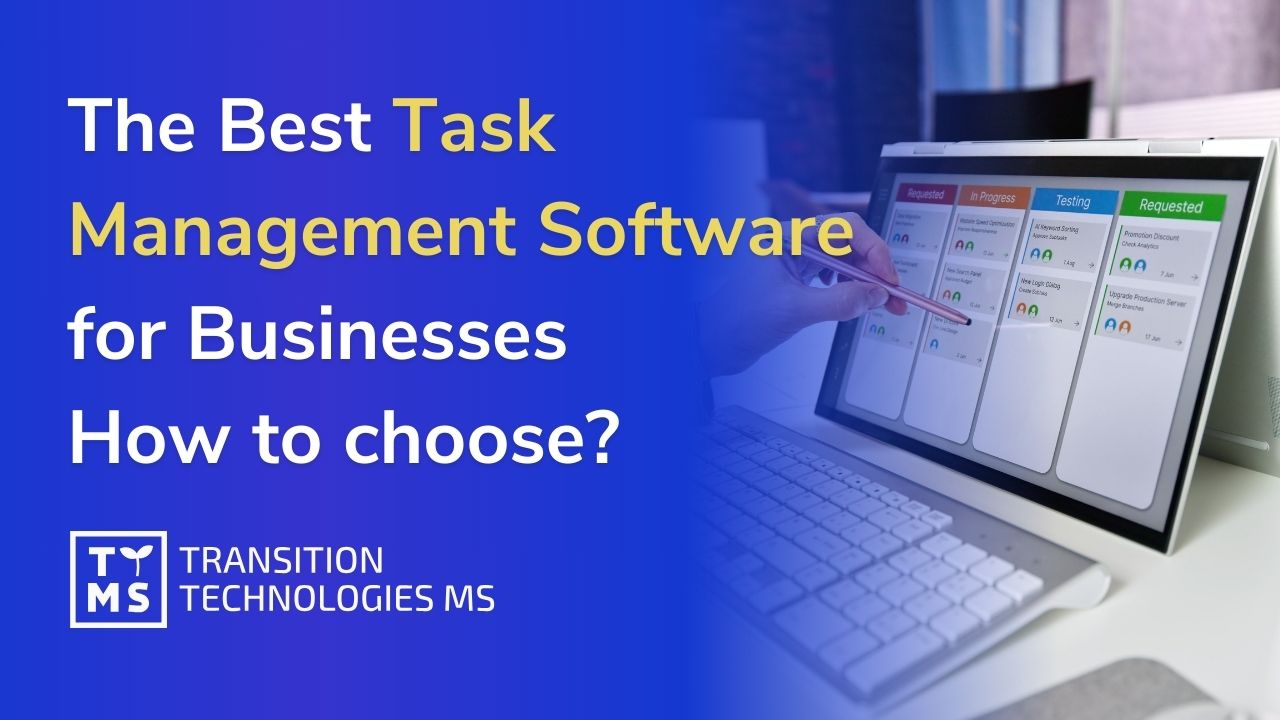
The Best Task Management Software for Businesses – How to Choose and What to Consider?
In today’s fast-paced business world, effective task management is the foundation of success for any company. Have you ever wondered how much time your team loses due to chaotic communication and lack of coordination? A good task management program can completely transform the way your company operates, turning disorder into an efficient collaboration system. 1. Task Management in Business – Introduction 1.1 The Importance of Task Management Efficient task management is the backbone of a well-functioning company. Businesses that use specialized task management systems are less likely to face delays and achieve better results. This is a fact that is hard to dispute. With well-organized work, you can plan more accurately, track progress, and make better use of your team’s time and potential. 1.2 Benefits of Effective Task Management A good task management system brings tangible benefits to the entire company. First and foremost, it eliminates information chaos, which often leads to misunderstandings and delays. Employees know exactly what needs to be done and when, which makes them more engaged and satisfied with their work. Moreover, when everything is transparent, problems are spotted faster and can be resolved efficiently. 1.3 The Role of Software in Task Management Modern task management tools serve as a command center for teams and daily operations. They automate routine activities such as task assignments and deadline reminders, saving valuable time. These tools also integrate with other business applications, creating a cohesive work environment. This allows teams to focus on what truly matters rather than wasting time on administrative tasks. 2. Key Features of Task Management Software 2.1 Task Assignment and Tracking A good task management program should have a simple system for assigning and monitoring work. Gathering all information in one place and using automated notifications significantly improve management. Modern tools allow precise role definitions, such as using the RACI matrix to clearly outline responsibilities within a project. 2.2 Prioritization and Deadlines The system must help set priorities and track deadlines. Popular solutions offer advanced time-tracking features and show task dependencies. This allows teams to plan work more effectively, meet deadlines, and remain flexible when priorities change. 2.3 Team Communication and Collaboration Good communication is the foundation of effective task management. Modern tools offer built-in communication solutions that enable quick information exchange and real-time collaboration. Features such as comments, group chats, and file attachments ensure that all key information stays linked to specific tasks. 2.4 Integration with Other Business Tools A task management program should integrate well with other tools used in the company. Leading systems like Jira and Asana offer a wide range of integrations, allowing workflow automation across different applications. This is crucial for improving efficiency and avoiding manual data transfers. 2.5 Reporting and Analytics Robust reporting features are essential for effective project management. The best systems provide comprehensive analytics tools that display progress, team performance, and potential issues. Real-time reports help make better decisions and optimize processes. 3. How to Choose the Right Task Management Software for Your Business 3.1 Assessing Your Team’s and Company’s Needs Before selecting a task management program, carefully analyze your company’s requirements. It’s essential to understand how your team works, what processes it follows, and the challenges it faces in project management. Take a close look at your current workflows and identify areas for improvement. Pay particular attention to team size, project complexity, and reporting requirements. 3.2 Budget and Pricing Model When planning to implement new software, thoroughly review the available pricing options. Most providers offer different subscription plans tailored to company size and required features. Evaluate not only the monthly cost per user but also additional fees for premium features or technical support. Starting with a free trial is a great way to test the tool in practice. 3.3 Usability and Learning Curve A simple interface and ease of use are key to the successful adoption of new software. Task management programs should be user-friendly and require minimal training. The interface should be clear, with essential functions easily accessible. Also, check the availability of training materials, guides, and the quality of customer support provided by the vendor. 3.4 Integrations and Scalability When choosing a system, think about the future of your business. The program should easily integrate with the tools you already use, such as communication platforms, calendars, or document management systems. Scalability is equally important—the ability to add new users, projects, and features as your company grows. A flexible system helps avoid the need for software replacement in the future. 4. WEBCON – A System for Task and Project Monitoring 4.1 Task Assignment WEBCON BPS is an advanced project management system featuring a flexible task assignment mechanism. Through properly configured rules, database queries, and business process logic, the system automatically determines who is responsible for a given task, when it should be completed, and its priority level. While administrators can define general rules and configurations, task assignments primarily occur at the system level, ensuring efficient and automated task management within an organization. WEBCON BPS also enables setting up substitutes in case of absences and automatically notifies users about new tasks and changes, ensuring transparency and control over workflow processes. Read our article about Webcon Advantages. 4.2 Progress Tracking With WEBCON, tracking task progress is simple. Users can monitor real-time progress through intuitive dashboards and Gantt charts. The system detects potential delays and bottlenecks, allowing teams to respond quickly and adjust project schedules as needed. 4.3 Reporting WEBCON BPS provides detailed reports on project performance and team productivity. The software offers insights into resource utilization, task progress, and key performance indicators (KPIs). Additionally, users can create custom reports tailored to their company’s specific needs. 4.4 Additional WEBCON Features for Task Management WEBCON BPS stands out with numerous additional features that support project management. It offers advanced document management tools, process automation, and the ability to design custom workflows. The system integrates with popular business tools, creating a seamless working environment. Users can also customize the interface and features to match their company’s specific requirements. 5. The Future of Task Management with Technology 5.1 Artificial Intelligence and Automation Artificial intelligence is gradually transforming task management in businesses, although its application in systems like WEBCON BPS remains limited for now. Currently, AI in WEBCON BPS focuses primarily on anomaly detection in forms, based on analyzing large datasets from business processes. It does not yet perform comprehensive analysis of work patterns or intelligently assign tasks based on employees’ skills and workload. Nevertheless, automation in WEBCON BPS streamlines repetitive tasks, such as status updates or document workflow management. This simplifies process administration for teams and enhances overall work efficiency. 5.2 Remote Work and the Need for Flexible Solutions The shift to hybrid work requires a new approach to task management tools. As a browser-based platform, WEBCON BPS enables seamless collaboration regardless of team members’ locations. The system operates both on-premises and in the cloud (e.g., Azure), with users logging in via AD/AAD credentials, ensuring secure access to business processes. With browser-based access, employees can monitor projects and complete tasks in real time from anywhere, without the need to install additional software. WEBCON BPS supports flexible work models by automating processes and reducing the need for frequent meetings, increasing efficiency in distributed teams. 6. How to Implement a Task Management System in Your Company? A successful implementation of a task management program requires a structured approach and thorough preparation. Breaking the process into several key stages ensures a smooth transition to the new system. Start by conducting a detailed analysis of your company’s needs. Review existing workflows, identify major challenges, and gather input from different departments. This will help select a tool that best fits your company’s operations. Next, create an implementation plan. Set up a training schedule, assign responsibilities for different stages, and define clear objectives and success metrics. A good strategy is to start with a pilot implementation in a smaller team to test the solution and gather initial feedback. Employee training is crucial to fully utilize WEBCON BPS’s capabilities. The training program should cater to different skill levels—from basic operation to advanced system functionalities. Business administrators play a key role in this process by supporting users, helping configure workflows, and acting as change leaders within the organization. A well-prepared team and designated business administrators facilitate a smooth system rollout and effective daily use. At TTMS, we offer comprehensive support for WEBCON BPS implementation, helping businesses optimize their workflow management with tailored solutions. Once the system is live, regularly assess its usage and collect user feedback. This will help identify areas for improvement and implement necessary changes. A flexible approach to system adjustments is essential for ensuring long-term effectiveness. If you are interested in Webcon BPS contact us now! Check our related Webcon BPS articles: Advantages of Webcon What does Webcon have to do with building with blocks? Data sources in Webcon BPS Do you need to be able to program to create applications How does a task management system work? A task management system organizes, assigns, and tracks tasks within a team or company. It centralizes task lists, deadlines, priorities, and progress updates, often integrating with communication and reporting tools. Automation features streamline workflows, ensuring efficient collaboration and timely project completion. What is Webcon BPS management? WEBCON BPS is a low-code Business Process Management (BPM) platform that streamlines task and workflow automation. It enables organizations to design, execute, and optimize business processes, integrating with various systems for improved efficiency and collaboration. What is an example of task management? An example of task management is a marketing team using a task management system to plan a product launch. Tasks are assigned to team members, deadlines are set, progress is tracked, and dependencies are managed. Automated reminders and status updates ensure timely completion and smooth collaboration. What is the difference between project management and task management? Project management oversees the entire lifecycle of a project, including planning, resource allocation, timelines, and objectives. It involves multiple tasks, milestones, and deliverables. Task management focuses on individual tasks within a project, ensuring they are assigned, tracked, and completed efficiently. While project management includes strategic planning, task management deals with day-to-day execution.
Read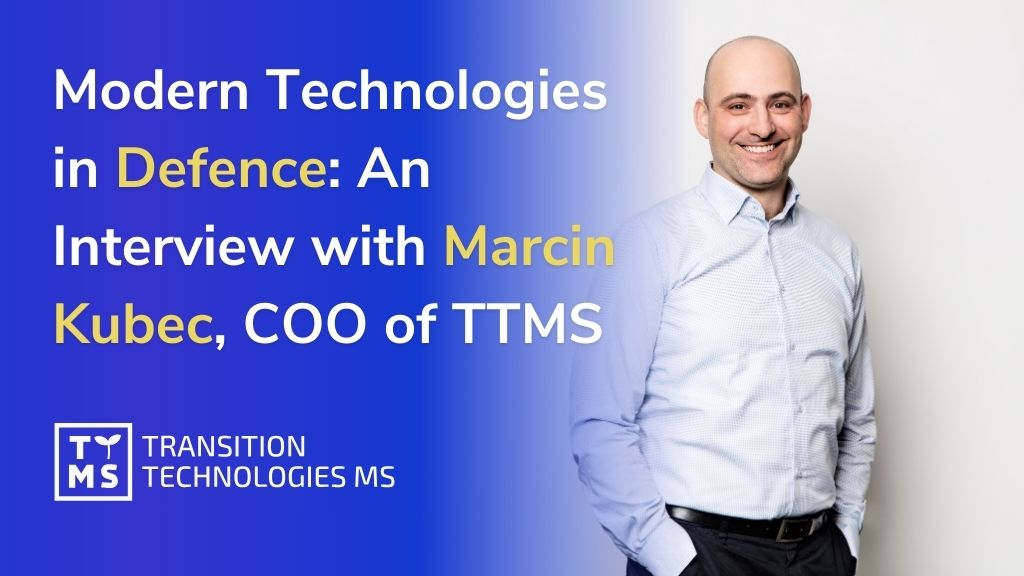
Modern Technologies in Defence: An Interview with Marcin Kubec, COO of TTMS
In today’s rapidly evolving security landscape, technology plays a pivotal role in shaping national defence strategies. In this article, we explore the fascinating insights shared by Marcin Kubec, COO of TTMS, as he discusses the company’s unexpected entry into the defence sector, the transformative role of artificial intelligence in image recognition, and the challenges of integrating modern innovations with traditional military mindsets. The Beginnings of TTMS’s Collaboration with the Defence Sector Marcin Kubec says that TTMS’s cooperation with the defence industry began somewhat by accident. Originating from an academic background, TTMS was invited to participate in technical workshops organized by the Institute of Aviation Technology and Warsaw University of Technology. The project aimed to develop a training environment for image analysis, and TTMS was tasked with addressing the challenge of simulating the SAR radar (Synthetic-aperture radar – Wikipedia). This initial collaboration with both academic and military institutions not only met the project’s demands but also paved the way for more advanced defence projects in the future. The Role of Artificial Intelligence and Image Recognition A key theme in the conversation is the crucial role of artificial intelligence (AI) in modern image recognition systems. With sophisticated algorithms at its core, these systems can process and analyse data from radars, satellites, drones, and even airships—much like an experienced doctor interprets ultrasound images. Just a few years ago, few would have predicted AI’s integral role in defence systems. Today, AI forms the backbone of effective image analysis, enabling rapid identification of potential threats. Watch the Interview To better illustrate these topics, please enjoy the video interview below, where Marcin Kubec shares his experiences and his vision for the future of defence systems: Integration of Systems and International Cooperation Modern defence systems do not operate in isolation; their effectiveness relies on seamless integration. Marcin emphasizes that TTMS’s projects are part of larger C4ISR (Command, Control, Communication, Computing, Intelligence, Reconnaissance) systems that facilitate data exchange among military units both domestically and internationally. Within the ACT Innovation Hub (https://innovationhub-act.org), multinational teams consisting of experts from Poland, Germany, the Netherlands, Romania, the USA and the UK work together to create minimally virtuous products (MVPs), which are then developed into long-term projects. This cooperation not only allows for faster implementation of innovations, but also ensures interoperability of systems, which is crucial for effective defence. Challenges of Traditional Military Mindset vs. the Need for Innovation Despite significant technological advancements, traditional military mindsets still pose a challenge. On the one hand, time-tested, “traditional” approaches provide stability and discipline; on the other, they can slow down the adoption of cutting-edge technologies. Implementing AI-based systems demands rapid decision-making, flexibility, and a willingness to experiment—qualities that can sometimes clash with established procedures and lengthy certification processes. Marcin also touches on the ethical dilemmas involved when delegating combat decisions to algorithms, stressing that ultimate responsibility must always remain with human operators. Perspectives on Development and Technological Independence Another important point raised by Marcin Kubec is the need for developing domestic defence technologies. According to him, Poland should invest in building its own defence industry to reduce dependence on foreign suppliers and open up export opportunities. Such investments not only enhance national security but also stimulate economic growth. By fostering homegrown solutions, Poland can tailor its systems to meet specific national needs and react more swiftly to emerging challenges on the modern battlefield. Summary and Conclusions The conversation with Marcin Kubec shows how crucial it is to combine a traditional, doctrinal approach in building the defence sector with modern technologies. TTMS’s cooperation with the defence sector, based on system’s integration, the use of artificial intelligence and international cooperation, is an example of how innovations can shape the future of national security. Challenges related to the constant change of military mentality and ethical dilemmas remain, but investments in the domestic arms industry give hope for achieving greater technological independence and more effective, in the long term, protection of the state. Thanks to such initiatives, Poland has a chance to become an important player on the international defence scene, integrating modern solutions with traditional methods and building foundations for a secure future. What is C4ISR and why is it important for defence? C4ISR stands for Command, Control, Communications, Computers, Intelligence, Surveillance, and Reconnaissance. It refers to integrated systems that help military forces collect, process, and exchange information to support decision-making and enhance operational effectiveness. What benefits does artificial intelligence bring to defence systems? Artificial intelligence enables rapid processing of vast amounts of data, enhances image recognition and threat detection, minimizes human error, and automates certain decision-making processes—essential in fast-paced, dynamic combat environments. What is image recognition in the context of defence? Image recognition involves analyzing visual data from various sources, such as satellites, drones, and radars. This technology helps military systems monitor large areas, identify potential threats, and support commanders in making timely, informed decisions. Why is the integration of technological systems crucial for modern armies? System integration ensures seamless communication and data sharing between different devices and units. By combining information from multiple sensors, integration improves operational coordination and allows for quicker responses to evolving battlefield conditions. What are the main challenges in implementing modern technologies in the defence sector? Key challenges include integrating innovative solutions with legacy systems, navigating lengthy certification and security procedures, adapting traditional military practices to rapid technological advancements, and addressing ethical concerns related to automated decision-making in combat.
Read
ISO 27001 Implementation – Strengthen Data Security in Your Company
In an increasingly digital world, information security has become the cornerstone of every company’s existence. Almost daily, we hear about data breaches and cyberattacks that can cost businesses millions and damage their reputation—or even lead to their closure. This is why ISO 27001 is no longer just another standard; it is a fundamental tool for protecting a company’s most valuable asset—its data. 1. Introduction to ISO 27001: Definition, Key Objectives, and Principles ISO/IEC 27001 is an international standard that defines the framework for establishing, implementing, and maintaining an Information Security Management System (ISMS). Developed by the International Organization for Standardization (ISO), this standard provides organizations with structured guidelines to protect their sensitive data efficiently and systematically. The primary goal of ISO 27001 is to ensure comprehensive information security across three fundamental areas: confidentiality (ensuring access is restricted to authorized individuals), integrity (guaranteeing that data remains accurate and unaltered), and availability (ensuring that information is accessible when needed). The foundation of the standard lies in a process-oriented approach and risk management. ISO/IEC 27001 offers great flexibility, making it suitable for implementation in various types of organizations, including governmental institutions, small businesses, and large corporations, regardless of the industry. The core principles of the standard involve systematic risk identification, implementation of appropriate security measures, and continuous improvement of security mechanisms. Implementing ISO 27001 in practice requires the development of a comprehensive system encompassing technical, organizational, and legal aspects. This holistic approach ensures effective information security management, addressing not only cybersecurity threats but also physical data protection. 2. Benefits of Implementing ISO 27001 2.1 Enhanced Information Security and Data Protection ISO 27001 is a fundamental step toward effective data protection in any organization. The standard helps systematically identify potential threats and implement robust security measures. Companies that have adopted ISO 27001 experience significantly fewer security breaches and data leaks compared to those that do not follow this standard. The implementation of ISO 27001 is widely recognized as an effective tool for minimizing security risks and preventing data breaches. Additionally, it facilitates the development of an efficient incident response system, which is essential in today’s rapidly evolving cybersecurity landscape. This enables organizations to detect and mitigate threats swiftly, reducing financial losses and reputational damage. 2.2 Building Trust Among Clients and Business Partners With over 70,000 organizations worldwide certified to ISO 27001, the standard has become a critical element in establishing trust in business relationships. Certification is particularly valued in industries dealing with sensitive information, such as finance and healthcare, where data security is paramount. Holding an ISO 27001 certificate sends a clear signal that a company adheres to the highest security standards, thereby increasing confidence among clients and business partners. This is especially beneficial when securing new contracts and participating in tenders. 2.3 Compliance with Legal and Regulatory Requirements With over 70% of companies anticipating stricter regulatory requirements in the coming year, implementing ISO 27001 has become a strategic choice. The standard helps organizations comply with various legal requirements, including GDPR and other data protection laws. An ISO 27001-compliant system ensures legal adherence and minimizes the risk of financial penalties. This is particularly crucial given the increasing stringency of global data protection regulations. 2.4 Gaining a Competitive Advantage in the Market Implementing ISO 27001 provides a tangible competitive edge. With over 20,000 companies already certified under ISO/IEC 27001:2022, the importance of information security in business strategy is undeniable. An ISO 27001 certificate serves as a powerful marketing tool, distinguishing a company from its competitors. Organizations with this certification are perceived as more reliable and professional, which often translates into better performance in tenders and business negotiations. 3. ISO 27001 Implementation Process 3.1 Planning and Risk Analysis in the Early Stages The implementation of ISO 27001 begins with thorough planning and a comprehensive risk analysis, which are key components of effective information security management. The first step involves conducting an initial audit to assess the current state of security measures and compliance with the standard’s requirements. This audit helps identify both existing security controls and potential gaps that require immediate attention. A threat map is then developed, outlining potential risks in detail. This includes internal factors such as procedural errors or improper system configurations, as well as external threats like cyberattacks, natural disasters, or unauthorized access attempts. Each risk is analyzed in terms of its likelihood and potential impact on the organization. Through these assessments, organizations can establish security priorities, focusing on areas that require immediate intervention. The results of the risk analysis serve as the foundation for a risk management strategy that integrates ISO 27001 requirements with business objectives. 3.2 Development of Information Security Policies and Procedures Based on the risk analysis, organizations develop a comprehensive set of documentation for their Information Security Management System (ISMS). A key part of this phase is the creation of security policies tailored to the company’s structure, industry, and specific needs. Key Information Security Policies: Information Security Policy – The most crucial document defining security objectives, commitments, and the overall approach to information security. Access Management Policy – Guidelines for granting, modifying, and revoking system and data access rights. Information Classification Policy – Rules for labeling, storing, and protecting data based on its confidentiality level. Physical Security Policy – Procedures for securing office spaces, server rooms, and hardware. IT Systems Security Policy – Standards for configuring, updating, and protecting IT infrastructure. Risk Management Policy – A framework for identifying, assessing, and mitigating information security risks. Incident Response Policy – A protocol for reporting, investigating, and resolving security incidents. Personal Data Protection Policy – Essential for GDPR compliance, outlining measures for securing personal data. Business Continuity Management Policy – Guidelines for ensuring operational resilience during system failures, cyberattacks, or disasters. Supplier Security Management Policy – Standards for evaluating and controlling security practices among vendors, cloud providers, and subcontractors. It is crucial for these documents to be clear, practical, and accessible to all employees, regardless of their role within the company. To ensure effective implementation, policies and procedures must align with business operations, legal regulations, and industry best practices. This phase requires collaboration across multiple departments, including IT, legal, and risk management teams. Well-defined security policies not only facilitate compliance with ISO 27001 but also create a strong foundation for a sustainable information security framework. 3.3 Implementation of the Information Security Management System (ISMS) At this stage, theoretical plans are transformed into practical security measures. The organization implements all technical and organizational safeguards designed in the previous phases. Special emphasis is placed on employee training to ensure that every team member understands their role in maintaining information security. Training sessions should cover both general security principles and role-specific procedures. The system is implemented gradually to allow seamless integration with existing business processes. Each phase requires testing and evaluation to assess effectiveness in real-world scenarios. It is crucial to avoid disruptions to daily operations, ensuring that new security procedures complement existing workflows. During implementation, continuous compliance monitoring is essential to verify that security measures align with ISO 27001 requirements and business goals. Adjustments are made as necessary to ensure full compliance and optimal security performance. Additionally, the organization must remain adaptable to evolving technological and regulatory changes, ensuring that security strategies remain effective over time. 3.4 Monitoring, Auditing, and Continuous Improvement Once the ISMS is fully implemented, ongoing monitoring and continuous improvement become essential to maintaining its effectiveness. The monitoring process involves regular assessment of security controls, identification of vulnerabilities, and proactive responses to emerging security challenges. Periodic internal audits help evaluate compliance with ISO 27001 and identify areas for enhancement. The ISMS should be dynamic and adaptable, allowing the organization to quickly adjust to new threats and changes in the business environment. Continuous improvement mechanisms include: Incident analysis – Learning from past security breaches to enhance defenses. User feedback – Incorporating insights from employees to optimize security measures. Regular policy updates – Adapting procedures to align with evolving threats and industry standards. This phase requires commitment from all levels of the organization, from executive leadership supporting security initiatives to employees executing security protocols. A strong culture of security awareness ensures that the ISMS remains effective in the long run. By continuously refining security practices, organizations can not only protect their data assets but also gain a competitive advantage in an increasingly security-conscious market. 4. Common Challenges in Implementing ISO 27001 The process of implementing ISO 27001 comes with numerous challenges that can impact its effectiveness. One of the key aspects is the time investment— a full implementation can take anywhere from several months to a year, depending on the size of the organization and its level of preparedness. Another critical issue is resource allocation, both in terms of human and financial resources. Implementation requires investments in infrastructure, security tools, and employee training. Data from February 2024 indicates that 47% of security incidents in Europe were due to vulnerabilities in supply chains, emphasizing the need for comprehensive training for all system users. A significant challenge is securing organization-wide engagement. The introduction of new procedures often meets resistance, making it essential for all employees to understand that information security is not solely the responsibility of IT or security departments but a shared responsibility across the company. Striking a balance between security and operational efficiency is another challenge. Overly stringent security policies may hinder workflow efficiency, while a lax approach increases vulnerability to threats. Finding optimal security procedures requires in-depth analysis and flexibility. Finally, documentation and ongoing updates are critical. Implementation demands detailed descriptions of all processes, and keeping them up to date with emerging threats and technological advancements can be time-consuming. Continuous system monitoring and maintaining engagement in security initiatives are essential for long-term success. 5. ISO 27001 Certification – What’s Next? 5.1 Certification Process and Requirements The ISO 27001 certification process begins with a preliminary audit, during which the certification body conducts a detailed review of the implemented Information Security Management System (ISMS) documentation to verify compliance with the standard. The next step is the certification audit, where auditors assess the documentation, interview key employees, and observe the system’s practical operation. Organizations must demonstrate that they have not only developed and implemented the required policies and procedures but are also effectively applying them. Providing evidence of control mechanisms and active management involvement in information security is crucial. 5.2 Maintaining Compliance After Certification Obtaining certification is just the beginning— maintaining it requires continuous monitoring and internal audits. Certification bodies also conduct annual surveillance audits to confirm that the organization continues to meet the standard’s requirements and maintains an effective ISMS. A crucial element of compliance maintenance is systematic documentation of changes, security incidents, and corrective actions. Organizations must demonstrate continuous improvement, adapting their ISMS to evolving threats and operational needs. 5.3 Long-Term ISMS Strategy and Development Long-term ISMS management requires a strategic approach, including regular reviews and updates of security policies to align with evolving market demands and security threats. Implementing a continuous improvement plan enables organizations to respond flexibly to new challenges. Developing employee competencies through training programs and security awareness initiatives is essential for the system’s success. Organizations should also stay up to date with technological innovations and cybersecurity trends, adjusting security mechanisms accordingly. Fostering an information security culture, where every employee understands their role and actively contributes to data protection, is vital. Regular security drills and incident simulations help maintain high readiness levels for potential threats. 6. How TTMS Can Help Your Organization Enhance Data Security and Implement ISO 27001 At TTMS, we offer comprehensive support for ISO 27001 implementation, leveraging years of experience across various industries. We start with a detailed assessment of your company’s current information security state, allowing us to identify key areas for improvement. As part of our implementation services, our team of experts provides: A detailed preliminary audit Preparation of ISMS documentation tailored to your company’s needs Assistance in implementing technical and organizational security measures Comprehensive employee training We understand that every business is unique, which is why our ISO 27001 implementation services are always customized to fit the specific industry and individual needs of each client. At TTMS, we provide not only implementation support but also long-term advisory services to help maintain and improve your information security system. With our extensive experience in various projects, we can anticipate and effectively address potential implementation challenges. Our team of experts supports you at every stage of the process, ensuring a smooth certification journey and long-term ISMS efficiency. Partnering with us guarantees a professional approach to information security, ensuring that your implemented system is not only ISO-compliant but also practical and effective in everyday business operations. At TTMS, we operate an integrated management system , including certifications and licenses such as: Information Security Management System (ISO 27001) Environmental Management System (ISO 14001) MSWiA License – Standards for software development projects for law enforcement and the military Quality Management System (ISO 9001) IT Service Management System (ISO 20000) Occupational Health and Safety Management System (ISO 45000) Get in touch with us today! What is ISO 27001? ISO 27001 is an international standard that defines the requirements for an information security management system. This standard: Provides a structured approach to managing sensitive company information Establishes a framework for protecting data from internal and external threats Defines requirements for information confidentiality, integrity, and availability Helps organizations meet legal and regulatory requirements The standard can be implemented in companies of any size and industry, ensuring effective information protection and building trust with business partners How to implement ISO 27001? Implementing ISO 27001 is a multi-stage process that requires a systematic approach. The main steps include: Conducting a detailed preliminary audit Performing a comprehensive risk analysis Developing and implementing security policies Conducting training for all employees Establishing a monitoring and control system The success of the implementation largely depends on management’s commitment and the active participation of all employees. It is also crucial to allocate adequate resources and time for the project. How much does ISO 27001 implementation cost? The cost of implementing ISO 27001 varies for each company and depends on several factors: Company size and number of employees Current level of security processes Complexity of IT infrastructure Scope of required changes and improvements Training needs The exact cost can only be determined after an initial analysis and company assessment. Keep in mind that investing in information security is not an expense but a strategic investment in the company’s future. How to implement an ISMS? Implementing an Information Security Management System (ISMS) requires: Defining the system’s scope and boundaries Identifying key information assets Developing security policies and procedures Implementing control and monitoring mechanisms Conducting training and building employee awareness The ISMS implementation should be tailored to the company’s specifics and business objectives. The most important aspect is ensuring that the system is practical and effective in daily operations.
Read
Find out the Key Benefits of Using Microsoft Power BI in 2026
In data-driven world, making sense of vast information streams can feel like trying to drink from a fire hose. Yet, some tools transform this overwhelming flood into a refreshing stream of insights. Power BI stands at the forefront of this transformation, and its impact is undeniable. With over 234,200 companies already leveraging its capabilities, Power BI has emerged as a game-changing solution for businesses seeking to harness their data’s full potential. As we look toward 2026, understanding its benefits becomes more crucial than ever. 1. Why Choose Power BI? The answer lies in the numbers. Power BI commands a remarkable 17% of the relative market share in the Business Intelligence market, outpacing competitors like Tableau or Qlik. This leadership position isn’t just about market dominance – it reflects the tool’s ability to meet evolving business needs in an increasingly complex data landscape. 1.1 Understanding the Role of Business Intelligence in modern business In today’s competitive landscape, Business Intelligence has transformed from a luxury into a necessity. Power BI exemplifies this evolution by democratizing data analysis across organizations of all sizes. The Business Intelligence market is projected to reach $59.7 billion by 2025, highlighting the growing recognition of BI’s critical role in modern business operations. Currently, spending on Business Intelligence (BI) software has reached significant levels – for instance, 44% of global BI expenditures come from the AMER region, highlighting the growing importance of advanced data analysis in business. Therefore, it is essential to ensure that these budgets are allocated to solutions that guarantee the highest quality and efficiency. This is where Power BI comes into play – one of the most popular BI tools globally, cementing its position as a leader with widespread adoption in markets such as the United Kingdom (11.50% market share) and India (7.76%). Power BI not only offers a comprehensive range of advanced analytical features but is also accessible and intuitive, enabling organizations to fully leverage the potential of their data. The platform’s versatility is evident in its user base. From small businesses to large enterprises, Power BI serves organizations across the spectrum. Notably, companies with 100-249 employees represent the largest user segment, proving that effective business intelligence isn’t just for corporate giants anymore. 2. Key Benefits of Using Power BI for Businesses The Power Bi benefits extend far beyond basic data visualization, transforming how organizations handle their data analytics needs. Let’s explore the key advantages of Power BI that make it an invaluable tool for modern businesses. 2.1 Improved Decision-Making with Artificial Intelligence Integration One of the most significant Power Bi advantages is its sophisticated AI integration. The platform’s natural language processing capabilities allow users to ask questions about their data in plain English, receiving instant insights. By combining Azure Machine Learning with Power BI, businesses can unlock predictive analytics that help forecast trends and identify patterns human analysts might miss. 2.2 Interactive and Engaging Data Visualizations A standout Power Bi benefit is its ability to transform complex data into compelling visual stories. The platform offers a rich library of visualization options, from basic charts to advanced custom visuals. These interactive dashboards allow users to drill down into data points, uncover hidden patterns, and share insights effectively across teams. 2.3 Comprehensive Data Integration from Multiple Sources Power BI advantages shine through its exceptional data integration capabilities. The platform seamlessly connects with hundreds of data sources, from Excel spreadsheets to cloud-based services and IoT devices. This unified approach eliminates data silos and provides a complete view of business operations. 2.4 Cost-Effectiveness and Affordability of Power BI Solutions One of the key strengths of Power BI that consistently sets it apart is the extensive support provided by its large and active user community. With a rapidly growing user base, Power BI offers access to an unparalleled repository of knowledge, tutorials, and best practices shared by professionals worldwide. This community-driven approach allows users to fully leverage the platform’s potential. The abundance of resources ensures that businesses of all sizes can find the support and solutions they need, making Power BI a reliable choice even in a rapidly evolving BI market. 2.5 Accessibility on Any Device, Anytime, Anywhere Modern business demands flexibility, and Power BI delivers. The platform’s cross-device compatibility ensures that critical insights are accessible whether you’re in the office, working remotely, or traveling. The mobile app maintains the same powerful features as the desktop version, ensuring consistent functionality across all devices. 2.6 Security Measures and Customized Privacy Controls Security represents one of the most crucial advantages of Power BI. The platform implements enterprise-grade security measures, including row-level security and encryption. Organizations can maintain granular control over who sees what data, ensuring compliance with industry regulations while facilitating secure collaboration across teams. 2.7 Seamless Big Data Analysis and Sharing Power BI excels at processing large-scale datasets through its integration with Azure and other DWH tools like Databrics or Snowflake. This capability allows organizations to analyze billions of rows of data without compromising performance. The platform’s sharing features enable teams to distribute insights securely, making big data analytics accessible to stakeholders across the organization. 2.8 Regular Updates and Continuous Innovation Microsoft’s commitment to innovation ensures that Power BI stays ahead of emerging business intelligence trends. Monthly updates bring new PowerBi uses and improvements, from enhanced visualization options to advanced analytical capabilities. This continuous evolution helps organizations adapt to changing data analysis needs while maintaining competitive advantage. 2.9 Creating a Data-Driven Culture Across the Organization Power BI democratizes data analysis by making it accessible to users at all levels. Its self-service analytics capabilities empower employees to explore data independently, fostering a culture where decisions are backed by solid evidence rather than intuition. This accessibility helps organizations build a more data-literate workforce. 2.10 Unifying Data Governance and Management The platform’s robust governance features ensure data quality and security while maintaining compliance with regulatory requirements. Power BI’s centralized management tools help organizations establish consistent data practices, ensuring that insights are based on reliable, well-maintained data sources. This unified approach to data governance reduces risks while maximizing the value of organizational data assets. 2.11 Data Processing and Access to Insights One of the significant advantages of Power BI is its ability to process data and present insights shortly after the data becomes available. This allows businesses to analyze key metrics in near real-time and make informed decisions. Whether it’s tracking sales performance or analyzing operational processes, Power BI supports organizations in quickly responding to changing business needs. 3. Summary Power BI has established itself as a transformative force in business intelligence, offering a comprehensive suite of tools that turn raw data into actionable insights. As we look toward 2026, its significance in the business landscape continues to grow, supported by its market-leading position and widespread adoption across industries. The platform’s strengths lie in its versatility and accessibility, combining powerful analytics capabilities with user-friendly interfaces. From AI-powered insights to real-time capabilites, from interactive visualizations to robust security measures, Power BI delivers enterprise-grade capabilities while remaining cost-effective for organizations of all sizes. What sets Power BI apart is its commitment to continuous innovation while maintaining ease of use. The platform’s regular updates, combined with its extensive integration capabilities and collaborative features, make it an invaluable tool for organizations striving to build a data-driven culture. As businesses continue to navigate an increasingly complex data landscape, Power BI stands ready to help them transform information into strategic advantage. Looking ahead, Power BI’s role in shaping business intelligence will likely expand further, driven by advances in AI, machine learning, and data visualization. For organizations seeking to stay competitive in a data-driven world, Power BI represents not just a tool, but a pathway to smarter, more informed decision-making. 4. How we in TTMS can help you to start using Power BI? At TTMS, we understand that transitioning to a new business intelligence platform can seem daunting. That’s why we’ve developed a comprehensive approach to help organizations maximize their Power BI investment from day one. Our expert team provides end-to-end support, starting with a thorough assessment of your organization’s specific needs and data environment. TTMS consultants work closely with your team to develop a customized implementation strategy that aligns with your business objectives and existing workflows. We offer specialized services including: Initial setup and configuration of Power BI environments Custom dashboard and report development Data source integration and optimization Advanced analytics implementation Security and governance framework setup Comprehensive training programs for your team TTMS doesn’t just implement Power BI – we ensure your team has the knowledge and confidence to leverage its full potential. Our training programs are tailored to different skill levels, from beginners to advanced users, ensuring everyone in your organization can contribute to data-driven decision-making. Additionally, TTMS provides ongoing support and maintenance services to help you stay current with Power BI’s evolving capabilities. Our experts keep track of the latest features and updates, recommending improvements to your Power BI implementation as new opportunities arise. Contact us today to begin your journey toward more effective data analytics with Power BI. Let us help you transform your data into actionable insights that drive business success. Check our PowerBI case study: How we helped Volvo Car Poland become a data-driven company? What is the advantage of using Power BI? The key Power Bi benefits include its ability to transform complex data into clear, actionable insights. The platform excels in data integration, offering real-time analytics and interactive visualizations that make information accessible to all stakeholders. One of the primary advantages of Power BI is its user-friendly interface combined with powerful analytical capabilities, making it suitable for both beginners and advanced users. What are the benefits of using BI? Business Intelligence tools deliver significant Power Bi benefits across organizations. They enable data-driven decision-making, improve operational efficiency, and provide competitive advantages through better market insights. BI platforms help organizations identify trends, predict future outcomes, and optimize resources. The systematic approach to data analysis helps eliminate guesswork and supports strategic planning with concrete evidence. What is the most useful advantage of Power BI over Excel? While Excel remains valuable for basic data analysis, the advantages of Power BI far exceed traditional spreadsheet capabilities. Power BI offers dynamic, interactive visualizations, and the ability to handle massive datasets efficiently. Unlike Excel’s static nature, Power BI provides automated data refresh, advanced data modeling, and seamless collaboration features that transform how teams work with data. What industries benefit most from Power BI, and how? Power BI benefits are particularly evident in several key industries: Finance: Monitoring of financial metrics and risk analysis Healthcare: Patient data analysis and operational efficiency tracking Retail: Customer behavior analysis and inventory management Manufacturing: Production monitoring and quality control Technology: Product usage analytics and performance tracking Each industry leverages Power BI’s capabilities to address specific challenges and optimize operations When is Power BI not a good tool? While Power BI is versatile and can be applied in virtually any reporting scenario, organizations processing massive data volumes may need to consider incorporating data warehouses, data lakes, or lakehouse architectures into their solution design. In our team, we always analyze both current and future needs to ensure that we create a solution fully tailored to the client’s requirements. This approach ensures that Power BI can be seamlessly integrated into even the most complex data ecosystems while maintaining optimal performance and scalability.
ReadThe world’s largest corporations have trusted us


























We hereby declare that Transition Technologies MS provides IT services on time, with high quality and in accordance with the signed agreement. We recommend TTMS as a trustworthy and reliable provider of Salesforce IT services.
TTMS has really helped us thorough the years in the field of configuration and management of protection relays with the use of various technologies. I do confirm, that the services provided by TTMS are implemented in a timely manner, in accordance with the agreement and duly.
Ready to take your business to the next level?
Let’s talk about how TTMS can help.

Michał Trojanowski
Managing Director TTMS Software UK Ltd.