

Home •Blog
TTMS Blog
TTMS experts about the IT world, the latest technologies and the solutions we implement.
Sort by topics
Search results for the term: “TEAMS”
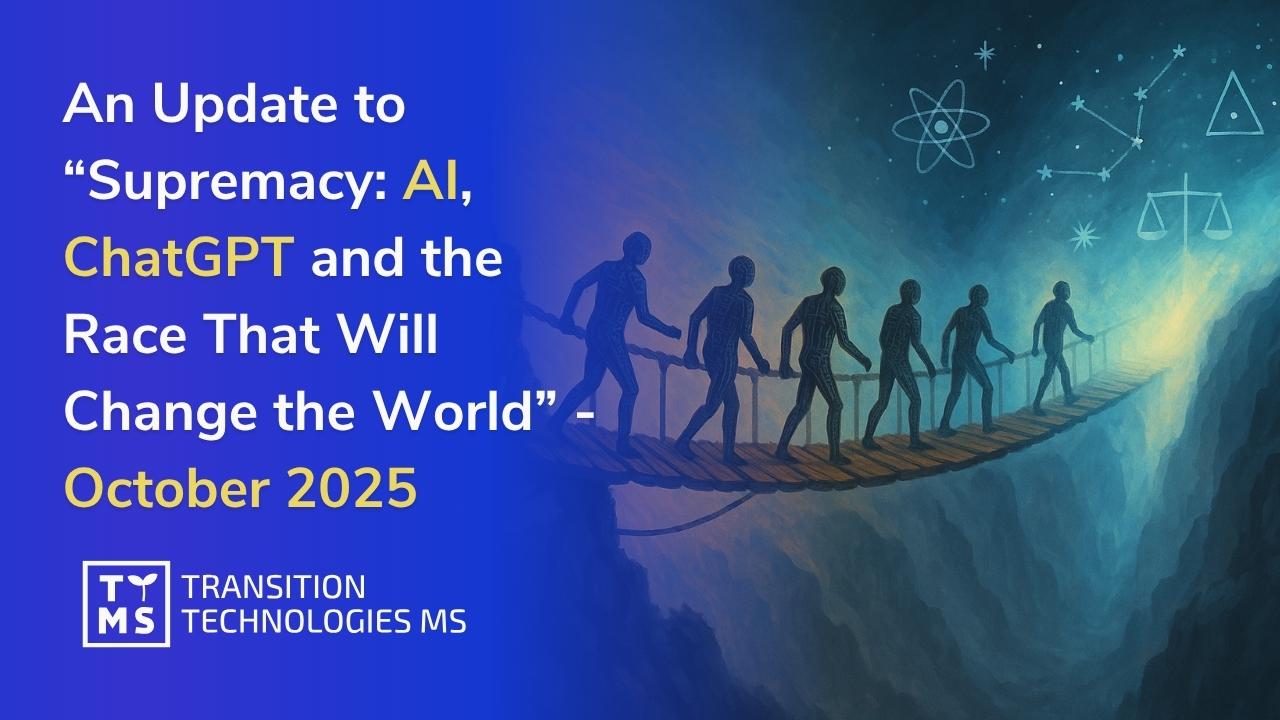
An Update to Supremacy: AI, ChatGPT and the Race That Will Change the World – October 2025
In her 2024 book Supremacy: AI, ChatGPT and the Race That Will Change the World, Parmy Olson captured a pivotal moment – when the rise of generative AI ignited a global race for technological dominance, innovation, and regulatory control. Just a year later, the world described in the book has moved from speculative to strikingly real. By October 2025, artificial intelligence has become more powerful, accessible, and embedded in society than ever before. OpenAI’s GPT-5, Google’s Gemini, Claude 4 from Anthropic, Meta’s open LLaMA 4, and dozens of new agents, copilots, and multimodal assistants now shape how we work, create, and interact. The “race” is no longer only about model supremacy – it’s about adoption, regulation, safety, and how well societies can keep up. With ChatGPT surpassing 800 million weekly active users, major AI regulations coming into force, and humanoid robots stepping into the real world, we are witnessing the tangible unfolding of the very competition Olson described. This article offers a comprehensive update on the AI landscape as of October 17, 2025 – covering model breakthroughs, adoption trends, global policy shifts, emerging safety practices, and the physical integration of AI into devices and robotics. If Supremacy asked where the race would lead us – this is where we are now. 1. Next-Generation AI Models: GPT-5 and the New Titans The past year has seen an explosion of next-gen AI model releases, with each iteration shattering previous benchmarks. Here are the most notable AI model launches and announcements up to Oct 2025: OpenAI GPT-5: Officially launched on August 7, 2025, GPT-5 is OpenAI’s most advanced model to date. It’s a unified multimodal system that combines powerful reasoning with quick, conversational responses. GPT-5 delivers expert-level performance across domains – coding, mathematics, creative writing, even medical Q&A – while drastically reducing hallucinations and errors. It’s available to the public via ChatGPT (including a Pro tier for extended reasoning) and through the OpenAI API. In short, GPT-5 represents a significant leap beyond GPT-4, with built-in “thinking” modes for complex tasks and the ability to decide when to respond instantly versus when to delve deeper. Anthropic Claude 3 & 4: OpenAI’s rival Anthropic also made major strides. In early 2024 they introduced the Claude 3 family (models named Claude 3 Haiku, Sonnet, and Opus) with state-of-the-art performance on reasoning and multilingual tasks. Claude 3 models offered huge context windows (up to 200K tokens, with the ability to handle over 1 million tokens for select customers) and even added vision – the ability to interpret images and charts. By mid-2025, Anthropic released Claude 4, featuring Claude Opus 4 and Sonnet 4 models. Claude 4 focuses heavily on coding and “agent” use-cases: Opus 4 can sustain long-running coding sessions for hours and use tools like web search to improve answers. Both Claude 4 models introduced extended “tool use” (e.g. invoking external APIs or searches during a query) and improved long-term memory, allowing Claude to save and recall facts during a conversation. These upgrades let Claude act more autonomously and reliably, solidifying Anthropic’s position as a top-tier AI provider alongside OpenAI. Google DeepMind Gemini: Google’s answer to GPT, known as Gemini, became a reality in late 2023 and has rapidly evolved. Google unified its Bard chatbot and Duet AI under the Gemini brand by February 2024, signaling a new flagship AI model developed by the Google DeepMind team. Gemini is a multimodal large model integrated deeply into Google’s ecosystem – from Android smartphones (replacing the old Google Assistant on new devices) to Gmail, Google Docs, and Cloud services. In 2024-2025 Google rolled out Gemini 2.0, offering variants like Flash (optimized for speed), Pro (for complex tasks and coding), and Flash-Lite (cost-efficient). These models became generally available via Google’s Vertex AI cloud in early 2025, complete with multimodal inputs and improved reasoning that allows the AI to “think” through problems step-by-step. While Gemini’s development is a bit more behind-the-scenes than ChatGPT, it has quietly become widely accessible – powering features in Google’s mobile app, enabling AI-assisted coding in Google Cloud, and even offering a premium “Gemini Advanced” subscription for consumers. Google is expected to continue iterating (rumors of a Gemini 3.0 by late 2025 persist), but already Gemini 2.5 has showcased improved accuracy through internal reasoning and solidified Google’s place in the generative AI race. Meta AI’s LLaMA 3 & 4: Meta (Facebook’s parent company) doubled down on its strategy of “open” AI models. After releasing LLaMA 2 in 2023, Meta unveiled LLaMA 3 in April 2024 with models at 8B and 70B parameters, trained on a staggering 15 trillion tokens (and open-sourced for developers). Later that year at its Connect conference, Meta announced LLaMA 3.2 – introducing its first multimodal LLMs and even smaller fine-tunable versions for specialized tasks. The culmination came in April 2025 with LLaMA 4, a new family of massive models that use a mixture-of-experts (MoE) architecture for efficiency. Uniquely, LLaMA 4’s design separates “active” versus total parameters – for example, the Llama 4 Scout model uses 17 billion active parameters out of 109B total, yet can handle an unprecedented 10 million token context window (the equivalent of reading ~80 novels of text in one prompt!). A more powerful Maverick model offers 1 million token context, and an even larger Behemoth (2 trillion parameters total) is planned. All LLaMA 4 models are natively multimodal and openly available for research or commercial use, underscoring Meta’s commitment to transparency in contrast to closed models. This open-model approach has spurred a vibrant community of developers using LLaMA models to build customized AI tools without relying on black-box APIs. Other Notable Entrants: The AI landscape in 2025 isn’t just defined by the Big Four (OpenAI, Anthropic, Google, Meta). Musk’s xAI initiative made headlines by launching its own chatbot Grok in late 2023. Marketed as a “rebellious” alternative to ChatGPT, Grok has since undergone rapid iteration – reaching Grok version 4 by mid-2025, with xAI claiming top-tier performance on certain reasoning benchmarks. During a July 2025 demo, Elon Musk touted Grok 4 as “smarter than almost all graduate students” and showcased its ability to solve complex math and even generate images via a text prompt. Grok is offered as a subscription service (including an ultra-premium tier for heavy usage) and is slated for integration into Tesla vehicles as an onboard AI assistant. IBM, meanwhile, has focused on enterprise AI with its WatsonX platform for building domain-specific models, and startups like Cohere and AI21 Labs continue to offer competitive large language models for business use. In the open-source realm, new players such as Mistral AI (which released a 7B parameter model tuned for efficiency) are emerging. In short, the AI model landscape is more crowded and dynamic than ever – with a healthy mix of proprietary giants and open alternatives ensuring rapid progress. 2. AI Adoption Soars: Usage and Industry Impact With powerful models proliferating, AI adoption has surged worldwide in 2024-2025. The growth of OpenAI’s ChatGPT is a prime example: as of October 2025 it reportedly serves 800 million weekly active users, double the usage from just six months prior. This makes ChatGPT one of the fastest-growing software platforms in history. Such tools are no longer niche experiments; they’ve become mainstream utilities for work and daily life. According to one executive survey, nearly 72% of business leaders reported using generative AI at least once a week by mid-2024 (up from 37% the year before). That figure only grew through 2025 as companies rolled out AI assistants, coding copilots, and content generators across departments. Enterprise integration of AI is a defining theme of 2025. Organizations large and small are embedding GPT-like capabilities into their workflows – from marketing content creation to customer support chatbots and software development. Microsoft, for example, integrated OpenAI’s models into its Office 365 suite via Copilot, allowing users to generate documents, emails, and analyses with natural-language prompts. Salesforce partnered with Anthropic to offer Claude as a built-in CRM assistant for sales and service teams. Many businesses are also developing custom AI models fine-tuned on their proprietary data, often using open-source models like LLaMA to retain control. This widespread adoption has been enabled by cloud AI services (e.g. Azure OpenAI Service, Amazon Bedrock, Google’s AI Studio) that let companies tap into powerful models via API. Critically, the user base for AI has broadened beyond tech enthusiasts. Consumers use AI in everyday applications – drafting messages, brainstorming ideas, getting tutoring help – while professionals use it to boost productivity (e.g. code generation or data analysis). Even sensitive fields like law, finance, and healthcare have cautiously started leveraging AI assistants for first-draft outputs or decision support (with human oversight). A notable trend is the rise of “AI copilots” for specific roles: designers now have AI image generators, customer service reps have AI-driven email draft tools, and doctors have access to GPT-based symptom checkers. AI is truly becoming an ambient part of software, present in many of the tools people already use. However, this explosive growth also highlights challenges. AI literacy and training have become urgent needs inside companies – employees must learn to use these tools effectively and ethically. Concerns around accuracy and trust persist too: while models like GPT-5 are far more reliable than their predecessors, they can still produce confident-sounding mistakes. Enterprises are responding by implementing review processes for AI-generated content and restricting use to cases with low risk. Despite such caveats, the overall trajectory is clear: AI’s integration into the fabric of business and society accelerated through 2025, with adoption curves that would have seemed unbelievable just two years ago. 3. Regulation and Policy: Governing AI’s Rapid Rise The whirlwind advancement of AI has prompted a flurry of regulatory activity around the world. Since mid-2025, several key laws and policy frameworks have emerged or taken effect, aiming to rein in risks and establish rules of the road for AI development: European Union – AI Act: The EU finalized its landmark Artificial Intelligence Act in 2024, making it the world’s first comprehensive AI regulation. The AI Act applies a risk-based approach – stricter requirements for higher-risk AI (like systems used in healthcare, finance, or law enforcement) and minimal rules for low-risk uses. By July 2024 the final text was agreed and published, starting a countdown to implementation. As of 2025, initial provisions have kicked in: by February 2025, bans on certain harmful AI practices (e.g. social scoring or real-time biometric surveillance) officially became law in the EU. General-purpose AI (GPAI) models like GPT-4/5 face new transparency and safety requirements, and providers must prepare for a compliance deadline in August 2025 to meet the Act’s obligations. In July 2025, EU regulators even issued guidelines clarifying how rules will apply to large foundation models. The AI Act also mandates things like model documentation, disclosure of AI-generated content, and a public database of high-risk systems. This EU law is forcing AI developers (globally) to build in safety and explainability from the start – given that many will want to offer services in the European market. Companies have begun publishing “AI system cards” and conducting audits in anticipation of the Act’s full enforcement in 2026. United States – Executive Actions and Voluntary Pledges: In absence of AI-specific legislation, the U.S. government leaned on executive authority and voluntary frameworks. In October 2023, President Biden signed a sweeping Executive Order on Safe, Secure, and Trustworthy AI. This 110-page order (the most comprehensive U.S. AI policy to date) set national goals for AI governance – from promoting innovation and competition to protecting civil rights – and directed federal agencies to establish safety standards. It pushed for the development of watermarking guidelines for AI content and required major agencies to appoint Chief AI Officers. Notably, it also instructed the Commerce Department to create regulations ensuring that frontier models are evaluated for security risks before release. However, the continuity of this effort changed with the U.S. election: as administrations shifted in January 2025, some provisions of Biden’s order were put on hold or rescinded. Nonetheless, federal interest in AI oversight remains high. Earlier in 2023 the White House secured voluntary commitments from leading AI firms (OpenAI, Google, Meta, Anthropic and others) to undergo external red-team testing of their models and to share information about AI safety with the government. In July 2025, the U.S. Senate held bipartisan hearings discussing possible AI legislation, including ideas like licensing for advanced AI models and liability for AI-generated harm. Several states have also enacted their own narrow AI laws (for instance, laws banning deepfake use in election ads). While the U.S. has not passed an AI law as sweeping as the EU’s, by late 2025 it’s clearly moving toward a more regulated environment – one that encourages innovation but seeks to mitigate worst-case risks. China and Other Regions: China implemented regulations on generative AI as of mid-2023, requiring security reviews and user identity verification for public AI services. By 2025, Chinese tech giants (Baidu, Alibaba, etc.) have to comply with rules ensuring AI outputs align with core socialist values and do not destabilize social order. These rules also mandate data labeling transparency and allow the government to conduct audits of model training data. In practice, China’s tight control has somewhat slowed the deployment of the most advanced models to the public (Chinese GPT-like services have heavy filters), but it also spurred domestic innovation – e.g. Huawei and Baidu developing strong AI models under government oversight. Elsewhere, countries like Canada, the UK, Japan, and India have been crafting their own AI strategies. The U.K. hosted a global AI Safety Summit in late 2024, bringing together officials and AI company leaders to discuss international coordination on frontier AI risks (such as superintelligent AI). International bodies are getting involved too: the UN has stood up an AI advisory board to recommend global norms, and the OECD updated its AI Guidelines. The overall regulatory trend is clear: governments worldwide are no longer content to be spectators – they are actively shaping how AI is built and used, albeit with different philosophies (EU’s precaution, U.S.’s innovation-first, China’s control, etc.). For AI developers and businesses, this evolving regulatory patchwork means new compliance obligations but also more clarity. Transparency is becoming standard – expect more disclosures when you interact with AI (labels for AI-generated content, explanations of algorithms in sensitive applications). Ethical AI considerations – fairness, privacy, accountability – are now boardroom topics, not just academic ones. While regulation inevitably lags technology, by late 2025 the gap has narrowed: the world is taking concrete steps to manage AI’s impact without stifling its benefits. 4. Key Challenges: Alignment, Safety, and Compute Constraints Despite rapid progress, the AI field in 2025 faces critical challenges and open questions. Foremost among these are issues of AI alignment (safety) – ensuring AI systems act as intended – and the practical constraints of computational resources. 1. Aligning AI with Human Goals: As AI models grow more powerful and creative, keeping their outputs truthful, unbiased, and harmless remains a monumental task. Major AI labs have invested heavily in alignment research. OpenAI, for instance, has continually refined its training techniques to curb unwanted behavior: GPT-5 was explicitly designed to reduce hallucinations and sycophantic answers, and to follow user instructions more faithfully than prior models. Anthropic pioneered a “Constitutional AI” approach, where the AI is guided by a set of principles (a “constitution”) and self-corrects based on those rules. This method, used in Claude models, aims to produce more nuanced and safe responses without needing humans to moderate every output. Indeed, Claude 3 and 4 show far fewer unnecessary refusals and more context-aware judgment in answering sensitive prompts. Nonetheless, complete alignment remains unsolved. Advanced models can be unpredictably clever, finding loopholes in instructions or producing biased results if their training data had biases. Companies are responding with multiple strategies: intensive red-teaming (hiring experts to stress-test the AI), adding moderation filters that block disallowed content, and enabling user customization of AI behavior (within limits) to suit different norms. New safety tools are emerging as well – e.g. techniques to “watermark” AI-generated text to help detect deepfakes, or AI systems that critique and correct other AI’s outputs. By 2025, there’s also more collaboration on safety: industry consortiums like the Frontier Model Forum (OpenAI, Google, Microsoft, Anthropic) share research on evaluation of extreme risks, and governments are sponsoring red-team exercises to probe frontier models’ capabilities. So far, these assessments have found no immediate “rogue AI” danger – for example, Anthropic reported that Claude 4 stays within AI Safety Level 2 (no autonomy in ways that pose catastrophic risk) and did not demonstrate harmful agency in testing. But consensus exists that as we approach AGI (artificial general intelligence), much more work is needed to ensure these systems reliably act in humanity’s interests. The late 2020s will likely see continued focus on alignment, potentially involving new training paradigms or even regulatory guardrails (such as requiring certain safety thresholds before deploying next-gen models). 2. Compute Efficiency and Infrastructure: The incredible capabilities of models like GPT-5 come with an immense cost – in data, energy, and computing power. Training a single large model can cost tens of millions of dollars in cloud GPU time, and running these models (inference) for millions of users is similarly expensive. In 2025, the industry is grappling with how to make AI more efficient and scalable. One approach is architectural: Meta’s LLaMA 4, for example, employs a Mixture-of-Experts (MoE) design where the model consists of multiple subnetworks (“experts”) and only a subset is active for any given query. This can dramatically reduce the computation needed per output without sacrificing overall capability – effectively getting more mileage from the same number of transistors. Another approach is optimizing hardware. Companies like NVIDIA (dominant in AI GPUs) have released new generations like the H100 and upcoming B100 chips, offering orders-of-magnitude more performance. Startups are producing specialized AI accelerators, and cloud providers are deploying TPUs (Google) and custom silicon (like AWS’s Trainium and Inferentia chips) to cut costs. Yet, a running theme of 2025 is the GPU shortage – demand for AI compute far exceeds supply, leading OpenAI and others to scramble for chips. OpenAI’s CEO even highlighted how securing GPUs had become a strategic priority. This constraint has slowed some projects and driven investment into compute-efficient model techniques like distillation (compressing models) and algorithmic improvements. We’re also seeing increasing use of distributed AI – running models across multiple devices or tapping edge devices for some tasks to offload server strain. 3. Other Challenges: Alongside safety and compute, several other issues are front-of-mind. Data privacy is a concern – big models are trained on vast internet data, raising questions about personal information inclusion and copyright. There have been lawsuits in 2024-25 from artists and authors regarding AI models training on their content without compensation. New tools allow users to opt out their data from training sets, and companies are exploring synthetic data generation to augment or replace scraping of copyrighted material. Additionally, evaluation of AI competency is tricky. Traditional benchmarks can hardly keep up; for example, GPT-5 aced many academic and professional exams that earlier models struggled with, so researchers devise ever-harder tests (like Anthropic’s “ARC-AGI” or xAI’s “Humanity’s Last Exam”) to measure advanced reasoning. Ensuring robustness – that AI doesn’t fail catastrophically on edge cases or malicious inputs – is another challenge being tackled with techniques like adversarial training. Lastly, the community is debating the environmental impact: training giant models consumes huge electricity and water (for cooling data centers). This is driving interest in green AI practices, such as using renewable-powered data centers and improving algorithmic efficiency. In summary, while 2025’s AI models are astonishing in their abilities, the work to mitigate downsides is just as important. The coming years will determine how well the AI industry can balance innovation with responsibility, so that these technologies truly benefit society at large. 5. AI in the Physical World: Robotics, Devices, and IoT One of the most exciting shifts by 2025 is how AI is leaping off the screen and into the real world. Advances in robotics, smart devices, and IoT (Internet of Things) have converged with AI such that the boundary between the digital and physical realms is blurring. Robotics: The long-envisioned “AI robot assistant” is closer than ever to reality. Recent improvements in robotics hardware – stronger and more dexterous arms, agile legged locomotion, and cheaper sensors – combined with AI brains are yielding impressive results. At CES 2025, for instance, Chinese firm Unitree unveiled the G1 humanoid robot, a human-sized robot priced around $16,000. The G1 demonstrated surprisingly fluid movements and fine motor control in its hands, thanks in part to AI systems that can precisely coordinate complex motions. This is part of a trend often dubbed the coming “ChatGPT moment” for robotics. Several factors enable it: world models (AI that helps robots understand their environment) have improved via innovations like NVIDIA’s Cosmos simulator, and robots can be trained on synthetic data in virtual environments that translate well to real life. We’re seeing early signs of robots performing a wider range of tasks autonomously. In warehouses and factories, AI-powered robots handle more intricate picking and assembly tasks. In hospitals, experimental humanoid robots assist staff by delivering supplies or guiding patients. And research projects have robots using LLMs as planners – for example, feeding a household robot a prompt like “I spilled juice, please clean it up” and having it break down the steps (find a towel, go to spill, wipe floor) using a language-model-derived plan. Companies like Tesla (with its Optimus robot prototype) and others are investing heavily here, and OpenAI itself has signaled renewed interest in robotics (seen in hiring for a robotics team). While humanoid general-purpose robots are not yet common, specialized AI robots are increasingly standard – from drone swarms that use AI for coordinated flight in agriculture, to autonomous delivery bots on sidewalks. Analysts predict that the late 2020s will see an explosion of real-world AI embodiments, analogous to how 2016-2023 saw AI explode in the virtual domain. Smart Devices & IoT: 2025 has also been the year that AI became a selling point of consumer gadgets. Take smart assistants: Amazon announced Alexa+, a next-generation Alexa upgrade powered by generative AI, making it far more conversational and capable than before. Instead of the stilted predefined responses of earlier voice assistants, Alexa+ can carry multi-turn conversations, remember context (“her” new AI persona even has a bit of a personality), and help with complex tasks like planning trips or debugging smart home issues – all enabled by a large language model under the hood. Notably, Amazon’s partnership with Anthropic means Alexa+ likely uses an iteration of Claude to handle many queries, showcasing how cloud AI can enhance IoT devices. Similarly, Google Assistant on the latest Android phones is now supercharged by Google Gemini, enabling features like on-the-fly voice translation, sophisticated image recognition through the phone’s camera, and proactive suggestions that actually understand context. Even Apple, which has been quieter on generative AI, has been integrating more AI into devices via on-device machine learning (for example, the iPhone’s Neural Engine can run advanced image segmentation and language tasks offline). Many smartphones in 2025 can run surprisingly large models locally – one demo showed a 7 billion-parameter LLaMA model generating text entirely on a phone – hinting at a future where not all AI relies on the cloud. Beyond phones and voice assistants, AI has permeated other gadgets. Smart home cameras now use AI vision models to distinguish between a burglar, a wandering pet, or a swaying tree branch (reducing false alarms). IoT sensors in industrial settings come with tiny AI chips that do preprocessing – for example, an oil pipeline sensor might use an onboard neural network to detect pressure anomalies in real time and only send alerts (rather than raw data) upstream. This is part of the broader trend of Edge AI, bringing intelligence to the device itself for speed and privacy. In cars, AI computer vision powers advanced driver-assistance: many 2025 vehicles have features like automated lane changing, traffic light recognition, and occupant monitoring, all driven by neural networks crunching camera and radar data in real time. Tesla’s rival automakers have embraced AI co-pilots as well – GM’s Ultra Cruise and Mercedes’ Drive Pilot use LLM-based voice interfaces to let drivers ask complex questions (“find a route with scenic mountain views and a charging station”) and get helpful answers. Crucially, the integration of AI with IoT means these systems can learn and adapt. Smart thermostats don’t just follow pre-set schedules; they analyze your patterns (with AI) and optimize comfort vs. energy use. Factory robots share data to collaboratively improve their algorithms on the fly. City infrastructure uses AI to manage traffic flow by analyzing feeds from cameras and IoT sensors, reducing congestion. This connected intelligence – often dubbed “ambient AI” – is making environments more responsive. But it also raises new considerations: interoperability (making sure different devices’ AIs work together), security (AI systems could be new attack surfaces for hackers), and the loss of privacy (as always-listening, always-watching devices proliferate). These are active areas of discussion in 2025. Still, the momentum of AI in the physical world is undeniable. We are beginning to talk to our houses, have our appliances anticipate our needs, and trust robots with modest chores. In short, AI is no longer confined to chatbots or computer screens – it’s moving into the world we live in, enhancing physical experiences and IoT systems in ways that truly feel like living in the future. 6. AI in Practice: Real-World Applications for Business While the race for AI supremacy is led by global tech giants, artificial intelligence is already transforming everyday business operations across industries. At TTMS, we help organizations implement AI in practical, secure, and scalable ways. Our portfolio includes solutions for document analysis, intelligent recruitment, content localization, and knowledge management. We integrate AI with platforms such as Salesforce, Adobe AEM, and Microsoft Power Platform, and we build AI-powered e-learning authoring tools. AI is no longer a distant vision – it’s here now. If you’re ready to bring it into your business, explore our full range of AI solutions for business. What is “AI Supremacy” and why is it significant? “AI Supremacy” refers to a turning point where artificial intelligence becomes not just a tool, but a defining force in shaping economies, industries, and societies. In 2025, AI has moved beyond being a promising experiment – it’s now a competitive advantage for companies, a national priority for governments, and a transformative element in everyday life. The term captures both the unprecedented power of advanced AI systems and the global race to harness them responsibly and effectively. How close are we to achieving Artificial General Intelligence (AGI)? We are not yet at the stage of AGI – AI systems that can perform any intellectual task a human can — but we’re inching closer. The progress in recent years has been staggering: models are now multimodal (capable of processing images, text, audio, and more), they can reason more coherently, use tools and APIs, and even interact with the physical world via robotics. While true AGI remains a long-term goal, many experts believe the foundational capabilities are beginning to emerge. Still, major technical, ethical, and governance hurdles need to be overcome before AGI becomes reality. What are the main challenges AI is facing today? AI development is accelerating, but not without major obstacles. On the regulatory side, there is a lack of harmonized global standards, creating legal uncertainty for developers and users. Technically, models are expensive to train and operate, requiring vast compute resources and energy. There’s also growing concern over the quality and legality of training data, especially when it comes to copyrighted content and personal information. Interpretability and safety are critical too – many AI systems are “black boxes,” and even their creators can’t always predict their behavior. Ensuring that models remain aligned with human values and intentions is one of the biggest open problems in the field. Which industries are being most transformed by AI? AI is disrupting nearly every sector, but its impact is especially pronounced in areas like: Finance: for fraud detection, risk assessment, and automated compliance. Healthcare: in diagnostics, drug discovery, and patient data analysis. Education and e-learning: through personalized learning tools and automated content creation. Retail and e-commerce: via recommendation systems, chatbots, and demand forecasting. Legal services: for contract review, document analysis, and research automation. Manufacturing and logistics: in predictive maintenance, process automation, and robotics. Companies adopting AI are often able to reduce costs, improve customer experience, and make faster, data-driven decisions. How can businesses begin integrating AI responsibly? Responsible AI adoption begins with understanding where AI can deliver value – whether that’s in improving operational efficiency, enhancing decision-making, or delivering better user experiences. From there, organizations should identify trustworthy partners, assess data readiness, and ensure compliance with local and global regulations. It’s crucial to prioritize ethical design: models should be transparent, fair, and secure. Ongoing monitoring, user feedback, and fallback mechanisms also play a role in mitigating risks. Businesses should view AI not as a one-time deployment, but as a long-term strategic journey.
Read
Top 7 Healthcare IT Software Companies in 2026
The healthcare IT sector is booming in 2026, fueled by the need for digital transformation in healthcare delivery, data management, and patient engagement. In this ranking of the top healthcare IT companies 2026, we highlight the best IT healthcare companies that are leading the industry with innovative solutions. These include both major healthtech software vendors and top healthcare IT consulting companies (and outsourcing providers) that help implement technology in hospitals, pharma, and life sciences. From electronic health records to AI-driven analytics, the best healthcare IT development companies on our list are driving better patient outcomes and operational efficiency in healthcare. Below we present the top IT healthcare companies of 2026 and what makes them stand out. 1. Transition Technologies MS (TTMS) Transition Technologies MS (TTMS) is a Poland-headquartered IT consulting and outsourcing provider that has rapidly emerged as a leader in healthcare and pharmaceutical software development. With over a decade of experience in pharma (since 2011), TTMS offers end-to-end support – from quality management and computer system validation to custom application development and system integration. TTMS stands out for its innovation in healthtech: for example, it implemented AI to automate complex tender document analysis for a global pharma client, significantly improving efficiency in drug development pipelines. As a certified partner of Microsoft, Adobe, and Salesforce, TTMS combines enterprise platforms with bespoke healthcare solutions (like patient portals and CRM integrations) tailored to clients’ needs. Its strong pharma portfolio (including case studies in AI for R&D and digital engagement) underscores TTMS’s ability to combine innovation with compliance, delivering solutions that are both cutting-edge and aligned with strict healthcare regulations. TTMS: company snapshot Revenues in 2024: PLN 233.7 million Number of employees: 800+ Website: https://ttms.com/pharma-software-development-services/ Headquarters: Warsaw, Poland Main services / focus: Healthcare software development, AI-driven analytics, quality management systems, validation & compliance (GxP, GMP), pharma CRM and portal solutions, data integration, cloud applications, patient engagement platforms 2. Epic Systems Epic Systems is a leading U.S. healthcare software company best known for its electronic health record (EHR) platform used by hospitals and clinics worldwide. Founded in 1979, Epic has become one of the top healthcare IT companies, with software managing over 325 million patient records. In 2026, it advances tools like Epic Cosmos, a vast clinical data repository, and Comet, an AI system predicting patient risks. As a private, employee-owned firm that reinvests in R&D, Epic delivers integrated clinical, billing, and patient engagement solutions trusted by major health systems globally. Epic Systems: company snapshot Revenues in 2024: USD 5.7 billion Number of employees: 13,000+ Website: www.epic.com Headquarters: Verona, Wisconsin, USA Main services / focus: Electronic Health Records (EHR) software, clinical workflow systems, patient portals, healthcare analytics 3. Oracle Cerner (Oracle Health) Oracle Cerner, now part of Oracle Health, is a global leader in healthcare IT known for its advanced electronic medical record systems and data solutions. Acquired by Oracle in 2022, it now leverages cloud and database expertise to build next-generation healthcare platforms. Used by thousands of facilities worldwide, its software supports clinical documentation, population health, and billing. In 2026, Oracle Cerner focuses on unifying health data through cloud analytics, AI, and large-scale interoperability, helping hospitals modernize IT infrastructure and enhance patient care with smarter, more connected systems. Oracle Cerner: company snapshot Revenues in 2024: No data Number of employees: 25,000+ (est.) Website: oracle.com/health Headquarters: Kansas City, Missouri, USA Main services / focus: Electronic health record (EHR) systems, healthcare cloud services, clinical data analytics, population health, revenue cycle management 4. McKesson Corporation McKesson Corporation is one of the world’s largest healthcare companies, combining pharmaceutical distribution with strong healthcare IT capabilities. Founded in 1833, it develops software that enhances efficiency in care delivery, including pharmacy management, EHRs, and supply chain systems. In 2026, McKesson focuses on automating pharmacy workflows with robotics and expanding data analytics to improve outcomes and reduce costs. Its scale and expertise make it a key partner for providers seeking interoperable, streamlined IT solutions across clinical and operational areas. McKesson Corporation: company snapshot Revenues in 2024: USD 308.9 billion Number of employees: 45,000+ Website: www.mckesson.com Headquarters: Irving, Texas, USA Main services / focus: Pharmaceutical distribution, healthcare IT solutions, pharmacy systems, medical supply chain software, data analytics 5. Philips Healthcare (Royal Philips) Philips Healthcare, the health technology arm of Royal Philips, is a global leader in medical devices and healthcare software. Based in the Netherlands, it has shifted its focus almost entirely to healthcare and wellness. Its portfolio includes diagnostic imaging systems, patient monitoring, and health informatics platforms connecting devices and clinical data. In 2026, Philips drives innovation in AI-powered image analysis and telehealth for remote care. With 68,000 employees and €18 billion in sales, it remains one of the biggest healthtech companies, advancing precision diagnosis and connected care through strong R&D investment. Philips Healthcare: company snapshot Revenues in 2024: EUR 18.0 billion Number of employees: 68,000+ Website: www.philips.com Headquarters: Amsterdam, Netherlands Main services / focus: Medical imaging systems, patient monitoring & life support, healthcare informatics, telehealth and remote care, consumer health devices 6. GE HealthCare Technologies GE HealthCare Technologies (GE HealthCare) is a leading medical technology and digital solutions company that was spun off from General Electric in 2023. Now an independent firm headquartered in Chicago, GE HealthCare is one of the top healthcare IT companies specializing in diagnostic and imaging equipment alongside associated software. The company’s product range includes MRI and CT scanners, ultrasound devices, X-ray and mammography systems, as well as anesthesia and patient monitoring equipment – all increasingly augmented by AI algorithms to assist clinicians. GE HealthCare also provides healthcare software platforms for things like image archiving (PACS), radiology workflow, and remote patient monitoring, helping care teams to interpret data more efficiently and collaborate across settings. In 2026, with nearly $20 billion in revenue and about 50,000 employees worldwide, GE HealthCare is pushing the envelope in areas like AI-driven imaging (to improve detection of diseases), and digital health platforms that connect imaging data with clinical decision support. The company’s global footprint and history of innovation make it a trusted partner for hospitals seeking state-of-the-art diagnostic technologies and integrated healthcare IT services. GE HealthCare: company snapshot Revenues in 2024: USD 19.7 billion Number of employees: 53,000+ Website: www.gehealthcare.com Headquarters: Chicago, Illinois, USA Main services / focus: Diagnostic imaging (MRI, CT, X-ray, Ultrasound), patient monitoring solutions, healthcare digital platforms, imaging software & AI, pharmaceutical diagnostics 7. Siemens Healthineers GE HealthCare Technologies, spun off from General Electric in 2023, is a leading medical technology and digital solutions company based in Chicago. It specializes in diagnostic and imaging equipment, including MRI, CT, ultrasound, and patient monitoring systems enhanced with AI. GE HealthCare also delivers software for image archiving, radiology workflows, and remote monitoring. In 2026, with nearly $20 billion in revenue and 50,000 employees, it advances AI-driven imaging and digital health platforms, empowering hospitals with integrated, data-driven diagnostic solutions worldwide. Siemens Healthineers: company snapshot Revenues in 2024: USD ~22.0 billion Number of employees: 70,000+ Website: www.siemens-healthineers.com Headquarters: Erlangen, Germany Main services / focus: Medical imaging equipment, laboratory diagnostics, oncology (Varian) solutions, healthcare IT software (imaging & workflow), digital health and AI services Transform Your Healthcare IT with TTMS Each of the companies above excels in delivering technology for healthcare. But if you are looking for a partner that combines global expertise with personalized service, TTMS offers a unique value proposition. We have deep experience in healthcare and pharma IT, and our track record speaks for itself. Below are some recent TTMS case studies demonstrating how we support global clients in transforming their healthcare business with innovative software solutions: Chronic Disease Management System – TTMS developed a digital therapeutics solution for diabetes care, integrating insulin pumps and continuous glucose sensors to improve patient adherence. This system empowers patients and providers with real-time data and alerts, leading to better management of chronic conditions and treatment outcomes. Business Analytics and Optimization – We delivered a data analytics platform that enables pharmaceutical organizations to optimize performance and enhance decision-making. By consolidating data silos and providing interactive dashboards, the solution offers actionable insights that help the client reduce costs, streamline operations, and make informed strategic decisions. Vendor Management System for Healthcare – TTMS implemented a system to streamline contractor and vendor processes in a pharma enterprise, ensuring compliance and efficiency. The platform automated vendor onboarding and tracking, improved oversight of service quality, and reinforced regulatory compliance (e.g. GMP standards) in the client’s supply chain. Patient Portal (PingOne + Adobe AEM) – We built a secure, high-performance patient portal with integrated single sign-on (PingOne) and Adobe Experience Manager. This solution provided patients with one-stop, password-protected access to health resources and personalized content, greatly enhancing user experience while maintaining stringent data security and HIPAA compliance. Automated Workforce Management – TTMS replaced a manual, spreadsheet-based staffing process with an automated workforce management system for a healthcare client. The new solution improved staff scheduling and planning, reducing errors and administrative effort. As a result, the organization achieved better resource utilization, lower labor costs, and more predictable staffing levels for critical healthcare operations. Supply Chain Cost Management – We created an analytics-driven solution to enhance transparency and control over supply chain costs in the pharma industry. By tracking procurement and logistics data in real time, the system helps identify cost-saving opportunities and inefficiencies. The pharma client gained improved budget oversight and was able to negotiate better with suppliers, ultimately leading to significant cost reductions. Each of these case studies showcases TTMS’s commitment to quality, innovation, and deep understanding of healthcare regulations. Whether you need to modernize legacy systems, harness AI for research and diagnosis, or ensure compliance across your IT landscape, our team is ready to help your organization thrive in the digital health era. Contact us to discuss how TTMS can support your goals with proven expertise and tailor-made healthcare IT solutions. FAQ What new technologies are transforming healthcare IT in 2026? In 2026, healthcare IT is being reshaped by artificial intelligence, predictive analytics, and interoperable cloud platforms. Hospitals are increasingly adopting AI-powered diagnostic tools, virtual care applications, and blockchain-based systems to secure medical data. The integration of IoT medical devices and real-time patient monitoring platforms is also driving a shift toward proactive, data-driven healthcare. Why are healthcare organizations outsourcing IT development? Healthcare providers outsource IT development to gain access to specialized expertise, faster delivery, and compliance-ready solutions. Outsourcing partners can handle complex regulatory frameworks (like GDPR or HIPAA) while maintaining cost efficiency and innovation. This model allows healthcare institutions to focus on patient care while ensuring their technology infrastructure remains modern and secure. How does AI improve patient outcomes in healthcare IT systems? AI enhances patient outcomes by enabling early disease detection, personalized treatment plans, and efficient data analysis. Machine learning models can analyze massive datasets to identify patterns invisible to human clinicians. From radiology and pathology to administrative automation, AI tools help reduce errors, accelerate diagnosis, and deliver more precise, evidence-based care. What are the biggest cybersecurity challenges for healthcare IT companies? The healthcare sector faces growing cybersecurity risks, including ransomware attacks, phishing, and data breaches targeting sensitive medical information. As patient data moves to the cloud, healthcare IT companies must implement advanced encryption, continuous monitoring, and zero-trust frameworks. Cyber resilience has become a top priority as digital transformation expands across hospitals, laboratories, and pharmaceutical networks. How do regulations like the EU MDR or FDA guidelines affect healthcare software development? Regulatory frameworks such as the EU Medical Device Regulation (MDR) and U.S. FDA guidelines define how healthcare software must be designed, validated, and maintained. They ensure that digital tools meet safety, reliability, and traceability standards before deployment. For IT providers, compliance involves continuous quality management, documentation, and audits — but it also builds trust among healthcare institutions and patients alike.
Read
Salesforce and OpenAI Partnership — A New Era of Intelligent Organisations
The enterprise AI landscape has just witnessed a groundbreaking shift. At Dreamforce 2025, Salesforce and OpenAI unveiled a major expansion of their strategic partnership that promises to fundamentally change how businesses work, sell, and serve customers. This isn’t just another integration announcement-it’s a vision for the “agentic enterprise,” where artificial intelligence and human expertise converge in natural, conversational interfaces that live directly inside the tools people already use every day. 1. Dreamforce 2025 Conference: Announcing a New Era of Artificial Intelligence in Business The collaboration between Salesforce and OpenAI represents a seismic shift in how enterprise technology operates. Instead of forcing employees to switch between multiple applications, dashboards, and interfaces, this partnership brings powerful AI capabilities directly into ChatGPT, Slack, and the Salesforce platform itself. 1.1 Deep OpenAI-Salesforce Integration – Revolutionary AI Integration in CRM Systems The partnership introduces several transformative capabilities that bridge the gap between frontier AI models and enterprise data. Salesforce customers can now leverage OpenAI’s latest models, including the advanced GPT-5 system, to build intelligent agents and prompts directly within the Salesforce Platform. GPT-5 represents a unified AI system that intelligently decides when to respond quickly and when to engage in deeper reasoning to provide expert-level responses. But the real innovation goes beyond just model access. This partnership also encompasses collaborations with Stripe to create the Agentic Commerce Protocol, with Anthropic to serve regulated industries, and with Google to integrate Gemini models into the Agentforce 360 ecosystem. Together, these partnerships position Salesforce as a central hub for enterprise AI, giving customers unprecedented choice and flexibility. 1.2 Agentforce 360 in the ChatGPT environment – full CRM and AI integration One of the most striking announcements is that Salesforce’s Agentforce 360 platform will be accessible directly within ChatGPT. This means that users can query sales records, review customer conversations, and even build sophisticated Tableau visualizations simply by typing natural language questions into ChatGPT. Imagine a sales manager asking, “Show me my top five opportunities closing this quarter,” and instantly receiving not just data, but actionable insights and visualizations-all without leaving the chat interface. This represents a fundamental reimagining of how work gets done, moving from application-centric workflows to conversation-driven productivity. 2. Salesforce and OpenAI Are Changing How We Work with CRM Systems The partnership fundamentally transforms the employee experience by making enterprise data and workflows conversational, accessible, and intuitive. 2.1 From Prompt to Decision – How AI Streamlines Everyday Work Traditional business intelligence requires navigating complex interfaces, running reports, and manually assembling insights. The Salesforce-OpenAI integration changes this entirely. Employees can now have natural conversations with their business data, asking questions in plain language and receiving immediate, contextual responses grounded in their CRM, analytics, and operational systems. This conversational approach dramatically reduces the time between question and action. A manager preparing for a quarterly review no longer needs to log into multiple systems, export data, and create presentations manually. Instead, they can simply ask for what they need, and the AI assembles it in real time. 2.2 AI Agents in Slack, Tableau, and CRM The integration extends deeply into Slack, which Salesforce positions as the “Agentic Operating System” for the modern enterprise. ChatGPT is now available directly within Slack, enabling teams to draft content, summarize lengthy conversation threads, search across organizational knowledge, and connect with internal tools-all without leaving their collaboration environment. Additionally, OpenAI’s Codex agent comes to Slack, allowing developers to delegate coding tasks using natural language commands. This means engineers can describe what they need built, and the AI can generate, test, and refine code directly within Slack threads. The partnership also brings voice and multimodal capabilities to the Agentforce 360 Platform, enabling richer, more intuitive interactions across every customer touchpoint. 3. Agentic Commerce – Lightning-Fast Shopping and More Perhaps the most consumer-facing innovation is Agentforce Commerce, which transforms how people discover and purchase products online. 3.1 Agentforce Commerce – Shopping Directly in ChatGPT Through the new integration, merchants using Salesforce’s Agentforce Commerce can now surface their product catalogs directly within ChatGPT, reaching hundreds of millions of potential customers where they already spend time. When a user expresses interest in a product during a ChatGPT conversation, they can complete the entire purchase without ever leaving the chat interface. This isn’t just about convenience-it’s about capturing demand at the exact moment of discovery.Research from Salesforce reveals that 48% of shoppers who already use AI are open to having an AI agent make purchases on their behalf. The Agentforce Commerce integration makes this future a reality today. 3.2 Secure Transactions with Stripe and the Agentic Commerce Protocol Security and trust are paramount in any commerce transaction. That’s why Salesforce partnered with Stripe and OpenAI to develop the Agentic Commerce Protocol (ACP)-an open-source framework that standardizes how businesses interact with consumers through AI agents while maintaining full control over customer relationships, data, and fulfillment. The protocol ensures that payment information remains secure, merchants retain the direct customer relationship throughout the purchase flow, and businesses can accept or decline orders based on their own risk assessment. Stripe’s robust financial infrastructure handles the payment processing, including support for Link and multiple payment methods, while merchants maintain complete ownership of the post-purchase experience. This three-way collaboration between Salesforce, Stripe, and OpenAI creates a complete, end-to-end solution that empowers merchants to drive revenue growth and build deeper customer loyalty directly within platforms where shoppers already reside. 4. What Impact Will the Salesforce and ChatGPT Partnership Have on Businesses and Customers? The partnership delivers tangible benefits for both employees and customers, fundamentally changing how organizations operate and engage with their markets. 4.1 AI Support for Sales Teams For employees, the integration eliminates the cognitive overhead of switching between applications and remembering complex query syntax or navigation paths. Sales representatives can access CRM insights conversationally, support agents can retrieve knowledge articles and customer history through natural language, and analysts can generate visualizations without mastering business intelligence tools. Early adopters are already seeing remarkable results.Reddit deployed Agentforce to handle advertiser support inquiries, achieving 46% case deflection and reducing resolution times by 84%-from an average of 8.9 minutes down to just 1.4 minutes. This efficiency improvement allowed Reddit to boost advertiser satisfaction by 20% while freeing human representatives from repetitive questions. 4.2 New Customer Engagement Channels – The Same Quality of Service For customers, the partnership creates seamless experiences across their preferred channels. Whether they’re chatting with an AI agent in ChatGPT, speaking with a voice-enabled agent over the phone, or shopping directly through conversational interfaces, the experience is consistent, personalized, and grounded in their complete customer history. Agentforce Voice, a key component of the Agentforce 360 Platform, delivers natural, real-time voice conversations with ultra-low latency that feels genuinely human. These voice agents can update CRM records, trigger workflows, call APIs, and execute meaningful actions-all while maintaining a conversation that flows naturally and reflects the brand’s unique tone and personality. 5. Trustworthy AI – Secure Solutions for Business Enterprise adoption of AI hinges on trust, security, and compliance-areas where Salesforce has built a comprehensive framework. 5.1 GPT-5, Anthropic Claude – Combining the Power of Models with Salesforce Security Salesforce gives customers unprecedented choice in AI models by integrating multiple frontier providers. Beyond OpenAI’s GPT-5, the partnership with Anthropic makes Claude a preferred model for regulated industries including financial services, healthcare, cybersecurity, and life sciences. Anthropic represents the first LLM vendor to be fully integrated within Salesforce’s trust boundary, meaning all Claude traffic remains contained within Salesforce’s virtual private cloud. The partnership with Google brings Gemini models into the Atlas Reasoning Engine, the intelligence layer behind Agentforce 360. This hybrid reasoning approach combines the creativity and flexibility of large language models with the reliability and predictability of structured business processes. All of these models operate within the Einstein Trust Layer-Salesforce’s secure AI architecture built directly into the platform. The Trust Layer provides multiple security guardrails including secure data retrieval that respects existing user permissions, data masking that identifies and protects sensitive information before it reaches external models, zero data retention agreements with all LLM providers, toxicity detection on generated content, and complete audit trails. 5.2 AI That Meets the Highest Standards of Regulated Industries For organizations in regulated sectors, compliance isn’t optional-it’s existential. The expanded Anthropic partnership specifically addresses this need by making Claude available through Salesforce’s secure cloud environment, allowing companies to leverage frontier AI capabilities while maintaining the appropriate safeguards for sensitive data and workloads. The partnership also includes plans to co-develop industry-specific AI solutions for regulated sectors, beginning with financial services, that address unique regulatory, privacy, and workflow demands. 6. The Era of Conversational AI: A New Chapter for Enterprises The announcements at Dreamforce 2025 are just the beginning of a longer transformation journey. 6.1 Roadmap for Agentforce 360 and OpenAI Integrations OpenAI frontier models are already live within Agentforce, allowing customers to begin building agents and prompts immediately. ChatGPT and Codex features in Slack are also available as of the announcement. Detailed rollout schedules for Agentforce 360 apps and Agentforce Commerce within ChatGPT will be announced in the coming months as the integrations move from preview to general availability. This phased approach allows Salesforce and OpenAI to refine the experience based on early customer feedback before scaling to millions of users globally. The Data 360 platform, formerly known as Data Cloud, now serves as the unified data layer that provides context and trusted information to every AI agent across the ecosystem. New capabilities like Intelligent Context connect structured data from CRM records with unstructured sources like emails, PDFs, and call transcripts, while Tableau Semantics ensures consistent business definitions across all applications. Feature/Integration Description Platform(s) Availability Agentforce 360 in ChatGPT Query CRM, visualizations, workflows via chat ChatGPT Preview (details TBA) OpenAI models in Salesforce Build agents/prompts, access GPT-5, multimodal/voice features Salesforce Platform Live Instant Checkout Commerce and payments natively in ChatGPT ChatGPT Preview ChatGPT in Slack Draft, summarize, search, connect internal tools Slack Live Codex in Slack Delegate coding tasks using natural language Slack Live Privacy-compliant commerce Secure, embedded transactions, customer control ChatGPT, Stripe Preview 6.2 Competitive Advantage in the Era of AI-Driven Workflows As Marc Benioff emphasized during the Dreamforce keynote, this partnership creates “the trusted foundation for companies to become Agentic Enterprises”. Sam Altman echoed this vision, stating that the collaboration aims to make everyday tools “work better together, so work feels more natural and connected”. The competitive advantage lies not just in having access to powerful AI models, but in how those models are embedded within existing workflows, grounded in trusted enterprise data, and governed by robust security frameworks. Organizations that embrace this conversational, agent-driven approach to work will be able to move faster, make better decisions, and deliver superior customer experiences compared to competitors still operating with traditional, application-centric paradigms. 7. TTMS Insights – Prepare Your Organization for the Era of AI Agents The Salesforce-OpenAI partnership represents more than technological innovation-it signals a fundamental shift in how enterprise software is designed, deployed, and experienced. As businesses evaluate how to leverage these new capabilities, several strategic considerations emerge. First, organizations need to assess their data readiness. The power of conversational AI depends entirely on having clean, accessible, well-governed data that agents can use to provide accurate, contextual responses. Second, companies should identify high-value use cases where conversational interfaces can deliver immediate impact. Customer support, sales enablement, and marketing represent natural starting points where the technology is proven and the ROI is clear. Third, organizations must develop governance frameworks that balance innovation with risk management. This includes establishing clear policies around when AI agents can act autonomously versus when human oversight is required, how sensitive data is protected, and how agent behavior is monitored and audited. 8. How TTMS Helps Companies Build Intelligent Enterprises with Salesforce and OpenAI At TTMS, we specialize in helping organizations navigate complex technology transformations. Our expertise spans Salesforce implementation projects, outsourcing and managed services, and AI integration across Sales Cloud, Service Cloud, Marketing Cloud, Experience Cloud, and Nonprofit Cloud platforms. The convergence of Salesforce’s enterprise CRM platform with OpenAI’s frontier models creates unprecedented opportunities for businesses ready to embrace the agentic enterprise vision. Whether you’re looking to deploy Agentforce agents for customer support, implement Agentforce Commerce to reach new customers through ChatGPT, or integrate voice AI to transform your contact center, TTMS can guide you through every step of the journey. The future of work is conversational, intelligent, and embedded directly in the tools your teams use every day. The question isn’t whether to adopt these technologies-it’s how quickly you can leverage them to gain competitive advantage. With the right strategy, implementation partner, and commitment to data quality and governance, your organization can become an agentic enterprise that operates faster, smarter, and more efficiently than ever before. Contact us now!
Read
The 2025 Guide to Salesforce Marketing: Platforms, Editions, and What’s New
In 2025, Salesforce continues to redefine how organizations connect with customers across every stage of the journey — from lead generation to personalized engagement and long-term loyalty. Its marketing ecosystem, built around the powerful Marketing Cloud platform and Data Cloud foundation, now offers a unified approach for both B2B and B2C marketers. With new editions, smarter automation, and AI-driven orchestration, Salesforce enables marketing teams to move beyond one-size-fits-all campaigns toward real-time, data-powered experiences. Whether you’re exploring Marketing Cloud for the first time or planning to upgrade your current setup, understanding the latest updates is key to making informed decisions. This guide breaks down Salesforce’s marketing platforms and editions, explains what’s new in 2025 — including the rise of AI agents and Marketing Cloud Next — and helps you identify which solution best aligns with your organization’s goals and marketing maturity. 1. Exploring Marketing Cloud Editions – What Each Edition Really Means For Marketing Managers? Choosing the right Salesforce Marketing Cloud edition can be a challenge. Each version offers different capabilities that directly impact how marketing managers plan campaigns, engage customers, and measure results. Below, we break down the main editions and what they actually mean for day-to-day marketing operations. 1.1 Marketing Cloud Growth Edition The Growth Edition is designed for organizations that want to get started with scalable, data-driven marketing. It provides the essentials to manage customer data, run targeted campaigns, and track performance without overwhelming complexity. Unified customer profiles for better audience segmentation Multi-channel campaign execution (email, SMS, push notifications) Automation tools for recurring campaigns Pre-built reporting dashboards For marketing managers, Growth Edition is the right choice when the priority is building a strong foundation and achieving measurable results quickly. 1.2 Marketing Cloud Advanced Edition The Advanced Edition builds on Growth by offering deeper personalization and AI-driven insights. It’s tailored for teams that already have experience with digital marketing and want to scale up sophistication. AI recommendations for personalization at scale Advanced analytics with deeper segmentation options Expanded automation journeys across multiple channels Integration with CRM and third-party apps for connected workflows For managers, this edition means more control over audience targeting, richer insights, and the ability to deliver highly individualized customer experiences. 1.3 Marketing Cloud Engagement Marketing Cloud Engagement focuses on email marketing at scale but extends well beyond simple campaigns. It’s ideal for global organisations who want to orchestrate customer journeys with precision. Advanced email design, testing, and personalization Journey Builder for cross-channel automation Real-time behavioral triggers (abandoned cart, product views, etc.) Deep analytics on engagement and conversions This edition is a fit for organizations where email is still the primary revenue-driving channel but needs to be complemented by journey-based experiences. 1.4 Marketing Cloud Account Engagement (formerly Pardot) Account Engagement is Salesforce’s B2B marketing automation solution. Unlike Engagement, it focuses on lead generation, nurturing, and aligning marketing with sales. Lead scoring and grading to prioritize prospects Automated nurture campaigns based on buyer stage Sales-marketing alignment with CRM integration Analytics on campaign ROI and pipeline contribution For marketing managers in B2B organizations, Account Engagement means shorter sales cycles, more qualified leads, and measurable impact on revenue. 1.5 Marketing Cloud Engagement Plus (2025 upgrade) The Engagement Plus edition, introduced in 2025, brings together the best of Engagement and Advanced capabilities. It’s designed for marketing teams ready to move toward real-time, AI-driven engagement. Hyper-personalization using AI models across all channels Real-time data activation for instant campaign adjustments Expanded capacity for automation and segmentation Deeper integrations with Commerce Cloud and Service Cloud For managers, this upgrade means moving from campaign planning to always-on engagement — campaigns that adapt automatically to customer behavior, increasing both efficiency and ROI. 2. How to Choose the Right Edition Picking the right edition is about fit — not feature envy. Use this quick decision flow as a guide: Are you B2B or B2C? B2B → Account Engagement (MCAE) or Growth if SMB B2B. B2C → Engagement or Engagement Plus for enterprise scale. How advanced are your marketing tools and data systems? Minimal data maturity → Growth Edition (fast setup + Data Cloud starter). Solid CDP and analytics → Advanced or Engagement Plus for maximum leverage. Do you need AI to run campaigns or to augment people? Tactical help (content ideas, personalization) → Growth/Advanced. Autonomous orchestration (agents acting across channels) → Marketing Cloud Next / Engagement Plus features. Budget & staffing constraints: factor in implementation costs, deliverability and creative resources, and ongoing platform admin. Growth reduces upfront lift; Advanced/Plus require more skilled operations. If you’re still unsure about which edition to pick, contact us and schedule a free consultation where we’ll discuss your business needs. 3. The Future: Introducing Marketing Cloud Next In June 2025 Salesforce unveiled Marketing Cloud Next — a reimagined, agentic marketing platform that aims to unify B2B and B2C marketing under a single, AI-native architecture. Built on the core Salesforce platform and Data Cloud, Next reframes marketing from campaign-driven playbooks to agentic marketing — where intelligent agents (Agentforce) autonomously plan, execute, and optimize outreach while preserving human oversight. The goal is two-fold: scale personalization in real time, and reduce the operational friction of multichannel orchestration. Marketing Cloud Next’s tight coupling with Data Cloud removes many historical data silos. A single customer (or account) profile is accessible across B2B and B2C workflows, enabling unified identity, improved measurement, and faster experimentation. Practically, this reduces integration complexity and lets marketers move from “one campaign at a time” to continuous, cross-channel relationship-building. 3.1 AI and Agentforce Agentforce is a set of AI agents that can draft campaign briefs, create journey templates, recommend audience segments, generate creative prompts, and — in some configurations — trigger and optimize campaign execution. For marketing managers this promises dramatic productivity gains: routine work gets automated, insights are surfaced continuously, and campaigns can adapt based on live data signals. 4. Strategic Impact: Why These Changes Matter Salesforce’s unification and AI push are not just product updates — they change how marketing teams organize, measure, and scale. From where we sit, the strategic impacts fall into five practical categories: 4.1 Operational efficiency and cost-to-serve Consolidating tooling reduces integration maintenance, duplicated data models, and the engineering cycles needed to keep disconnected systems speaking. For many clients we work with, this lowers ongoing TCO and frees engineering bandwidth for new features rather than housekeeping. 4.2 Faster time-to-market and campaign velocity Pre-built journeys, templates, and agentic assistants compress the time required to launch tests and campaigns. This speed is especially valuable in retail, travel, or finance where promotional windows are short and reactive campaigns drive material revenue. 4.3 Measurable revenue alignment When marketing systems natively understand accounts and opportunities (B2B) or unified customer lifetime value (B2C), it becomes easier to tie marketing activities to revenue metrics. That shifts marketing from “cost center” reporting to demonstrating direct ROI and influencing budgets. 4.4 Personalization at scale — and the supplier of complexity The ability to personalize at scale increases relevance and LTV, but it also increases creative volume and governance needs. Organizations that succeed are those that pair personalization with content modularity and clear KPIs per segment. 4.5 Data governance, privacy, and regulatory compliance Unified Data Cloud capabilities improve identity resolution but also centralize risk: a single customer profile used across channels must comply with GDPR, ePrivacy, CCPA, and sector-specific rules (finance, health, pharma). 5. Conclusion Salesforce Marketing Cloud is entering a new era — one defined by data unification, AI-driven engagement, and continuous personalization. As features evolve and editions expand, the challenge for organizations is no longer access to technology, but using it strategically: choosing the right edition, connecting systems, and translating automation into measurable business outcomes. At TTMS, we help companies navigate this complexity with a structured, value-first approach. Whether you’re starting with Marketing Cloud Growth Edition or preparing to move into AI-powered Engagement Plus or Next, our experts ensure that every step — from design to adoption — is aligned with your goals and delivers lasting ROI. 6. How TTMS Helps You Choose and Implement the Right Salesforce Solution Selecting the right Salesforce edition is more than a licensing decision — it’s about matching your business goals with the right technology stack. At TTMS, we guide organizations through every stage of this process, ensuring that the chosen Salesforce Marketing Cloud solution delivers measurable business impact. Why work with TTMS? Proven expertise – With years of experience in Salesforce consulting and implementation, we know how to tailor the platform to unique business needs. End-to-end support – From the first workshop to go-live and beyond, we support our clients with implementation, integrations, training, and managed services. Cross-industry knowledge – Our teams have delivered Salesforce solutions for industries such as retail, life sciences, finance, and non-profit, adapting best practices to different business models. Certified consultants – Our Salesforce experts are certified across multiple clouds, including Marketing Cloud, Sales Cloud, Service Cloud, and Experience Cloud. Scalable solutions – Whether your team is just starting with Growth Edition or planning to adopt Engagement Plus, we design roadmaps that evolve with your organization. Our approach We begin with an assessment of your marketing and sales processes to understand current challenges and long-term goals. Based on that, we recommend the most suitable Salesforce edition and define a clear implementation roadmap. Once in place, we integrate Salesforce with your existing ecosystem, ensure adoption across teams, and provide ongoing support to maximize ROI. With TTMS as your Salesforce Consulting Partner, you don’t just get a platform — you get a strategic solution aligned with your growth plans. Let’s talk about how we can help your organization unlock the full potential of Salesforce. Contact us today to schedule a consultation with our Salesforce team.
Read
How to Create Business Apps – 2026 Guide
Creating a mobile app for business is no longer just a nice-to-have. It’s become essential. As digital transformation gains momentum across industries, companies that embrace mobile technologies are ahead of the competition. Whether you want to streamline your team’s workflow or better connect with your customers, learning to build a business app requires strategic thinking, technical expertise, and careful implementation. 1. Why your business needs a mobile app, current trends in the mobile application market The world of mobile apps continues to explode with growth. The global mobile app market reached $252.9 billion in 2023 and is expected to reach $626.4 billion by 2030. This massive growth is fundamentally changing the way businesses connect with customers and conduct business. Mobile devices dominate digital interactions today. Companies that utilize mobile apps gain greater brand visibility, stronger customer relationships, and a real competitive advantage. Interestingly, no-code and low-code platforms have made app development accessible to companies of all sizes. Industry experts predict that by 2026, as many as 70% of new projects will be based on these solutions. App development leaders also emphasize that AI-based predictive analytics are becoming standard in business applications. It’s no longer the exclusive domain of tech giants. This allows companies to deliver highly personalized user experiences, offering recommendations and interfaces that significantly increase engagement and keep users coming back. Another important trend is Progressive Web Apps. They combine the accessibility of websites with the functionality of native apps, a particularly clever solution. This hybrid approach allows companies to reach broader audiences while still providing users with the user experience of apps. On-demand applications are also an extremely strong growth category, with users spending almost $58 billion annually in this sector. 2. Types of business apps you can create Understanding how to build a business app begins with understanding the different types available. Customer-facing apps include e-commerce platforms, appointment booking systems, delivery tracking, and feedback tools. These apps have a direct impact on revenue and customer satisfaction. Internal applications focus on streamlining processes, such as team management platforms, workflow automation tools, and communication systems. There are also industry-specific solutions that address specific needs, such as restaurant ordering systems, real estate listing platforms, medical forms, and event registration tools. Modern application development is flexible enough to create solutions tailored to your processes or niche markets. A simple information application can evolve into a complex platform with payment processing, inventory management, and extensive reporting. 3. Planning a business application strategy 3.1 Defining the purpose and assumptions of the application Learning how to create an app idea begins with a clear understanding of its purpose. Your app should solve specific problems or provide real value to users. Setting measurable goals provides a roadmap for feature development and benchmarks for tracking success. Opar is a good example. This company successfully launched a social app by focusing on user-centric design and advanced matching algorithms that connect people based on location and interests. Ensure your app’s goals align with your broader business strategy. This ensures your app supports your business’s growth, rather than operating in isolation. Ask yourself: is your top priority customer engagement, revenue generation, process improvement, or brand enhancement? A clear answer will shape every decision you make during the development process. 3.2 Target group identification You need to thoroughly understand the demographics, behaviors, and pain points of your audience. This is the foundation of effective app development. Research reveals who will benefit most from your solution and helps prioritize features. A good example is the fitness app of a major sportswear brand. Through data analysis and user research, they discovered that easy navigation and personalized content were key. The result? A 40% increase in user retention and a 60% increase in active engagement. Creating detailed user profiles supports marketing and communication strategies. This research step protects against costly mistakes and ensures your app meets the needs of the right audience. Be sure to include both primary and secondary users, as different types of people may use your app differently. 4. Conducting market research and competitive analysis In-depth market research validates your app idea and demonstrates real demand. Competitive analysis reveals industry standards, popular features, and opportunities for differentiation. Understanding existing solutions allows you to leverage best practices and better understand user expectations in your market segment. Analyzing failed apps provides valuable insights into common mistakes and poor decisions. This knowledge helps you make smarter development choices and avoid repeating the mistakes of others. Market research also reveals effective pricing strategies, monetization models, and user acquisition methods in your industry. 5. Creating user personas and usage scenarios Developing detailed user personas helps you anticipate needs and design features that actually serve them. These extensive profiles represent your ideal audience, taking into account their goals, frustrations, and behavioral patterns. Usage scenario mapping clarifies how different types of users will use your app in real-world situations. This process ensures the application remains intuitive and addresses the problems users actually face. Usage scenarios provide guidance in developing functional requirements and designing user journeys, creating a roadmap to seamless experiences. Well-defined personas and scenarios provide a reference point at every stage of development, keeping the team focused on real user needs. 6. Choosing the right approach to app development 6.1 Native app development 6.1.1 Native iOS App Development Native iOS apps are built using Apple’s development tools and programming languages like Swift and Objective-C. This approach ensures superior performance and seamless integration with the iOS ecosystem. However, apps must meet Apple’s stringent guidelines and undergo the App Store’s review process. Native iOS development provides access to the latest Apple features and maintains consistency with the platform’s design standards. However, it requires specialized knowledge of the operating system and allows for the development of apps exclusively for Apple devices. 6.1.2 Native Android app development Native Android apps are developed in Java or Kotlin within Android Studio. This approach leverages the diversity of Android devices and their customization capabilities. A more flexible distribution model allows apps to be made available not only through the Google Play Store but also through other channels. Native Android development works well with a variety of Android hardware and provides deep integration with Google services. Similar to iOS, it requires platform-specific knowledge and allows for the development of single-system solutions. 6.2 Advantages and disadvantages of native applications Native development provides superior performance, full access to device features, and a refined user experience that fits naturally into the platform. Such apps typically load faster, run more smoothly, and integrate seamlessly with device features like the camera, GPS, and sensors. The main disadvantages are longer development time and higher costs, as a separate application must be created for each platform. Native development also requires specialized knowledge of each operating system, which can mean doubling resources and extending the project timeline. 7. Progressive web applications (PWA) 7.1 When to choose PWA for business PWAs are ideal for situations where companies want broad availability without the need for publishing to app stores. This approach is ideal for businesses that require rapid updates, SEO benefits, and compatibility with various devices. PWAs are a perfect fit for content-rich apps or services that require frequent updates. PWAs are a good choice when your users value convenience over advanced functionality. They’re a great solution for companies that want to test market demand before investing in full native development, or for those that support users across devices and platforms. 7.2 Benefits of PWA development PWAs provide a native app-like experience through a web browser while maintaining web accessibility. They work offline, update automatically, and eliminate app store fees and approval processes. Users can use PWAs immediately without downloading them, lowering the barrier to entry. Such solutions are built on a single codebase, reducing maintenance complexity. PWAs remain visible in search engines, offering SEO advantages that traditional apps lack. This is a particularly cost-effective solution for companies that prioritize reach over advanced hardware integration. 8. Creating cross-platform applications 8.1 React Native and Flutter options Cross-platform frameworks like React Native and Flutter enable the creation of iOS and Android apps from a single codebase. CTOs and digital strategy leaders regularly recommend these solutions for their code reuse, fast and cost-effective development cycles, and consistent user experiences across platforms. This approach reduces development time and costs compared to separate native development. React Native uses JavaScript, a language familiar to many developers, while Flutter uses Dart, enabling the creation of highly flexible interfaces. Both frameworks enjoy strong community support and regular updates from major tech companies. 8.2 Hybrid solutions Hybrid application development combines web technologies with native containers, allowing for rapid application deployment across platforms. This approach is effective for moderately complex applications that don’t require full native performance. Hybrid solutions often enable faster time-to-market, which is crucial for companies prioritizing time-to-market over maximum performance. Modern hybrid frameworks have significantly reduced the performance gap compared to native applications. They are particularly suitable for content-driven applications or business tools where user interface consistency is more important than intensive computing capabilities. 9. No-Code and Low-Code Platforms 9.1 The Best No-Code App Builders for Business No-code platforms offer application development using drag-and-drop interfaces and pre-built templates. Industry experts emphasize that low-code/no-code solutions enable even those without programming experience to create applications for rapid prototyping and increased business agility. These tools allow companies to build functional applications without any programming knowledge, making them ideal for prototypes, MVPs, and simple business applications. Popular no-code solutions offer industry-specific templates, integrated databases, and publishing features. They are especially valuable for small businesses or departments that want to test concepts before committing to a dedicated solution. Many platforms also offer analytics, user management, and basic e-commerce features. 9.2 Limitations and Considerations No-code and low-code platforms have limitations in terms of customization, scalability, and access to advanced features. They are best suited for simple applications or as a starting point before moving on to dedicated development. Complex business logic or unique project requirements may exceed the capabilities of these tools. When choosing no-code solutions, consider long-term development plans. While they allow for a quick start and lower initial costs, you may eventually need dedicated development as your requirements grow. Check the platform provider’s stability and data export options to avoid future migration issues. 10. Power Apps in practice Power Apps is not just a platform for rapid application development, but a way to truly transform organizational operations. The following examples demonstrate how companies are using TTMS solutions based on Power Apps to automate processes, save time, and improve team efficiency. 10.1 Leave Manager – quick leave reporting and approval In many organizations, the leave request process is inefficient and opaque. Leave Manager automates the entire process—from request submission to approval. Employees can submit leave requests in just a few clicks, and managers gain real-time visibility into team availability. The application ensures complete transparency, shortens response times, and eliminates errors resulting from manual processing. 10.2 Smart Office Supply – Shopping App Daily office operations often suffer from chaotic reporting of faults or material shortages. Smart Office Supply centralizes this process, enabling quick reporting of needs—from missing coffee to equipment failures. The application integrates with Microsoft 365, sends email and Teams notifications to the appropriate people, and all requests are archived in one place. The result? Time savings, greater transparency, and a modern office image. 10.3 Benefit Manager – digital management of Social Benefits Fund benefits Paper applications, emails, and manual filing are a thing of the past. Benefit Manager completely digitizes the Company Social Benefits Fund (ZFŚS) process. Employees submit applications online, and the system automatically routes them to the appropriate person. Integration with Microsoft 365 makes the process fully GDPR-compliant, transparent, and measurable. HR saves time, and employees gain a convenient digital experience. 10.4 Device Manager – company hardware management Device Manager streamlines the management of IT assets—computers, phones, and corporate devices. Administrators can assign devices to users, track their status and service history, and log repairs and maintenance. The application automates hardware replacement and failure reporting processes, minimizing the risk of device loss and increasing control over IT resources. 10.5 Safety Check – workplace safety In factories and production plants, rapid response to threats is crucial. Safety Check is a Power App for occupational health and safety inspectors that enables immediate risk reporting using photos and location. Users can track the progress of corrective actions, generate reports, and confirm hazard removal. The solution increases safety, supports regulatory compliance, and improves communication within production teams. Each of the above applications demonstrates that Power Apps is a tool that allows you to quickly translate business needs into working solutions. Combining a simple interface with Power Automate and Power BI integration, the platform supports digital transformation in practice – from the office to the production floor. 11. Step-by-step application development process 11.1 Step 1: Wireframe and Prototyping Wireframes establish the structural foundation of an app, defining key navigation and user flow before visual design begins. They can be compared to architectural plans that define the layout of rooms before interior design. This stage focuses on functionality and optimizing the user journey, rather than aesthetics. Prototyping brings wireframes to life, creating interactive models that showcase user experiences. Early prototypes reveal usability issues and allow you to gather stakeholder feedback before making larger development investments. Iterative refinement during the prototyping phase saves significant time and resources in later development phases. 11.2 Step 2: UI/UX Design for Business Applications User interface and experience design transforms functional wireframes into engaging, intuitive applications. Effective business app design balances simplicity with functionality while maintaining brand consistency. Design choices should ensure easy navigation, fast loading, and enjoyable interactions that encourage regular use. Digital transformation experts emphasize that AR integration delivers high ROI in sectors like retail, education, and healthcare, enabling interactive, real-world experiences. For example, IKEA, which uses furniture visualization to reduce returns and increase conversions, is a key example. When designing business applications, consider the user context. Internal tools may prioritize efficiency and data density, while customer-facing applications prioritize visual appeal and ease of use. Considering accessibility requirements ensures that the application will be usable by people with diverse needs and abilities. 11.3 Step 3: Selecting the technology The technology stack determines an application’s capabilities, performance, and future scalability. Enterprise IT strategists consistently recommend cloud infrastructure because it supports scalability and innovation, enables easy global deployment, flexible scaling, and a usage-based cost model. The technology choice influences development speed, maintenance requirements, and specialist availability. Factors such as team expertise, project timeline, budget constraints, and scalability needs must be considered. Popular technology stacks offer extensive documentation and integrations with external solutions, while newer technologies can offer performance advantages, although they often have smaller support communities. 11.4 Step 4: Backend and Database Configuration Backend systems are responsible for data storage, user authentication, business logic, and API connections that drive application functionality. Much like a restaurant kitchen, the backend remains invisible to users, yet it determines the quality and reliability of the service. A robust backend architecture ensures secure and scalable performance under variable load conditions. Database selection impacts data retrieval speed, storage costs, and scalability. Data types, query patterns, and growth projections should be considered when deciding between relational and NoSQL databases. Cloud solutions often offer better scalability and lower maintenance costs than self-hosted options. 11.5 Step 5: Frontend and User Interface The front-end transforms design mockups into interactive user interfaces that interface with back-end systems. This stage requires careful attention to responsive design to ensure consistent experiences across screens and devices. Performance optimization is crucial because front-end code directly impacts users’ perception of the application’s speed and reliability. Integration between frontend and backend must be seamless to ensure a seamless user experience. API connections, data synchronization, and error handling require thorough testing to avoid user frustration and data inconsistency. 11.6 Step 6: Integrating APIs and External Services API integrations expand an application’s capabilities by connecting it to external services such as payment systems, maps, social media platforms, and business tools. Such solutions accelerate development and provide professional functionality that would be costly to develop internally. When selecting external services, ensure APIs are reliable and secure. It’s important to prepare contingency plans for critical integrations and monitor service availability to maintain application stability. Documenting API dependencies facilitates future maintenance and updates. 11.7 Step 7: Testing and quality control Comprehensive testing helps detect bugs, usability issues, and performance bottlenecks before users encounter them. Testing should encompass functionality across devices, operating system versions, and network conditions. Security testing is particularly important for business applications handling sensitive data or financial transactions. Automated testing tools can streamline iterative testing, while manual testing can catch subtle usability issues that might escape automation. Beta testing with real users provides valuable feedback on actual app usage patterns and audience preferences. 12. Key features of business applications 12.1 Basic functional requirements The most important features must be directly linked to the application’s primary purpose and user needs. Prioritizing core functionality ensures immediate value while avoiding unnecessary complexity that could discourage users or increase development costs. Core features provide the foundation upon which subsequent application elements can be built. Clearly defining priorities helps manage project scope and budget constraints. It’s important to consider which features are absolutely essential for launching the app and which can be added in later updates. This approach allows you to get your app to market faster while maintaining a focus on user value. 12.2 User authentication and security Secure login protects user data and builds trust in the business application. Implementation should balance security requirements with ease of use, avoiding overly complex processes that could discourage use. Multi-factor authentication, strong password requirements, and session management are the foundations of security. Regular security audits and updates protect against new threats and support compliance with industry regulations. Business applications often process sensitive data, so security should be a priority, impacting both user adoption and regulatory compliance. 12.3 Push notifications and messaging systems Well-thought-out push notifications engage users by providing them with timely, relevant information about new products, offers, and important reminders. An effective notification strategy should deliver value without being intrusive or overwhelming. Users should be able to manage their preferences themselves to maintain a positive experience. In-app messaging features can support customer service, user interactions, or internal communication between business teams. Such solutions extend the value of the app by reducing the need for external tools and keeping all interactions within a single platform. 12.4 Analytics and reporting tools Built-in analytics provide insights into user behavior, feature usage, and app key performance indicators. This data supports business decisions, guides feature development, and allows you to measure return on investment. Analytics helps pinpoint features that are performing best and areas for improvement. Reporting tools should present data in formats that enable quick decision-making. It’s important to determine which metrics are most relevant to your business goals and design reports to clearly highlight key KPIs. 12.5 Payment integration Secure payment processing is essential for business applications that process transactions. Integration with trusted payment providers builds user trust and supports compliance with financial regulations. Providing a variety of payment methods addresses diverse user preferences and can increase conversion rates. The reliability of your payment system directly impacts revenue and customer trust. Choose providers with a proven track record of security, good customer service, and transparent costs. Thoroughly test your payment processes in various scenarios and across multiple devices. 12.6 Offline functionality The ability to use an application offline increases its reliability and user satisfaction, especially in environments with limited network access. Key features should remain accessible without an internet connection, and data synchronization should occur automatically when an internet connection is restored. This functionality can distinguish your application from the competition. Determine which features are most important offline and design appropriate data caching strategies. Users should be clearly informed when they are offline and how this impacts app performance. 12.7 Customer support features Integrated support options like chat, FAQs, and contact forms improve user satisfaction and reduce support costs. Easy access to support builds trust and allows for quick resolution of issues before they escalate into negative reviews or app abandonment. Self-service options often allow users to quickly resolve basic issues while reducing the burden on support teams. Help functions should be easily accessible and offer clear paths to resolution for different types of users. 13. Budget and timeline for app development 13.1 Cost breakdown by development method App development costs vary significantly depending on the chosen approach, level of complexity, and required features. Recent industry data shows that business mobile app development costs range from $40,000 to over $400,000, depending on complexity. Simple apps typically cost between $40,000 and $100,000, medium-complexity apps between $100,000 and $200,000, and advanced apps can reach $200,000–$400,000 or more. Cross-platform development using frameworks like Flutter or React Native can reduce costs compared to building standalone native apps. Development rates average between $25 and $49 per hour, varying by region, developer experience, and platform complexity. No-code platforms offer the lowest upfront costs but can generate higher long-term expenses due to monthly subscriptions and limited customization options. For example, a comprehensive marketplace app with reservations, payments, and reviews required around $300,000 or more for full platform development, while apps with IoT integration typically start at $60,000, depending on the complexity of the devices supported. 13.2 Hidden costs to consider Beyond initial development costs, ongoing costs must be considered, which significantly impact the budget. Annual maintenance costs average around 20% of the initial application development cost, including updates, bug fixes, and improvements. Marketing is a significant investment, with annual costs ranging from 50% to 100% of the initial development budget. Additional expenses include integrations with external services ($5,000–$20,000 per year), backend infrastructure ($20,000–$100,000), app store fees, server hosting, and ongoing support resources. It’s worth planning these recurring costs in advance to avoid budget surprises that could impact app quality or business stability. 13.3 Estimated timeline for different application types Application development time varies depending on the level of complexity and the approach taken. Simple applications require 3 to 6 months of work, medium-complexity applications 6 to 9 months, and complex enterprise-class solutions can take anywhere from 9 to 18 months or longer. Real-world examples demonstrate how these timelines play out: the social app Opar was developed in about 4–6 months, while the comprehensive marketplace platform required over 9 months. It’s also worth factoring in the time it takes for apps to be approved in marketplaces, which can take several weeks and require rework. 13.4 Financing options for app development Funding for an app project can come from a variety of sources, such as self-funding, crowdfunding, angel investors, or venture capital funds. Each option comes with its own set of requirements, timelines, and implications for business control and future strategic decisions. Preparing a compelling investment presentation with a clearly defined value proposition, market analysis, and financial forecasts increases your chances of securing financing. It’s also worth considering how different funding sources align with your business goals and growth plans before making a commitment. 14. Business application testing 14.1 User Acceptance Testing (UAT) User acceptance testing (UAT) confirms that an application meets business requirements and user expectations before its public release. This is a crucial step in which real users perform common tasks to identify usability issues or missing features. UAT feedback often reveals discrepancies between developer assumptions and actual user needs. The success of a major sportswear brand’s fitness app demonstrates the importance of comprehensive user research—surveys and focus groups—which indicated that easy navigation and personalized content are key. The UAT phase should be well-planned, with clearly defined test scenarios, success criteria, and feedback collection methods. 14.2 Performance and load testing Performance tests verify the stability, speed, and responsiveness of an application under various usage conditions. Load tests simulate periods of peak traffic to identify potential bottlenecks or system failures. These tests ensure the application runs smoothly even under heavy traffic, preventing crashes that undermine user confidence. Testing should span devices, network conditions, and operating system versions to ensure consistent performance. In the fitness app example, performance optimization resulted in a 25% drop in bounce rate, demonstrating the real-world impact of thorough testing on business outcomes. 14.3 Safety testing and regulatory compliance Security testing identifies vulnerabilities that could threaten user data or business operations. This process is crucial for applications processing sensitive data, financial transactions, or regulated information. Regular security audits help maintain protection against new threats. Compliance requirements vary by industry and location, impacting aspects such as data storage and user consent processes. It’s important to understand applicable regulations early in the planning process to avoid costly rework or legal issues after the app’s launch. 14.4 Beta testing with real users Beta testing programs allow select users to use an app before its official release, allowing them to gather valuable feedback on functionality, usability, and appeal. Beta testers often uncover edge cases and unusual usage patterns that may have been missed during internal testing, leading to a more polished final product. Recruit beta testers who represent your target audience and provide them with clear channels for feedback. It’s important to balance the length of your beta testing with your launch schedule to ensure you have enough time to fix key bugs without losing development momentum. 15. Application maintenance and updating 15.1 Regular updates and feature improvements Continuous updates allow for bug fixes, performance improvements, and new features that keep users engaged. A well-known sportswear brand’s fitness app achieved impressive results thanks to strategic updates, increasing downloads by 50% and referral traffic by 70% after performance optimizations and new features. It’s important to plan your update schedule to balance new feature development with stability improvements. Changes should be clearly communicated to users, highlighting the benefits and improvements they will experience after the update. The frequency of new releases should align with user expectations and competitive market pressures. 15.2 Integration of user feedback Actively collecting and analyzing user feedback helps set development priorities and demonstrates a commitment to customer satisfaction. Feedback channels should be easily accessible and encourage honest sharing of experiences and suggestions for improvement. It’s worth developing a systematic process for reviewing, categorizing, and prioritizing feedback. While not all suggestions can be implemented, simply acknowledging them and explaining the decisions made builds brand loyalty and trust. 15.3 Performance monitoring and data analysis Continuous performance monitoring allows you to track usage patterns, identify technical issues, and measure key business success metrics. Analytics support fact-based decisions about feature development, user experience optimization, and business strategy adjustments. Monitor both technical performance indicators and business KPIs to understand how application performance impacts business results. It’s also important to set up alerts for critical issues that require immediate attention to maintain high user satisfaction. 15.4 Long-term application development strategy Planning for future development ensures that the application can adapt to changing business needs, technological advancements, and market conditions. An evolution strategy should consider scalability requirements, new platform capabilities, and changes in the competitive landscape. Create roadmaps that balance innovation and stability—so that new features enhance the user experience, not complicate it. Regular strategy reviews allow you to adjust your plans based on market feedback and business performance data. 16. The most common traps and how to avoid them 16.1 Technical challenges and how to solve them Technical issues such as platform fragmentation, complex integrations, or limited scalability can disrupt application development or cause long-term operational challenges. Proactive planning, proper technology stack selection, and comprehensive testing significantly mitigate these risks. Complex, feature-rich, or highly secure enterprise applications generate the highest costs and longest timelines due to requirements for a dedicated backend, regulatory compliance (e.g., HIPAA, GDPR), and advanced integrations. Partnering with experienced developers or partners specializing in these solutions, such as TTMS, helps overcome these challenges with expertise in AI implementation, system integration, and process automation. 16.2 User Experience (UX) Errors Poor design, unintuitive navigation, or slow app performance can discourage users, regardless of its functionality. Prioritizing intuitive interfaces, responsive design, and fast loading significantly improves user retention and satisfaction. A case study of a fitness app shows that improving user experience can significantly increase engagement levels. Regular usability testing during development helps detect user experience issues before they impact real-world users. Simple, clear design solutions often prove more effective than complex interfaces that try to do too much at once. 16.3 Security and compliance issues Inadequate security measures can lead to data leaks, legal consequences, and lasting damage to a company’s reputation. Implementing best security practices, conducting regular audits, and monitoring regulatory changes are key investments in business protection. Security issues should be considered at every stage of application development, not treated as an afterthought. The cost of properly implementing security measures is small compared to the potential losses resulting from their absence. 16.4 Budget overruns and schedule delays Underestimating project complexity, scope creep, and hidden costs are common causes of application implementation problems. Realistic budget planning with a financial reserve, a clearly defined project scope, and monitoring progress based on milestones help maintain implementation control. It’s also worth remembering that application maintenance can cost from 20% to as much as 100% of the initial project cost annually—incorporating this into the budget prevents financial surprises. Regular project reviews enable early detection of potential issues and course corrections before they become serious. Good communication between all stakeholders helps manage expectations and prevent misunderstandings that could lead to costly changes. 17. Summary Building effective business apps in 2026 requires strategic planning, sound technology choices, and a consistent commitment to user satisfaction. Whether you choose native, cross-platform, or no-code development, effective business app development is about finding the right balance between user needs, technological capabilities, and business goals. The key to successful app development is thorough preparation, thoughtful execution, and continuous improvement based on user feedback and analytical data. With the dynamic growth of the global mobile app market, the ROI potential for well-designed business apps remains high. Companies such as TTMS provide expert knowledge in AI solutions, process automation and system integration, which allows you to increase application functionality while ensuring reliable and scalable implementations tailored to business needs. It’s important to remember that launching an app is just the beginning of a longer journey that includes maintenance, updates, and development in response to changing market needs. Success requires treating app development as a continuous investment in digital transformation, not a one-off project – so that your mobile strategy delivers value for many years. If you are interested contact us now!
Read
TOP 10 AEM partners in 2026
Ranking the Best AEM Companies: Meet the Top 10 Partners for Your 2026 Projects The market for Adobe Experience Manager (AEM) implementations continues to expand as brands seek unified content management and customer‑centric digital experiences. Organisations that partner with AEM implementation partners gain access to deep technical expertise, accelerators and strategic guidance that help them move faster than competitors. Below are ten leading AEM development companies in 2026, ranked by market presence, breadth of services and overall experience. TTMS tops the list of the best Adobe Experience Manager Consulting Partners thanks to its comprehensive services, experienced consultants and innovative use of AI for content delivery. 1. Transition Technologies MS (TTMS) TTMS is a Bronze Adobe Solution Partner with one of the largest AEM competence centres in Poland and top AEM experts. The company’s philosophy emphasises personalisation and customer‑centric design: it provides end‑to‑end services covering architecture, development, maintenance and performance optimisation, and its 90‑plus consultants ensure deep expertise across all AEM modules. TTMS integrates AEM with marketing automation platforms such as Marketo, Adobe Campaign and Analytics, as well as Salesforce and customer identity systems, enabling seamless omnichannel experiences. The firm also leverages generative AI to automate tagging, translation and metadata generation, offers AI‑powered search and chatbots, and uses accelerators to reduce time‑to‑market, giving clients significant competitive advantage. Beyond core implementation, TTMS specialises in product catalogue and PIM integration. Its AEM development teams integrate existing product data into AEM’s DAM and authoring tools to eliminate manual entry errors and ensure consistent product information across channels. They also build secure customer portals on AEM that provide personalised experiences and HIPAA‑compliant document management. For organisations moving to AEM as a Cloud Service, TTMS handles performance testing, environment set‑up, integrated marketing workflows and training. Consulting services include platform audits, tailored onboarding, optimisation of legacy implementations, custom integrations and training for internal teams. Thanks to this comprehensive offering, TTMS stands out as a trusted AEM implementation partner that delivers strategic advice and innovative solutions. TTMS: company snapshot Revenues in 2024: PLN 233.7 million Number of employees: 800+ Website: https://ttms.com/aem/ Headquarters: Warsaw, Poland Main services / focus: AEM consulting & development, AI integration, PIM & product catalogue integration, customer portals, cloud migration, marketing automation integration, training and support 2. Vaimo Headquartered in Stockholm, Vaimo is a global commerce solution provider known for implementing AEM alongside Magento. The company’s strength lies in combining strategy, design and technology to build unified digital commerce platforms. Vaimo integrates AEM with e‑commerce systems and marketing automation tools, enabling brands to manage content and product data across multiple channels. Its expertise in user experience, technical architecture and performance optimisation positions Vaimo as a reliable AEM implementation partner for retailers seeking personalised shopping experiences. Vaimo: company snapshot Revenues in 2024: Undisclosed Number of employees: 500+ Website: www.vaimo.com Headquarters: Stockholm, Sweden Main services / focus: AEM & Magento integration, digital commerce platforms, design & strategy, omnichannel experiences 3. Appnovation Appnovation is a full‑service digital consultancy with offices in North America, Europe and Asia. The firm combines digital strategy, experience design and technology to deliver enterprise‑grade AEM solutions. Appnovation’s multidisciplinary teams develop multi‑channel content architectures, integrate analytics and marketing automation tools, and provide managed services to optimise clients’ AEM platforms. Its global presence and user‑centric design approach make Appnovation a popular AEM development company for organisations pursuing large‑scale digital transformation. Appnovation: company snapshot Revenues in 2024: Undisclosed Number of employees: 600+ Website: www.appnovation.com Headquarters: Vancouver, Canada Main services / focus: AEM implementation, user‑experience design, digital strategy, cloud‑native development, managed services 4. Magneto IT Solutions Magneto IT Solutions specialises in building e‑commerce platforms and digital experiences for retail brands. It leverages Adobe Experience Manager to create scalable, content‑driven websites and integrates AEM with Magento, Shopify and other commerce platforms. The company’s strong focus on design and conversion optimisation helps clients deliver seamless shopping experiences. Magneto’s ability to customise AEM for specific retail verticals positions it among the top AEM implementation partners for online stores. Magneto IT Solutions: company snapshot Revenues in 2024: Undisclosed Number of employees: 200+ Website: www.magnetoitsolutions.com Headquarters: Ahmedabad, India Main services / focus: AEM development for retail, e‑commerce integration, UX/UI design, digital marketing 5. Akeneo Akeneo is recognised for its product information management (PIM) platform and its synergy with AEM. The company enables brands to centralise and enrich product data, then syndicate it to AEM to ensure consistency across digital channels. By integrating AEM with its PIM tool, Akeneo helps organisations streamline product catalogue management, reduce manual entry and improve data accuracy. This focus on product data integrity makes Akeneo an important partner for companies using AEM in commerce and manufacturing. Akeneo: company snapshot Revenues in 2024: Undisclosed Number of employees: 400+ Website: www.akeneo.com Headquarters: Nantes, France Main services / focus: Product information management, AEM & PIM integration, digital commerce solutions 6. Codal Codal is a design‑driven digital agency that combines user experience research with robust engineering. The firm adopts a user‑centric approach to AEM implementations, ensuring that information architecture, component design and content workflows meet both customer and business needs. Codal’s teams also integrate data analytics and marketing automation platforms with AEM, enabling clients to make informed decisions and deliver personalised experiences. This design‑first ethos makes Codal a top choice for brands looking to align aesthetics and technology. Codal: company snapshot Revenues in 2024: Undisclosed Number of employees: 250+ Website: www.codal.com Headquarters: Chicago, USA Main services / focus: AEM implementation, UX/UI design, data analytics, integration services 7. Synecore Synecore is a UK‑based digital marketing agency that blends inbound marketing strategies with AEM’s powerful content management capabilities. It helps clients craft inbound campaigns, develop content strategies and integrate marketing automation tools with AEM. Synecore’s team ensures that content, design and technical implementations support lead generation and customer engagement. Its expertise in inbound marketing and content strategy positions Synecore as a valuable AEM development company for organisations seeking to combine marketing and technology. Synecore: company snapshot Revenues in 2024: Undisclosed Number of employees: 50+ Website: www.synecore.co.uk Headquarters: London, UK Main services / focus: Inbound marketing, content strategy, AEM implementation, marketing automation integration 8. Mageworx Mageworx is best known for its Magento extensions, but the company also offers AEM integration services for e‑commerce sites. By connecting AEM with Magento and other e‑commerce platforms, Mageworx enables brands to manage product information and content in one environment. The company develops custom modules, optimises website performance and provides SEO and analytics integration to drive online sales. For merchants looking to leverage AEM within a Magento ecosystem, Mageworx is a solid partner. Mageworx: company snapshot Revenues in 2024: Undisclosed Number of employees: 100+ Website: www.mageworx.com Headquarters: Minneapolis, USA Main services / focus: Magento extensions, AEM integration, performance optimisation, SEO & analytics 9. Spargo Spargo is a Polish digital transformation firm focusing on commerce, content and marketing technologies. It uses AEM to deliver integrated digital experiences for clients in retail, finance and media. Spargo combines product information management, marketing automation and e‑commerce integrations to help brands operate efficiently across multiple channels. With its cross‑platform expertise and agile methodology, Spargo stands out among regional AEM implementation partners. Spargo: company snapshot Revenues in 2024: Undisclosed Number of employees: 100+ Website: www.spargo.pl Headquarters: Warsaw, Poland Main services / focus: Digital commerce solutions, AEM development, PIM integration, marketing automation 10. Divante Divante is an e‑commerce software house and innovation partner based in Poland. It has strong expertise in Magento, Pimcore and AEM, and builds headless commerce architectures that allow clients to deliver content across multiple devices and channels. Divante’s teams focus on open‑source technologies, API‑first approaches and custom integrations, enabling rapid experimentation and scalability. The company’s community‑driven culture and technical depth make it a trusted partner for enterprises looking to modernise their digital commerce stack. Divante: company snapshot Revenues in 2024: Undisclosed Number of employees: 300+ Website: www.divante.com Headquarters: Wrocław, Poland Main services / focus: Headless commerce, AEM development, open‑source platforms, custom integrations Our AEM Case Studies: Proven Expertise in Action At TTMS, we believe that real results speak louder than promises. Below you will find selected case studies that illustrate how our team successfully delivers AEM consulting, migrations, integrations, and AI-driven optimizations for global clients across various industries Migrating to Adobe EDS – We successfully migrated a complex ecosystem into Adobe EDS, ensuring seamless data flow and robust scalability. The project minimized downtime and prepared the client for future growth. Adobe Analytics Integration with AEM – TTMS integrated Adobe Analytics with AEM to deliver actionable insights for marketing and content teams. This improved customer experience tracking and enabled data-driven decision-making. Integration of PingOne and Adobe AEM – We implemented secure identity management by integrating PingOne with AEM. The solution strengthened authentication and improved user experience across digital platforms. AI SEO Meta Optimization – By applying AI-driven SEO optimization in AEM, we boosted the client’s search visibility and organic traffic. The approach delivered measurable improvements in engagement and rankings. AEM Cloud Migration for a Watch Manufacturer – TTMS migrated a luxury watch brand’s digital ecosystem into AEM Cloud. The move improved performance, reduced costs, and enabled long-term scalability. Migration from Adobe LiveCycle to AEM Forms – We replaced legacy Adobe LiveCycle with modern AEM Forms, improving usability and efficiency. This allowed the client to streamline processes and reduce operational risks. Headless CMS Architecture for Multi-App Delivery – TTMS designed a headless CMS approach for seamless content delivery across multiple apps. The solution increased flexibility and accelerated time-to-market. Pharma Design System & Template Unification – We developed a unified design system for a global pharma leader. It improved brand consistency and reduced development costs across international teams. Accelerating Adobe Delivery through Expert Intervention – Our experts accelerated stalled Adobe projects, delivering results faster and more efficiently. The intervention saved resources and increased project success rates. Comprehensive Digital Audit for Strategic Clarity – TTMS conducted an in-depth digital audit that revealed key optimization areas. The client gained actionable insights and a roadmap for long-term success. Expert-Guided Content Migration – We supported a smooth transition to a new platform through structured content migration. This minimized risks and ensured business continuity during change. Global Patient Portal Improvement – TTMS enhanced a global medical portal by simplifying medical terminology for patients. The upgrade improved accessibility, patient satisfaction, and global adoption. If you want to learn how we can bring the same success to your AEM projects, our team is ready to help. Get in touch with TTMS today and let’s discuss how we can accelerate your digital transformation journey together. What makes a good AEM implementation partner in 2026? A good AEM implementation partner in 2026 is not only a company with certified Adobe Experience Manager expertise, but also one that can combine consulting, cloud migration, integration, and AI-driven solutions. The best partners deliver both technical precision and business alignment, ensuring that the implementation supports digital transformation goals. What really distinguishes the top firms today is their ability to integrate AEM with analytics, identity management, and personalization engines. This creates a scalable, secure, and customer-focused digital platform that drives measurable business value. How do I compare different AEM development companies? How to compare the best Adobe AEM implementation companies? When comparing AEM development companies, it is essential to look beyond price and consider factors such as their proven track record, the number of certified AEM developers, and the industries they serve. A reliable partner will provide transparency about previous projects, case studies, and long-term support models. It is also worth checking if the company is experienced in AEM Cloud Services, as many enterprises are migrating away from on-premises solutions. Finally, cultural fit and communication style play a huge role in successful collaborations, especially for global organizations. Is it worth choosing a local AEM consulting partner over a global provider? The decision between a local and a global AEM consulting partner depends on your organization’s priorities. A local partner may offer closer cultural alignment, time zone convenience, and faster on-site support. On the other hand, global providers often bring broader expertise, larger teams, and experience with complex multinational implementations. Many businesses in 2026 follow a hybrid approach, where they choose a mid-sized international AEM company that combines the flexibility of local service with the scalability of a global player. How much does it cost to implement AEM with a professional partner? The cost of implementing Adobe Experience Manager with a professional partner varies significantly depending on the project’s scale, complexity, and integrations required. For smaller projects, costs may start from tens of thousands of euros, while large-scale enterprise implementations can easily exceed several hundred thousand euros. What matters most is the return on investment – a skilled AEM partner will optimize content workflows, personalization, and data-driven marketing, generating long-term business value that outweighs the initial spend. Choosing the right partner ensures predictable timelines and reduced risk of costly delays. What are the latest trends in AEM implementations in 2026? In 2026, the hottest trends in AEM implementations revolve around AI integration, headless CMS architectures, and cloud-native deployments. Companies increasingly expect their AEM platforms to be fully compatible with AI-powered personalization, predictive analytics, and automated SEO optimization. Headless CMS setups are gaining momentum because they allow content to be delivered seamlessly across web, mobile, and IoT applications. At the same time, more organizations are moving to AEM Cloud Services, reducing infrastructure overhead while ensuring continuous updates and scalability. These trends highlight the need for AEM implementation partners who can innovate while maintaining enterprise-grade stability.
ReadThe world’s largest corporations have trusted us




























We hereby declare that Transition Technologies MS provides IT services on time, with high quality and in accordance with the signed agreement. We recommend TTMS as a trustworthy and reliable provider of Salesforce IT services.
TTMS has really helped us thorough the years in the field of configuration and management of protection relays with the use of various technologies. I do confirm, that the services provided by TTMS are implemented in a timely manner, in accordance with the agreement and duly.
Ready to take your business to the next level?
Let’s talk about how TTMS can help.

Michał Trojanowski
Managing Director TTMS Software UK Ltd.