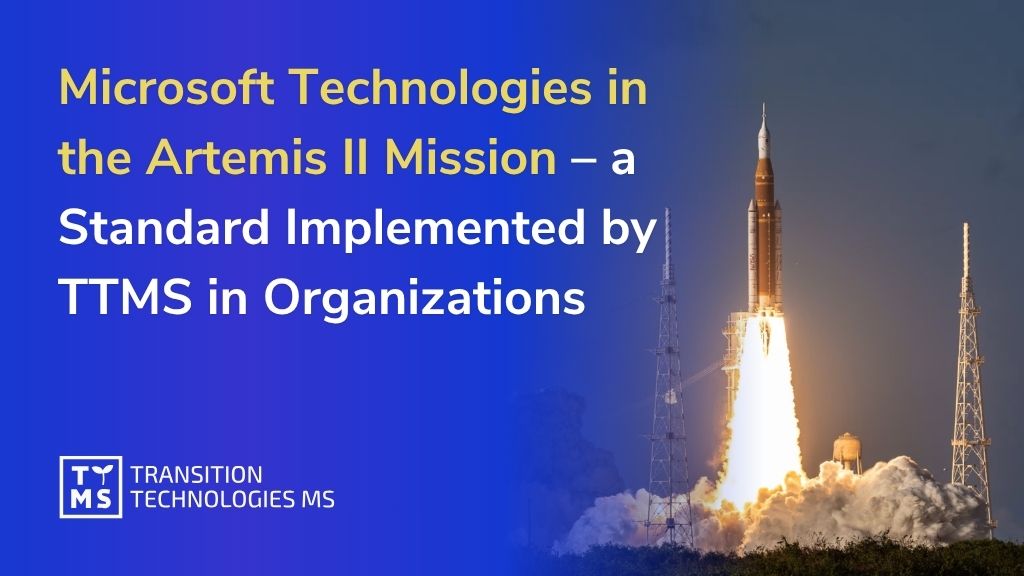
The return of humans to the vicinity of the Moon is not only a scientific breakthrough. It is also one of the most complex technological projects of our time, involving thousands of specialists, hundreds of organizations, and enormous technological infrastructure. The Artemis II mission shows that behind spectacular achievements stand not only rockets and spacecraft, but also advanced data, analytics, and information‑management systems that make it possible to coordinate operations on a scale never seen before.
This “invisible technological layer” is what determines the success of the entire undertaking. Integrating data from multiple sources, managing risk, monitoring progress, and making rapid decisions are elements without which such a complex mission would not be possible.
Importantly, many of these technologies are the same solutions used every day in modern organizations. Microsoft technologies play an increasingly important role in this ecosystem, supporting the most demanding operations on Earth and beyond.
This marks an important shift in perspective. Technologies once associated mainly with business or public administration are now a key foundation for globally significant projects. Their maturity, scalability, and security make them well suited for environments where requirements are at their highest.
1. Artemis II – a mission redefining technological standards
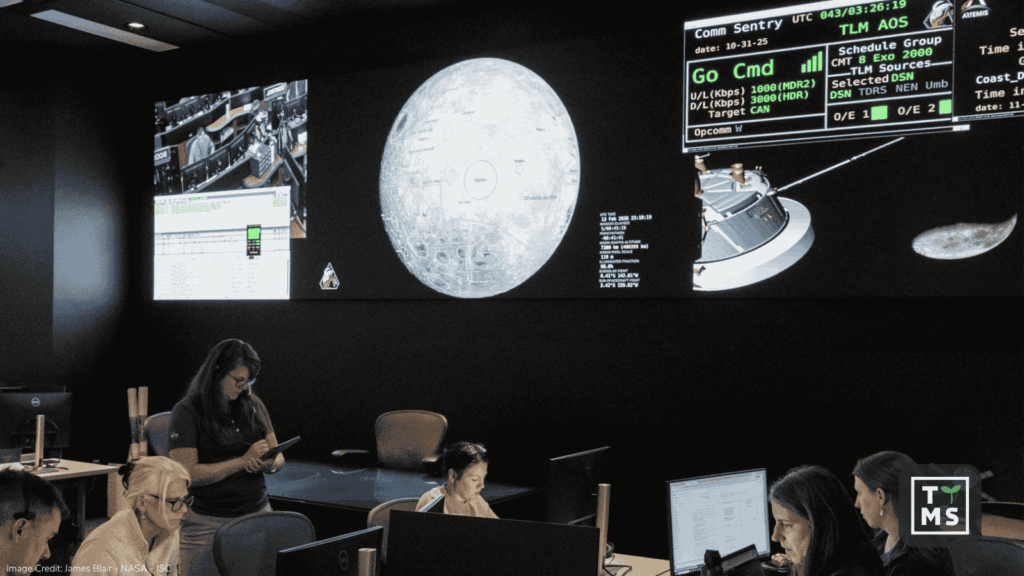
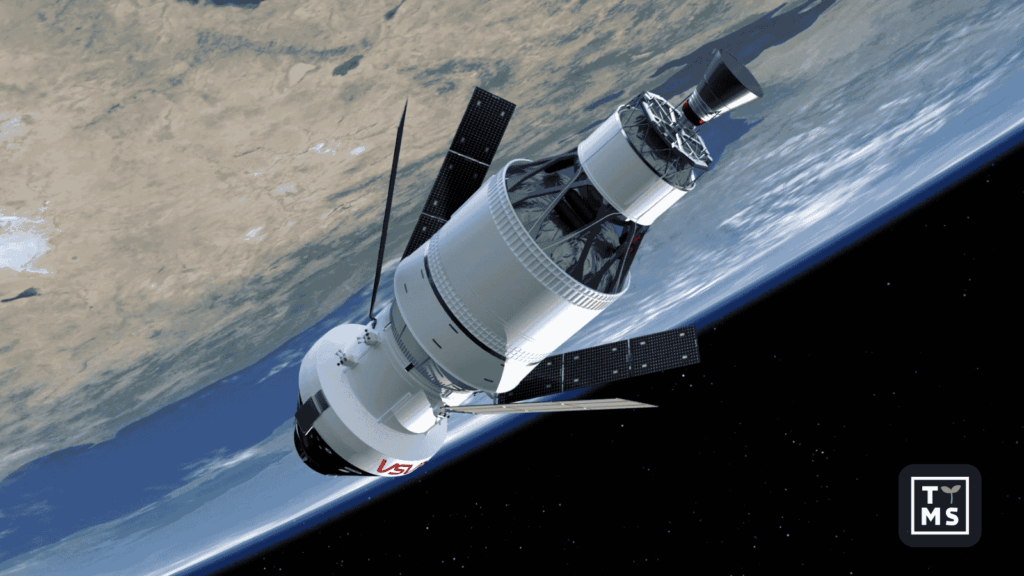
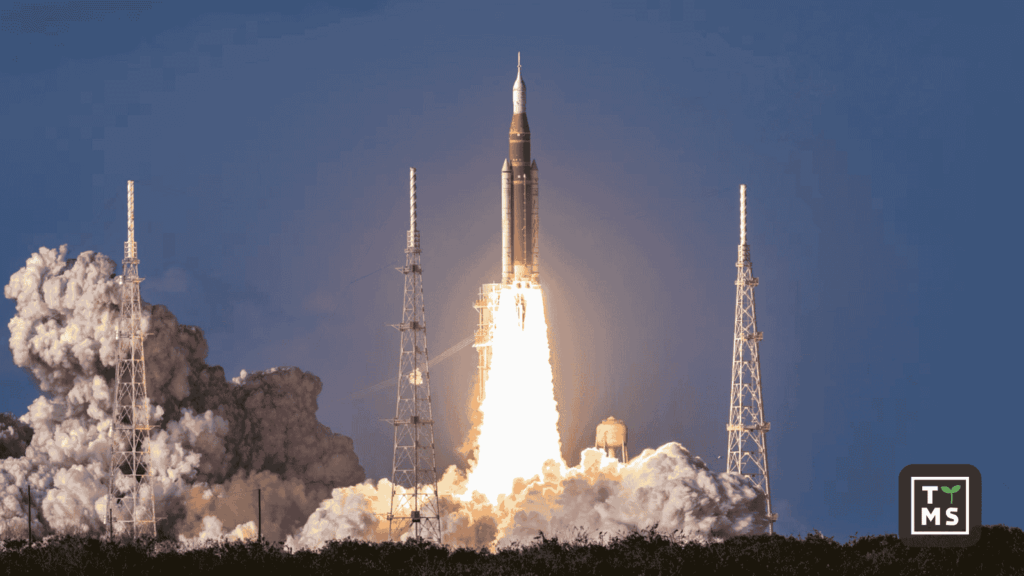
Artemis II is the first crewed mission in decades aimed at flying around the Moon. The scale of the project is enormous—it involves hundreds of suppliers, thousands of engineers, and unimaginable amounts of data generated at every stage. Every component, every process, and every decision is part of a larger, precisely synchronized system that must operate flawlessly.
It is important to emphasize that we are speaking not only about technology in the traditional sense, but about an entire ecosystem of interconnected solutions. From design systems, through logistics and supply‑chain management, all the way to analytics and reporting—everything must be consistent, up to date, and available to the right teams at the right time.
What’s more, this is an environment in which geographically distributed teams, different technological systems, and multiple layers of responsibility operate simultaneously. This makes information management one of the most crucial parts of the entire program—not just a supporting function. Equally essential is the ability to synchronize work between teams and ensure that every project participant operates with the same, current data.
This is an environment where every mistake can have critical consequences. That is why technologies enabling complexity management, data integration, and real‑time decision‑making are so vital. Equally important is the ability to quickly identify risks and address changes before they become real threats.
Transparency and continuous process monitoring also play a pivotal role. In such a complex environment, lack of visibility means real operational risk, so access to data and the ability to interpret it correctly become pillars of the entire program.
In practice, this requires building a coherent technological ecosystem that connects data, people, and processes into one well‑managed operating system. This is where modern technological platforms come into play, enabling not only information management but also its active use in optimizing operations and making better decisions.
2. The Microsoft technology ecosystem surrounding Artemis II
While Microsoft technologies do not directly control the spacecraft, they form a crucial part of the operational, analytical, and organizational backbone surrounding the Artemis program. They make it possible to structure massive volumes of data, improve communication between teams, and ensure transparency across all project stages.
These technologies act as a connective layer across organizational levels—from operations to management to strategic decision‑making. In practice, this means data ceases to be scattered or difficult to use and becomes a real asset supporting teams.
They also enable process standardization and scalability—critical in an environment like Artemis. Every optimization and every improvement in information flow directly enhances the efficiency of the entire program.
2.1 Data and analytics
Microsoft Power BI enables organizations to build advanced dashboards and analytics that support decision‑making in complex project environments. In programs like Artemis, this means improved process visibility and faster responses to risks.
By centralizing data and making it easily visualizable, teams can quickly identify issues, analyze trends, and make decisions based on real‑time information. This is especially important in environments where information delays can create real operational risks.
2.2 Automation and applications
Microsoft Power Apps makes it possible to build dedicated applications that support operational processes without long development cycles. This is crucial where speed and flexibility of implementation matter.
In practice, this enables rapid responses to changing project needs and the creation of tools precisely tailored to specific processes. Automation eliminates manual errors, accelerates operations, and allows teams to focus on higher‑value tasks.
2.3 Cloud and scalability
Microsoft Azure provides infrastructure capable of handling massive data volumes, advanced analytics, and AI‑based solutions. It forms the foundation for projects requiring reliability and global scale.
The cloud makes it possible not only to store and process data, but also to scale it dynamically as needed. This is essential in projects where system loads can change rapidly and unpredictably.
2.4 AI and productivity
Microsoft 365 Copilot supports teams in working with information—from document analysis and summarization to improving communication. In high‑complexity environments, this translates into real productivity gains.
Bringing AI into daily processes significantly shortens the time required to process information and reduces employee workload. Organizations can therefore operate faster, more efficiently, and more precisely.
It is worth emphasizing that these are not systems controlling the space mission but a layer enabling efficient management of a project of unprecedented scale. This layer determines whether a complex system functions as a cohesive whole.
3. Why does NASA use such technologies?
Programs like Artemis require technologies that meet the highest standards. This is an environment where operations take place in real time and decisions rely on massive volumes of data from many, often independent sources. The key is not only collecting information but also processing, interpreting, and sharing it quickly with the right teams.
In such conditions, technology becomes more than support—it becomes an integral part of the program’s operating system. The key factors include:
- Security – protecting data and ensuring continuity of operation
- Scalability – the ability to handle increasing amounts of data and processes
- Complexity management – integrating multiple systems and data sources
- Decision speed – access to current information in real time
- Flexibility – the ability to adapt to a dynamic environment
Each of these elements has very concrete significance in space missions. Security means not only data protection but also ensuring that critical information is neither lost nor corrupted. Scalability means the ability to handle the growing flow of data generated by systems, teams, and devices in real time.
Complexity management allows organizations to maintain control over multilayer processes and inter‑system dependencies. Meanwhile, decision speed is essential in situations where every second can have operational consequences. Flexibility enables adaptation to changing conditions and unexpected scenarios.
It is important to note that technologies supporting such requirements are not built exclusively for the space sector. These are universal solutions applicable wherever high complexity and responsibility are present. These universal requirements extend far beyond the space industry.
4. From space to organizations – the same technological standard
Although space missions may seem far removed from everyday organizational challenges, they share a key element—complexity. Managing data, processes, and risk is a challenge both in space programs and in modern organizations.
In practice, this means operating on massive data volumes, coordinating the work of many teams, and making decisions under uncertainty. These are exactly the same challenges organizations face today in dynamic, digital environments.
Modern organizations also work in environments where data comes from many sources, processes are distributed, and decisions must be made quickly and based on current information. The difference lies only in context—not in the level of complexity.
Additionally, increasing regulatory demands, pressure for efficiency, and the need for constant optimization mean that organizations must operate more consciously and data‑driven. Without a consistent approach to information management, errors, delays, and loss of competitive advantage can occur.
Technologies used in some of the world’s most demanding projects set a standard that is now increasingly accessible to companies, public institutions, and the defense sector. As a result, organizations can build solutions that were once reserved only for the most advanced technological programs.
This means that approaches known from projects like Artemis II can now be applied in much broader contexts. Organizations can use the same principles – data centralization, process automation, real‑time analytics, and AI support—to enhance efficiency and operational resilience.
5. Why organizations choose Microsoft technologies
In environments where process complexity and data volumes grow each year, technology selection is no longer just a tools‑based decision. Organizations are no longer looking for individual solutions but for an integrated ecosystem that enables efficient information management, system integration, and data‑driven decision‑making.
In this context, Microsoft technologies gain particular importance. Their strength lies not in one specific tool but in how they connect different areas of an organization into one cohesive, well‑integrated system. Analytics, automation, cloud infrastructure, and tools supporting daily teamwork function as components of a single whole—not siloed solutions requiring complicated integration.
As a result, organizations can gradually eliminate data silos, which are often a major source of operational issues. Information is no longer scattered across systems and teams—it becomes a coherent picture available to everyone who needs it. This leads to faster and more accurate decisions, especially in environments where reaction time has real business impact.
Security and regulatory compliance also play a key role. In many organizations—especially those operating on sensitive data—requirements in these areas are becoming increasingly strict. Microsoft technologies offer built‑in mechanisms for access control, data protection, and user‑activity monitoring, ensuring high security without the need for custom solutions built from scratch.
Scalability is equally important. As organizations grow, so does the volume of data, number of processes, and demand for system performance. Using the Azure cloud enables organizations to adjust their technological environment to current needs—in terms of computing power, availability, and reliability. This means organizations do not need to predict all scenarios in advance, but can evolve their systems flexibly.
Automation and team‑productivity support are also becoming increasingly important. Tools like Power Platform enable rapid application development and process improvement without long development cycles. Meanwhile, AI‑based solutions like Microsoft 365 Copilot are transforming information work—shortening analysis time, simplifying summary creation, and supporting communication.
As a result, Microsoft technologies become not just a set of tools but a foundation for modern organizational operations. This approach helps organizations better handle complexity, improve operational efficiency, and create a data‑driven working environment—regardless of industry or scale.
6. How TTMS implements Microsoft technologies in practice
TTMS uses Microsoft technologies to build solutions that help organizations operate more efficiently, rapidly, and securely—especially in environments with significant data volumes and complex processes.
In practice, this work focuses on several key areas:
- Better use of data
TTMS supports organizations in collecting and analyzing data, for example through Power BI. This enables the creation of clear reports and dashboards that support decision‑making. - Process optimization
Using Power Apps and automation, organizations can build simple applications and eliminate repetitive tasks. This allows employees to focus on more meaningful work. - Modern infrastructure
Azure cloud enables secure data storage and large‑scale processing. Additionally, systems can be easily expanded as the organization’s needs grow.
6.1 System integration
TTMS connects different tools and systems into one cohesive whole. This eliminates data fragmentation and gives organizations a complete picture of their operations. The result is faster workflows, fewer errors, and better use of available information.
6.2 Microsoft technologies as a foundation for security and scalability
In high‑stakes projects, stable and secure system operation is essential. Microsoft technologies help organizations achieve this by providing solid foundational infrastructure.
The most important elements include:
- Data security
Advanced mechanisms protect information from unauthorized access and loss. - Regulatory compliance
Microsoft solutions help meet regulatory requirements—essential in sensitive sectors. - System reliability
Systems operate stably and remain available even under heavy load. - Access control
Organizations maintain full control over who can access which data.
This enables the creation of solutions that perform reliably even in demanding environments.
6.3 One standard – many applications
Technologies similar to those used in programs like Artemis are applicable across many different environments.
They can be used in:
- large organizations and enterprises
- public institutions
- the defense sector
- R&D projects
Regardless of industry, the common denominator is complexity—large data volumes, many processes, and the need for reliability.
These are exactly the conditions in which Microsoft technologies deliver the greatest value, enabling better information management and smoother organizational performance. Want to implement Microsoft technologies in your organization? Contact us.
FAQ
Are Microsoft technologies used directly to control the Artemis II mission?
No. Technologies such as Power BI, Power Apps, or Microsoft 365 Copilot are not systems that control the spacecraft. They serve as analytical, operational, and communication support layers that make it possible to manage a complex program. This is an important distinction that highlights their role as part of the technological backbone.
Why is the use of these technologies in the NASA context significant?
Projects carried out by NASA are among the most technologically demanding in the world. If certain solutions are used in such an environment, it means they meet very high standards of security, scalability, and reliability. This signals to organizations that these technologies have been proven in extreme conditions.
Can the same technologies be used outside the space sector?
Absolutely. Microsoft technologies are designed as universal platforms that can be applied across many industries. Their flexibility allows them to be adapted to the needs of the public sector, private organizations, and research projects.
What benefits does Power Platform bring to an organization?
Power Platform enables rapid application development, process automation, and data analysis without the need for large development teams. This allows organizations to respond more quickly to changes, optimize processes, and make better data‑driven decisions.
How does TTMS support organizations in implementing Microsoft technologies?
TTMS provides a comprehensive approach to implementing Microsoft technologies—from needs analysis and solution design to implementation and ongoing development. With experience working with advanced systems, TTMS helps organizations achieve higher levels of efficiency, security, and scalability.