OpenAI unveiled GPT-6 Astra on 3 September 2026, and early research findings and user reports show why the release is generating so much excitement. The new model solved mathematical problems that earlier GPT models and competing models failed to solve in the same test. Users have already tested GPT-6 across a range of tasks, from rebuilding a sales workflow in a CRM system and creating a detailed steam locomotive model to analysing a novel spanning more than 500 pages. What exactly has it achieved, and how can businesses put these capabilities to use?
1. GPT-6 Astra’s early achievements are impressive
Early tests and user reports show how Astra handles complex tasks. These include findings from a test conducted by Epoch AI and accounts from people who put the model to work on their own projects.
1.1 Solving two previously unsolved mathematical problems
Epoch AI tasked five models with solving 68 Erdős problems, giving each the same time and budget limits. Only the pre-release version of Astra solved two of them and produced solutions in a form that passed automated mathematical verification. GPT-5.6 Sol, GPT-5.5, Claude Fable 5.1 and Claude Fable 5 did not solve any of the problems in this test. Astra had already recorded other mathematical achievements. Before its release, OpenAI presented ten further results involving problems in mathematics and theoretical computer science. We covered them in our article “Astra, the future GPT-6: a new model from OpenAI?”.
1.2 A 3D steam locomotive model with 3,295 editable components
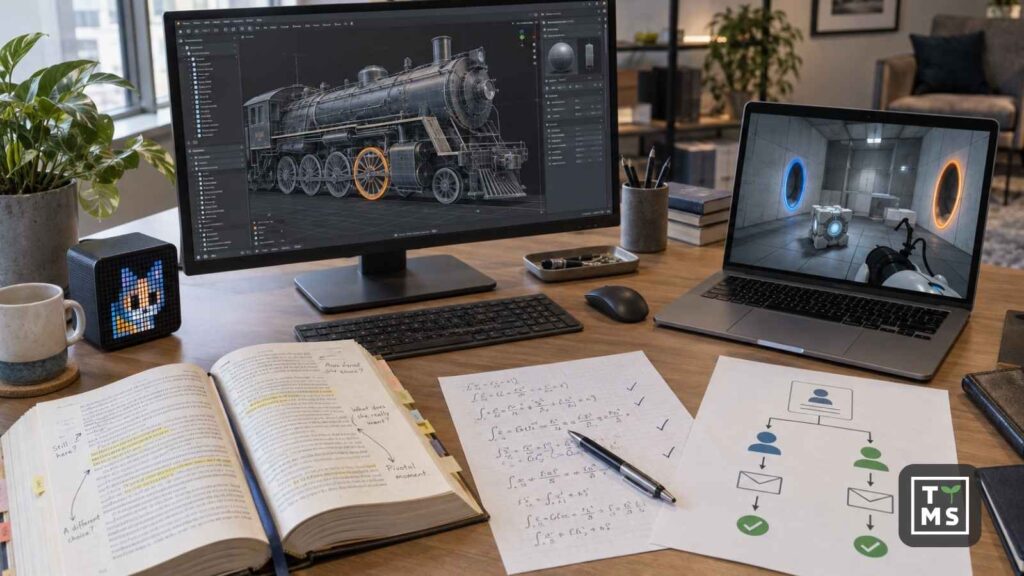
Tom Krcha, a designer and creator of the AI-assisted interface design tool Pencil, gave Astra an old drawing of a steam locomotive. The task was to recreate the machine in Blender, an application for building 3D models, animations and scenes. Within a few minutes, it produced a model containing 3,295 separate objects. The wheels, axles, boiler components and other parts can be selected, moved and modified independently. Astra had to interpret a flat drawing, reconstruct the machine’s three-dimensional structure and preserve the relationships between thousands of components. According to Krcha, it did this mainly by writing Python scripts that built the geometry piece by piece. The resulting model can serve as a starting point for an animation or a game project.
1.3 Rebuilding a sales workflow directly in a CRM system
Claire Vo, creator of the ChatPRD platform, gave Astra access to her customer relationship management system, or CRM. Working through Codex, the model was tasked with changing how new sales leads were handled. It had to understand the existing workflow, find the relevant settings and rebuild the rules in a visual editor. After the changes, the system automatically routed leads to Claire or Zach, inserted a link to book a meeting with the appropriate person and sent the draft message to Slack for approval. The new rules would also apply to future leads.
1.4 Adding new capabilities to a Bluetooth speaker with Astra
Claire Vo also used the model to experiment with a small Divoom speaker fitted with a colour pixel display. She wanted to show her own images and messages on it. According to her account, the device had no public API, an interface that would allow other software to control it. This meant working out how to communicate with the hardware. Astra built an application that displayed drawings made with a computer mouse on the speaker’s screen. It then created a tool for controlling the speaker. The model also looked up information about the latest podcast episode and sent scrolling text and an animated graphic to the display. Vo noted that earlier attempts with other models had only allowed her to display a simple greeting. This time, she received custom software for controlling the device that she could develop further to suit her ideas.
1.5 Checking plot consistency in a novel spanning more than 500 pages
Jakub Szczęsny of Antyweb gave Astra an extensive draft of his own book. The model was asked to check the chronology of events, the logic of the plot and storylines introduced in one part of the text and developed many chapters later. Analysing a manuscript of this length requires tracking the characters’ stories, the sequence of events, their motivations and the consequences of earlier decisions at the same time. Astra mapped these connections and flagged passages that needed further work, consistently checking the entire text for the specified issues. Szczęsny particularly valued its ability to connect information scattered across hundreds of pages. A similar skill is useful when reviewing contracts, project documentation and reports, where details in one section affect how others should be interpreted.
1.6 An AI agent completes the entire game Portal
A creator publishing as CozyBlaze connected Astra to Portal, a spatial puzzle game in which players create passages between distant locations and use the laws of physics to overcome obstacles. The model received screenshots and information about the player character’s position and the direction they were facing. It used this information to plan moves, execute them and check the results. After approximately 23 hours and 43 minutes, including waiting time and technical interruptions, it reached the end credits. The creator developed custom controls and settings to make precise movement easier, and the game paused while the model was processing its next actions. The creator also resumed the session following service availability issues, while the agent made the gameplay decisions. Completing the game required interpreting the situation on screen, spatial awareness and hours of planning moves and checking their effects.
These examples help explain the enthusiasm around Astra. The model analyses a problem, carries out successive actions and uses the results to guide what it does next. For businesses, this opens up the possibility of assigning AI more complex tasks involving information and applications. Comparisons with GPT-5.6 show where performance has improved and what those gains could mean for businesses.
2. GPT-6 Astra in business: what does better performance mean for companies?
Businesses using AI also bear the cost of checking responses, correcting errors and stepping in when the model cannot finish a task. Better performance from the next generation could therefore make more tasks cost-effective to delegate to AI. Astra’s results give businesses reason to reconsider how responsibilities are divided, how existing systems are used and how much time employees spend reviewing AI output.
GPT-6 Astra vs GPT-5.6 Sol: test results and their business implications
| Skill tested | GPT-6 Astra | GPT-5.6 Sol | Business implications |
|---|---|---|---|
| Successfully completing a task across several applications, AutomationBench | 41.4% | 28.77% | Reason to test whether AI can handle a larger part of a process independently. |
| Locating the correct elements on screen, ScreenSpot-Pro | 92.7% | 76.9% | Greater precision when AI interacts with business software. |
| Detecting bugs that require analysing several files, the more challenging CodeRabbit subset | 57.1% | 47.6% | Better performance when analysing complex dependencies in software. |
The results come from different tests and measure distinct skills. AutomationBench: Zapier’s leaderboard as of 9 September 2026, with both models set to Max. ScreenSpot-Pro: OpenAI’s comparison. CodeRabbit: the more challenging subset of code reviews. The business implications are interpretations of the results; any savings need to be assessed within the company’s own process.
2.1 A broader range of tasks to delegate
The more stages a task involves, the more opportunities there are for mistakes. The model needs to find information, apply the right rules, perform actions in the correct order and use the same assumptions consistently throughout. These are the demands placed on models by AutomationBench, Zapier’s benchmark for business processes.
On the leaderboard dated 9 September 2026, Astra successfully completed 41.4% of tasks, compared with 28.77% for GPT-5.6 Sol, with both models using their highest reasoning setting. A task counted as successful only when all required conditions were met. That amounts to roughly 13 more successfully completed tasks out of every 100.
For businesses, this is an opportunity to test whether AI can complete more stages without employee assistance. It is worth reviewing tasks where an employee repeatedly prompts the model to take the next step, supplies more data or transfers the output to another application. Each intervention takes time and reduces the benefit of automation. Astra gives businesses reason to test which of these stages it can now handle together.
The 41.4% result also shows how demanding these tasks remain. The level of autonomy should be determined by the model’s performance within the company’s own process.
2.2 Automating more tasks in existing business software
Companies use many applications introduced at different stages of their development. AI’s access to these resources plays a significant role in how useful it can be. When a model can navigate an application’s interface effectively, businesses can consider using it for tasks that employees currently perform through forms, buttons and menus.
In ScreenSpot-Pro, a test of locating elements in screenshots, Astra achieved 92.7% accuracy, compared with 76.9% for GPT-5.6 Sol. The test covers complex applications with densely packed controls. The result measures one specific skill needed to operate software.
This improvement gives businesses reason to consider automating more tasks in the applications they already use. Automation planning should include tasks that currently require employees to navigate software manually. Better interface recognition could help AI carry them out when equipped with the appropriate tools and permissions. Cost-effectiveness will depend on the success of the entire operation, including reading data, making changes and checking the result. Accurately locating a button is one requirement for completing that operation successfully.
2.3 Detecting errors that require connecting information from several places
Business tasks are often difficult because of the connections between pieces of information. A change to one agreed detail can affect subsequent decisions, documents and team activities. The person responsible for the overall task needs to identify these dependencies and assess their consequences.
In CodeRabbit’s evaluation, Astra’s advantage was particularly clear when detecting bugs that required examining several code files. The model detected 57.1% of labelled bugs, compared with 47.6% for GPT-5.6 Sol. Across the full evaluation, the difference was smaller: 61.3% versus 59.0%. The greatest improvement was therefore seen in the more challenging cases.
For those overseeing AI adoption, this offers a useful lesson: evaluate the new generation on tasks where the earlier model missed connections between pieces of information or required extensive corrections. With simple prompts, the difference between models may be small. Materials containing exceptions, interdependent conditions and information spread across several places can reveal more about Astra’s usefulness. CodeRabbit documents this improvement in software analysis. Establishing whether similar gains apply to documentation, reports or business agreements requires testing on the company’s own materials. This is a useful way to assess the model in organisations where employees spend considerable time working out how different pieces of information affect one another.
2.4 When does better AI performance translate into savings?
Even a small improvement in quality can matter when a task is repeated hundreds of times a month. If employees spend less time correcting outputs and helping AI finish tasks, the team gains time back. The scale of that benefit depends on how often errors occur, how long they take to correct and the consequences of those mistakes.
Astra’s results justify reassessing applications of AI that previously proved too unreliable or required too much supervision. A company can revisit a shelved idea and test it on a set of real cases, including more difficult ones. Three measures matter in this assessment: the proportion of tasks completed correctly, employee time spent on checks and corrections, and the total cost of handling each case. These indicators help establish whether the model’s better performance benefits the team as a whole.
Astra’s progress could therefore make tasks that were previously too costly to automate economically viable. Tasks that have required constant human assistance are worth testing again, particularly when they are frequent, time-consuming and have a clearly defined outcome.
How can your business put GPT-6 Astra to use?
Our AI consulting services help you identify the tasks where improvements would deliver the greatest business benefit and plan the implementation. At TTMS, we work with clients to analyse the process, identify the data and integrations required, and agree on how to measure results. We combine consulting with designing AI solutions and integrating them with business systems.
We were the first company in Poland to obtain accredited ISO/IEC 42001 certification for our artificial intelligence management system. For clients, this confirms that our practices for risk assessment, project documentation and AI oversight have been reviewed by independent auditors.
Tell us about a task you would like to improve. Together, we will explore how AI could help and where to begin. Talk to TTMS about AI consulting for your business.

GPT-6 Astra in business: frequently asked questions
What does GPT-6 Astra change for businesses already using AI?
GPT-6 Astra gives businesses reason to test whether AI can handle a larger share of a task with less employee assistance. Comparisons with GPT-5.6 Sol show improvements in completing tasks across several applications, locating on-screen elements and analysing dependencies in code. It is therefore worth revisiting processes where the team frequently corrects outputs or guides the model step by step. The benefit comes when better performance reduces the work needed to achieve a correct result.
Can GPT-6 Astra work in business systems without building a new integration?
In some cases, yes, provided its environment gives Astra tools to operate a browser or computer. The model can then interact with applications through forms, menus and buttons. It needs access to the system and the appropriate permissions. Whether this approach is suitable depends on the application and the task. For frequent, repetitive operations, it is worth comparing it with an API integration, which allows software systems to exchange data directly.
Which tasks are worth trying with AI again if earlier automation attempts failed?
Start with tasks where the earlier model lost track of the steps, confused interface elements or missed connections between pieces of information. These are areas where the tests discussed in this article show Astra’s progress. Use the same materials and assessment criteria for the new trial, including cases that previously proved difficult. If outdated data, conflicting instructions or a lack of application access caused the original failure, those issues also need to be resolved.
How can you decide what GPT-6 Astra can do independently and what needs employee approval?
The level of autonomy should depend on the consequences of a mistake, whether an action can be reversed and the results of tests using company data. Drafting a document or organising a copy of a dataset allows the output to be checked before use. Sending a proposal, changing commercial terms or deleting records may require prior approval. Process instructions should clearly define when AI can proceed, when it should request a decision and when it should stop because information is missing.
How can you tell whether GPT-6 Astra saves your business money after checks and corrections are included?
Compare the total cost of completing the same set of tasks with and without Astra. Include data preparation, tool use, reviewing outputs, making corrections and any cases that employees have to redo. A useful measure is the cost per successfully completed task that meets the required quality standard. Base the assessment on a representative set of tasks, including exceptions. This will help establish whether the savings hold up in day-to-day work.